King Abdullah II
King of Jordan since 1999 and a member of the Hashemite royal family.
Also known as: Abdullah II · Abdullah bin Hussein
King Abdullah II, born Abdullah bin Hussein on 30 January 1962, is the king of Jordan. He acceded to the throne on 7 February 1999 following the death of his father, King Hussein.
Abdullah was born in Amman and began a military career in 1980. He later commanded Jordan's Special Forces and reached the rank of major general in 1998. Shortly before his death, King Hussein designated Abdullah as his heir.
He married Rania Al-Yassin in 1993. Their children include Crown Prince Hussein, Princess Iman, Princess Salma and Prince Hashem.
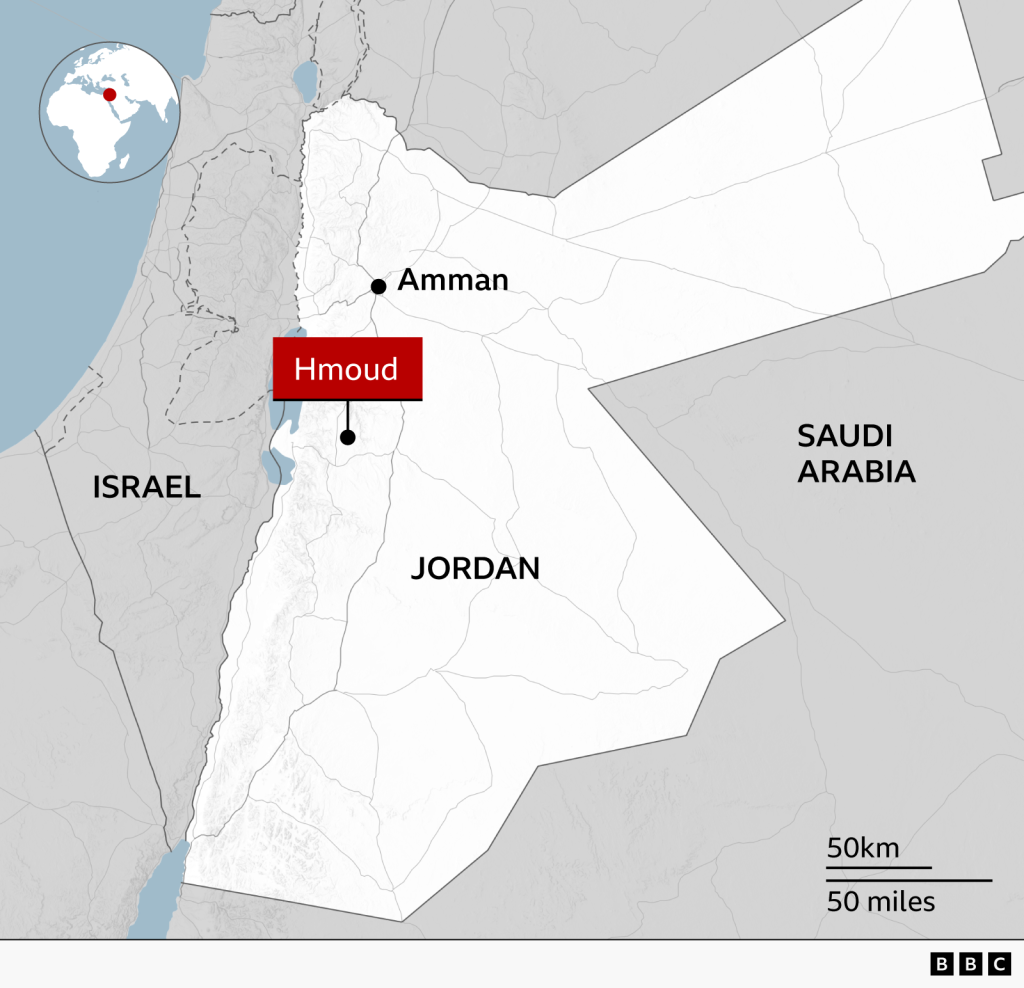
As Jordan's monarch, Abdullah plays a central role in the country's political and security affairs. Following the deadly attack on St George's Greek Orthodox Church in Hmoud, he praised the security forces for pursuing the suspects and said those responsible for terrorism and divisive extremist ideologies would not be tolerated.
Related translated reports
Jordanian Forces Capture Trio Behind Deadly Church Massacre After Dawn Raid
Three suspects linked to the killing of nine Christians at a funeral in Hmoud were arrested following a shootout, with no group yet claiming responsibility for the attack.
Jordan’s Public Security Directorate (PSD) confirmed the arrest of three armed men suspected of orchestrating last week’s deadly assault on a Greek Orthodox church in the village of Hmoud. The raid, which targeted an abandoned house in Karak governorate south of Amman before dawn, resulted in a firefight after the suspects refused to surrender. All three individuals were wounded during the exchange, while Jordanian security personnel remained unharmed.
The operation concludes a frantic manhunt initiated after gunmen opened fire on a funeral service at St George’s Church on Friday, killing nine Christians and injuring 34 others. As of Monday, no organization had claimed responsibility for the massacre. Interior Minister Mazen al-Faraya stated that authorities would prosecute everyone involved and are actively investigating the societal drivers pushing young people toward extremism.
King Abdullah II commended the security forces for their persistence in tracking the perpetrators “to the very end.” Writing on social media platform X, the monarch emphasized that terrorists would not evade justice and that ideologies seeking to divide Jordanians would not be tolerated. He offered prayers for the deceased and wished for the swift recovery of the injured, invoking divine protection over the nation.
Evidence from the scene includes verified CCTV footage showing three armed men approaching the church and opening fire. A second video captured the aftermath, depicting victims lying on the ground amidst chaos. Khalid al-Mdanat, a survivor present at the funeral, described the ordeal as lasting approximately 15 minutes. He recounted scenes of attendees taking cover, cradling the dead, or fleeing with their children while clutching friends. According to al-Mdanat, the attackers escaped in a pickup truck, continuing to shoot as they departed.
The religious community responded swiftly to the tragedy. On Sunday, Theophilos III, the Greek Orthodox Patriarch of Jerusalem, visited survivors and condemned the violence as a “vile, cowardly, and bloody act.” He subsequently led a mass funeral at St George’s Church for eight of the victims: Dr. Maher Zureiqat, Ihab al-Halsa, Dr. Fadi al-Halsa, Dr. Khaled al-Halsa, Dr. Asim al-Burqan, Alaa al-Masarwa, Marwan Khaitan, and Mazen al-Qassous. Thousands mourned the loss during the ceremony. The ninth victim, Dr. Mohammed al-Qassous, was buried near Amman on Monday.