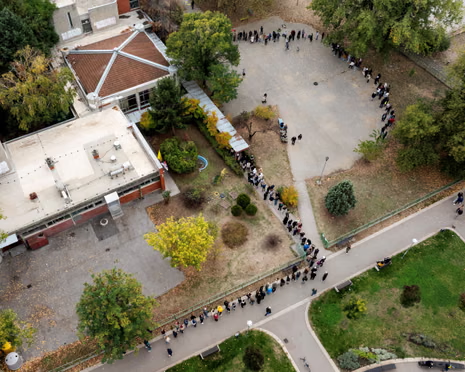
2026 Serbian parliamentary election
Early parliamentary elections held in Serbia on October 25, 2026, resulting in a historic defeat for the ruling Serbian Progressive Party and a seismic political shift led by a student-backed movement.
Also known as: 2026 Serbian snap parliamentary election
Overview
Early parliamentary elections were held in Serbia on October 25, 2026, to elect members of the National Assembly. Originally scheduled for December 2027, the snap elections were called following a government proposal and the dissolution of the National Assembly by President Aleksandar Vučić. The vote marked a major political turning point, ending the ruling Serbian Progressive Party's (SNS) governance that began in 2012.
Results and Turnout
The student-backed electoral list secured a historic victory, winning an absolute majority of seats in the National Assembly. According to preliminary results from the Republic Electoral Commission (RIK) covering 96.9% of polling stations, the Student List garnered 53.3% of the valid votes, securing approximately 140 seats under final projections. The SNS-led coalition finished second with 39.7% of the vote (about 103 seats), while national minority lists also secured representation. Voter turnout reached 68.85%, representing a roughly ten-percentage-point increase compared to the previous election in 2023. Aleksandar Vučić conceded defeat on election night.
Campaign and Electoral Environment
International and domestic monitors—including observers from the OSCE Office for Democratic Institutions and Human Rights (ODIHR), the European Parliament, the Council of Europe, and Serbia's Center for Research, Transparency and Accountability (CRTA)—scrutinized the electoral process. Observers noted active citizen engagement and high turnout, but reported that the campaign unfolded in an atmosphere of profound polarization. Concerns were raised regarding entrenched ruling party advantages, the misuse of state resources, severe imbalances in media exposure, and instances of voter pressure and intimidation.
Related translated reports
International Monitors Highlight Systemic Flaws After Landmark Serbian Election
Global election observation missions released their preliminary evaluations regarding Serbia's October 25 early parliamentary vote, pointing to severe polarization, state resource abuse, and campaign inequalities, even as a youth-backed movement triumphed to unseat longtime leader Aleksandar Vučić.
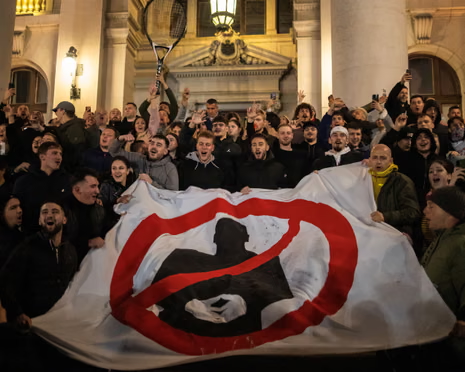
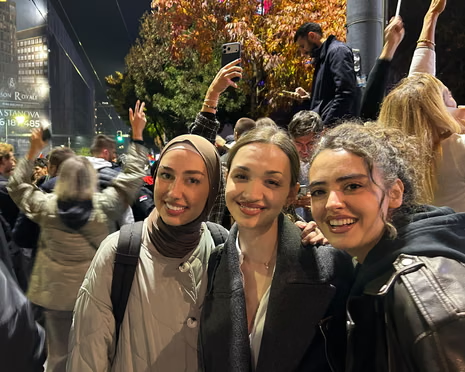
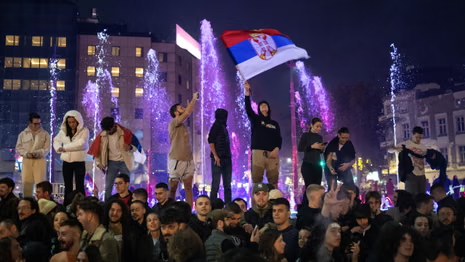
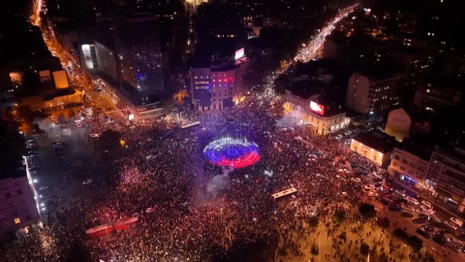
International electoral observers have issued their joint preliminary findings concerning Serbia's early parliamentary elections held on October 25. While noting high civic participation and active competition, international monitors emphasized that the vote took place amidst deep political polarization and serious imbalances in campaign opportunities. Delegation representatives highlighted entrenched advantages held by the incumbent administration, citing instances of voter pressure, intimidation, and the severe misuse of public resources. Eoghan Murphy, head of the OSCE Office for Democratic Institutions and Human Rights (ODIHR) mission from Ireland, drew particular attention to inadequately regulated online campaigning, noting a lack of transparency regarding how social media algorithms amplify content. He also criticized state-controlled media outlets for failing to deliver impartial information, citing severe coverage imbalances that ran contrary to legal obligations. Additional structural hurdles were raised by Italian MP Federica Onori of the OSCE Parliamentary Assembly and Austrian MEP Andreas Schieder, head of the European Parliament delegation, both of whom underscored significant voting difficulties and long queues faced by diaspora communities abroad, such as in London, due to arbitrary polling station arrangements. Meanwhile, Pierro Fassino, heading the Council of Europe’s parliamentary assembly delegation, remarked that the ballot proceeded responsibly in roughly 96% of observed locations despite the tense climate. Luxembourgish MP and special coordinator Gilles Baum reiterated concerns regarding systemic disadvantages for challengers and widespread skepticism surrounding voter registration lists, although general election day administration received positive marks outside of reported physical altercations and procedural snags. Domestically, Raša Nedeljkov of the Center for Research, Transparency and Accountability (CRTA) reported that up to 15,000 domestic observers helped block widespread local irregularities, though he stressed that deep state capture and heavily skewed media exposure—such as President Aleksandar Vučić receiving over 500 live camera appearances—heavily tainted the overall contest. The ballot's outcome marks a dramatic political turnaround following nearly two years of anti-establishment protests. The victorious student-backed platform—whose candidate list features academics and artists rather than traditional politicians, including over 160 PhD holders—centered its campaign on anti-corruption reforms following the tragic events in Novi Sad. Standing in central Belgrade amidst celebratory crowds, 24-year-old local resident Sara reflected on the momentous shift, noting the surreal experience of celebrating victory on streets where police and gendarmerie forces had previously confronted demonstrators, moments after Vučić publicly conceded defeat.