Albanian anti-government protests
Violent anti-government demonstrations and clashes in Tirana against Prime Minister Edi Rama, marked by corruption allegations, student participation and calls for resignation.
Also known as: 2025–2026 Albanian opposition protests · Tirana anti-government protests · Flamingo Revolution
Overview
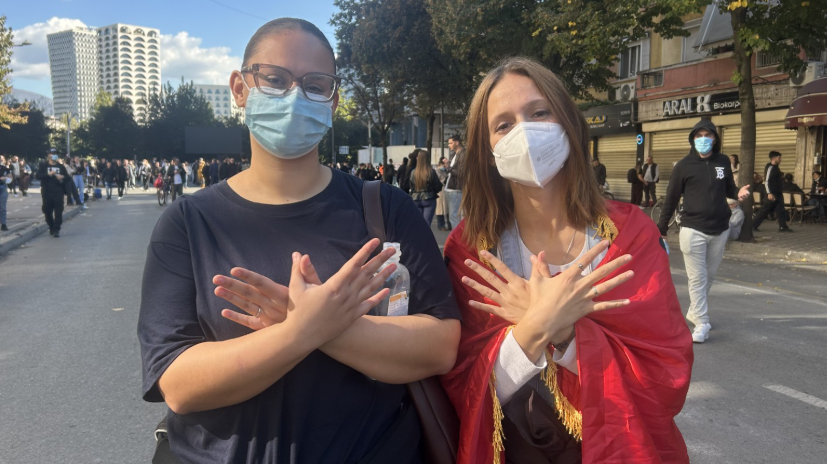
The Albanian anti-government protests were a series of demonstrations and street clashes, primarily in Tirana, directed against Prime Minister Edi Rama and his government. In the 2025–2026 period, the protests expanded from opposition to corruption allegations and governance grievances into a broader movement calling for Rama's resignation and a non-partisan or technocratic government.
Background
Protests began in the summer, with high school and university students prominent among participants. Students said they were boycotting classes, and opposition figures and protesters cited corruption allegations linked to Rama's administration. Research extracts also describe allegations of irregularities in the 2025 Albanian parliamentary election and corruption proceedings involving Deputy Prime Minister and Minister of Infrastructure Belinda Balluku. A related wave of protest, associated with the Flamingo Revolution, initially focused on disputed development projects and land ownership before broadening into opposition to state capture, media capture, poor governance and democratic backsliding.
Rama's Socialist Party held a comfortable parliamentary majority, and analysts described him as having concentrated power in his own hands. The unrest occurred while Albania aspires to join the European Union, and Rama had long been viewed favourably by the EU.
Events
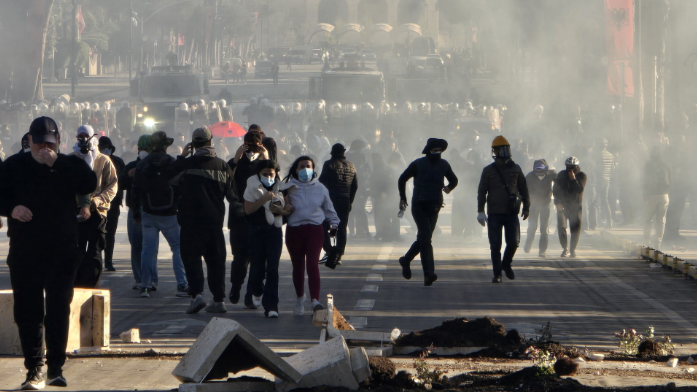
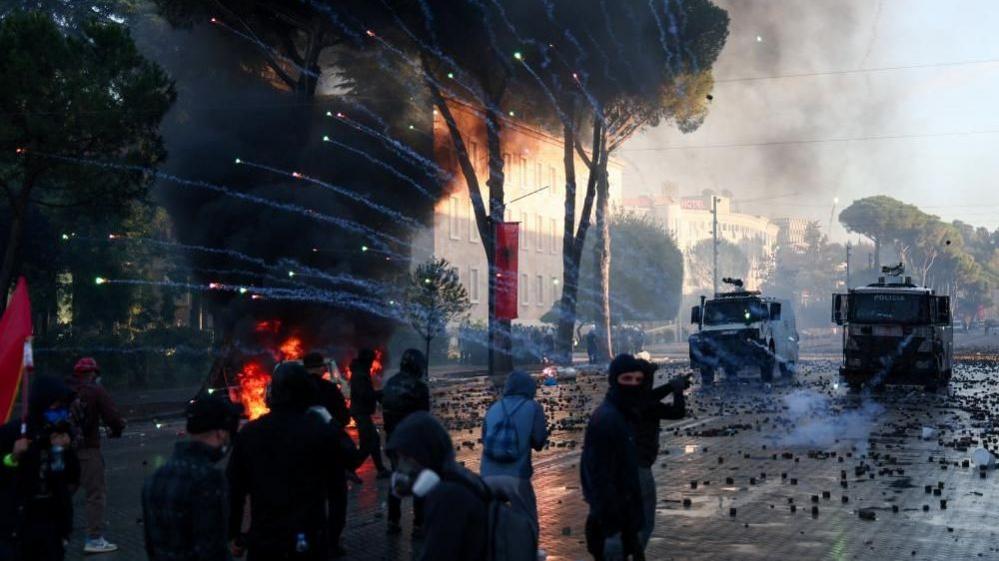
Masked protesters, many of them students, hurled rocks, fireworks and petrol bombs at riot police defending institutions such as the education ministry. Police responded with water cannons and tear gas, and reports said rubber bullets were used for the first time. The focus later shifted to the office of the prime minister, where crowds swelled and exchanges intensified. Many people were injured on both sides, 80 people were charged with disorder, and hundreds were arrested or under investigation.
Demands and responses
Demonstrators called for Rama to resign and for a neutral, caretaker government to organise new elections. Opposition demands also included a technocratic government and new elections. Rama blamed the opposition Democratic Party and unnamed foreign actors, urged Albanians not to forget achievements, and has promised EU membership by 2030.
Legal and international context
Parallel investigations by the special prosecution service, set up under EU and US pressure in 2019, threatened Rama's rule. Those investigations included the arrest of secret service chief Vlora Hyseni and businessman Ergys Agasi. Some Albanian media outlets claimed Agasi acted as an intermediary between the prime minister and organised criminal groups; Rama admitted knowing Agasi but denied knowledge of illegal transactions.
Broader context
Some accounts place the protests within a wider 2020s pattern of youth-led demonstrations, often connected to corruption, inequality, democratic backsliding and social-media coordination.
Related translated reports
Anti-government protesters battle with police in Albania
There were violent clashes between demonstrators and riot police throughout Saturday in the capital Tirana.
Demonstrators and riot police fought pitched battles in the centre of Tirana on Saturday for the fifth day in a row. Masked protesters, many of them high school and university students, hurled rocks and petrol bombs at riot police trying to defend the education ministry, one of the focal points of the protests. The police responded with water cannon and volleys of tear gas, sending the crowds scattering. There are also reports that rubber bullets were used for the first time. Protests which began in the summer have grown into a wider anti-government movement , with calls for the prime minister to resign following corruption allegations linked to his administration. Many of the protesters in central Tirana wore gas masks or face masks, while volunteers handed out syringes of saline eyewash to reduce the pain from the tear gas which billows down the street. The constant boom of petrol bombs could be heard exploding on Saturday. During the afternoon, the focus of the protests shifted to the office of Prime Minister Edi Rama on the city's main boulevard. Here the crowds swelled to far larger numbers than on previous days. Riot police faced a steady hail of cobble stones and fireworks, and responded with barrage after barrage of tear gas, some of the canisters landing far back in the crowds, causing panic. Incensed by the gas, the crowds waited for it to clear, then renewed their attacks. Black smoke from a burning vehicle and the sirens of police cars and ambulances split the afternoon. As dusk fell, police special forces arrived to reinforce the riot police. Many people have been injured on both sides, 80 people have been charged with disorder so far, and hundreds more have been arrested, or are under investigation. The centre of the Tirana looks increasingly like a war zone, scattered with broken glass and burnt debris. George, a 19-year-old medical student who works as an electrician to fund his studies, stood near the burnt-out education ministry building, a scarf wrapped round his face and goggles covering his eyes. He is one of the thousands who have taken part in the increasingly intense protests which began in early June. In his gloved hands he clutched two rocks intended for the police. Asked if he was concerned about injuring them, he said: "We have mothers too. We have family too. "We were peaceful for 135 days. Now we are trying to do like in France… we are trying to make a revolution. "Our government doesn't want peace, so we are using violence." Many of the protesters were even younger. Klea, 17, is in her first year of university in Tirana. She said: "All the students are boycotting their university classes and left school to fight for our rights." She alleged there were provocateurs among the protesters, smashing up stores and banks, to discredit the demonstrations. Socialist Party Prime Minister Edi Rama has been in power for 13 years and has dominated Albanian politics, much like his main rival Sali Berisha, of the opposition Democratic Party, did for decades. The students say they are against "the whole corrupt political class". So what is the alternative? Osman Stafa, a prominent journalist for the News24 channel, who also describes himself as an activist for change, called for a "neutral, caretaker government for one year, to organise new elections". The irony for the wider European community during this latest wave of unrest is that Rama has long been viewed favourably by the EU, which Albania aspires to join. In a social media post on Saturday morning, he urged Albanian to "not forget that we have achieved extraordinary things". He blamed the protests on the opposition Democratic Party, and on what he called "the sinister agenda of foreign actors, intent on halting our progress" towards EU membership, which he has promised by 2030. He did not name which "foreign actors" he had in mind. The latest protests have seriously tarnished Rama's carefully cultivated image as a charming leader, steering his country towards prosperity. Parallel to the protests, a series of investigations by the special prosecution service also threaten his rule. Set up under EU and US pressure in 2019, the prosecutors recently arrested the powerful secret service chief Vlora Hyseni. She stands accused of helping a prominent businessman, former government official, and personal friend of Rama, Ergys Agasi, evade justice. The 39-year-old is under arrest. Agasi, speaking through his lawyer, denied the allegations against him and said he had nothing to do with corruption. Hyseni told prosecutors that she contacted Agasi to try to recruit him to the intelligence services. Several Albanian media outlets claim he acted as an intermediary between the prime minister and organised criminal groups. Rama has admitted that he knows Agasi but denies any knowledge of illegal transactions. "Edi Rama is caught between a rock and a hard place," Lutfi Dervishi, a political analyst and university lecturer, told the BBC. "He's the victim of his own success. By concentrating so much power in his own hands, he has made himself the only person the people blame for their grievances." Rama's Socialist Party has a comfortable majority, with 83 out of 140 seats in the Albanian Parliament. The next parliamentary elections are not due till 2029.