Gilets jaunes
The Gilets jaunes were a French populist, grassroots protest movement that began in November 2018 against fuel-price and cost-of-living pressures and became one of France's longest-lived protest movements.
Also known as: Yellow vest movement · Mouvement des gilets jaunes
Overview
The Gilets jaunes (French: Mouvement des gilets jaunes; English: yellow vest movement) refers to a series of populist, grassroots weekly protests in France that began on 17 November 2018 and is described as ending on 28 June 2020. The movement was initially motivated by rising crude oil and fuel prices, a high cost of living, and economic inequality. Its protesters argued that a disproportionate burden of taxation in France fell on working and middle classes, especially in rural and peri-urban areas.
Origins and demands
Priscillia Ludosky published an online petition in May 2018 that attracted nearly one million signatures. Jacline Mouraud gained national attention through a viral Facebook video in October 2018 opposing a proposed eco-tax. Éric Drouet reached out to Ludosky, and the two joined causes and called for the first protest on 17 November 2018.
On 29 November 2018, a list of 42 demands was made public and became a de facto structuring basis for the movement. The demands covered democracy, social justice, and fiscal justice, and included calls for lower fuel taxes, reintroduction of the solidarity tax on wealth, and a minimum wage increase. Some demanded the resignation of President Emmanuel Macron.
Violence and later relevance
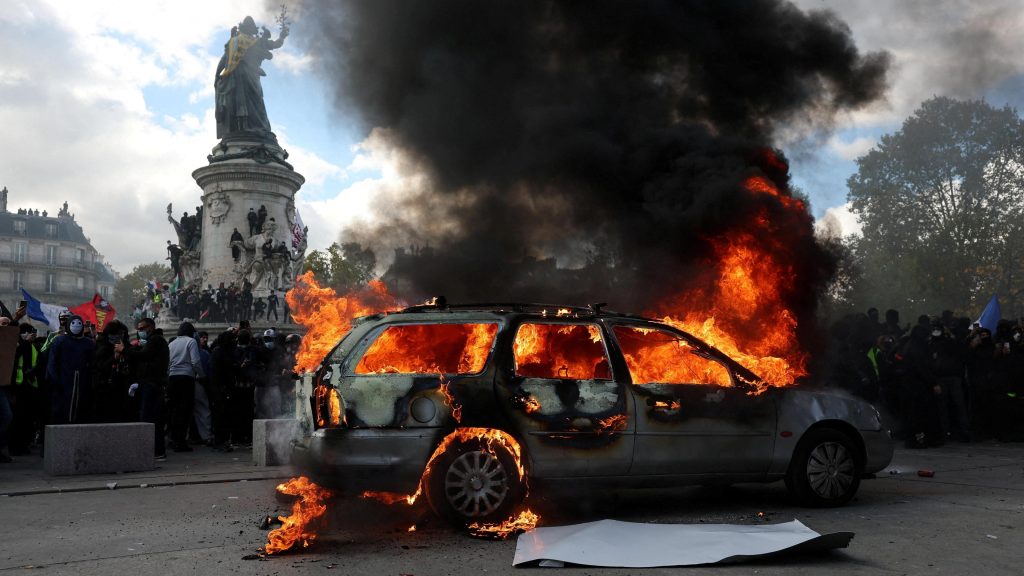
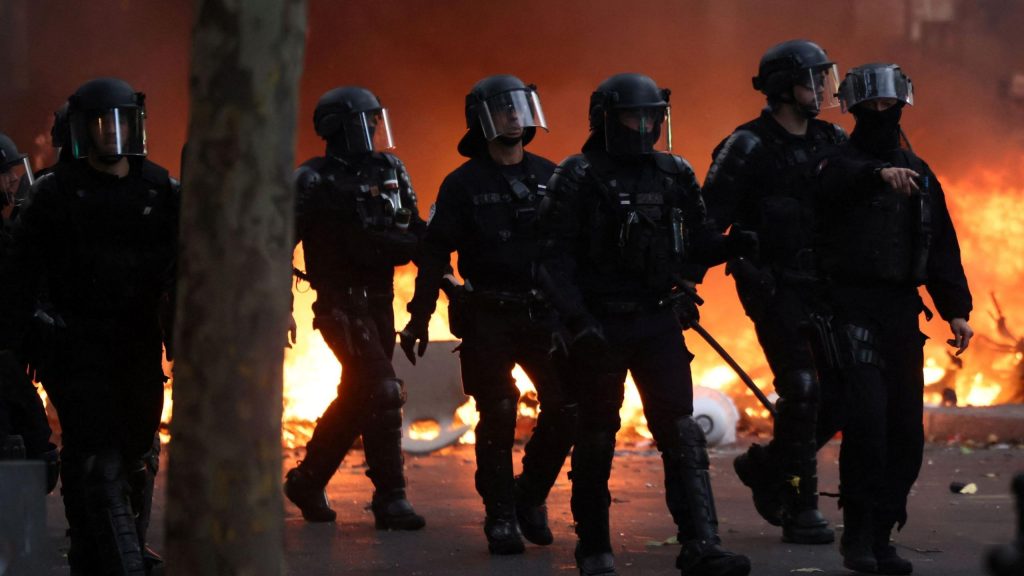
The protests were marred by violence involving different groups, including far-right and black bloc elements. In the unrest described in the news article, the Gilets jaunes are identified as one of the protest groups joining broader demonstrations over hardship in schools and the cost of living; the article notes that the movement demonstrated against cost-of-living hikes for more than a year from 2018 and became one of the longest-lived protest movements in French history.
Related translated reports
Violent clashes, looting and buildings ablaze in France as more than 1,200 arrested after protests
Disorder broke out in cities across the country on a day in which more than half a million joined cost of living protests.
Violence broke out across France on Saturday during the latest day of demonstrations against hardship in schools and the cost of living. At least 1,200 people were arrested during what the French government described as an "escalation in violence" alongside an estimated 550,000 taking to the streets. In Paris, there were significant clashes into the evening with riot police, who used tear gas and water cannon on crowds. Buildings were set alight in the capital and other areas, including in Limoges where a large fire in the town hall caused the roof to partly collapse. Looting broke out in several cities, with widespread vandalism targeting city halls and businesses also reported. Prime Minister Sébastien Lecornu said 150 police officers were injured in the unrest. In the French capital, the main march appeared to be largely peaceful during the afternoon. A group of young people told the BBC that they were "pacifists" who were "just trying to make things change, but nothing is moving". However, as the day wore on some groups lit fires in the street and torched vehicles, including in iconic locations in the city centre like the Place de la République. Shops were ransacked, at least one restaurant was gutted by fire, and the BBC saw fighting breaking out among some of the groups. Riot police were seen charging at one crowd in central Paris and hitting several people with batons. In Lyon, Mayor Grégory Doucet said the burning of the city's tourist office was "a tragedy", telling BFMTV "it breaks our hearts because it's a very iconic, well-known historic building". Local police said "hostile individuals" prevented firefighters from safely tackling the blaze. Fire crews also battled the fire at Limoges town hall, which the local prefecture said caused part of the building to collapse. A young man "had his hand blown off" by a small explosive in Saint-Étienne, the south-eastern city's Mayor Régis Juanico said on social media, adding: "Such a tragedy should never have happened." Hundreds of thousands of students have protested in recent weeks over staff shortages and dilapidated facilities in the country's lycées - secondary schools attended by 15- to 18-year-olds. Their numbers have been bolstered by trade union members and other protest groups. These groups include the so-called gilets jaunes (or "yellow vest") movement, which demonstrated against cost-of-living hikes for more than a year from 2018 - becoming one of the longest-lived protest movements in French history. France's interior ministry said Saturday's protests involved "targeted acts of violence" from "hooded individuals" in places, including parts of the capital and also Marseille, Rennes, Toulouse and Angers. Damage to buildings was reported across France, including in Grenoble, Avignon, Pau, Montpellier and Valence. Clothes and food shops were raided in Paris, while an Apple store in Lille was broken into and emptied. Footage authenticated by BBC Verify showed a tourist train in Grenoble being driven by masked men along a narrow street in the city centre towards at least three riot police officers. While France is no stranger to outbreaks of protest and disorder, this round comes as the country heads into a period of deep political uncertainty. French President Emmanuel Macron will leave office next year and polls suggest April's presidential election could come down to a fight between the leader of the National Rally, Marine Le Pen, and Jean-Luc Mélenchon of the hard-left La France Insoumise party. The latter took part in demonstrations in France and later accused police officers of "unleashing" on protesters, while condemning looting and arson. Lecornu said his comments were "dangerous and cynical". He earlier said police had faced "violence of extreme intensity" and some groups were using the protests as a "warm-up" for the presidential elections, adding: "No-one will impose their political agenda through violence." Le Pen said "legitimate demands" voiced by protesters had been "held hostage by the far left", accusing Mélenchon of fuelling the violence. Macron said: "Those who have broken, attacked the prefectures as well as businesses, looted even our town halls, will be prosecuted and punished." The government has made apparent attempts at concessions, with Education Minister Édouard Geffray promising 3,000 extra supply teachers during a television interview on 8 October. However, the protests have continued and intensified.