2025 French protests
A wave of French demonstrations and disorder in 2025 that escalated into violence, looting and arrests, prompting calls for partial curfews and blame on ultra-left groups.
Also known as: 2025 French unrest · 2025 French riots · 2025 French looting
Overview
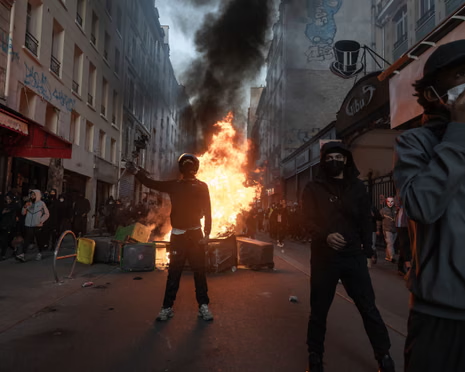
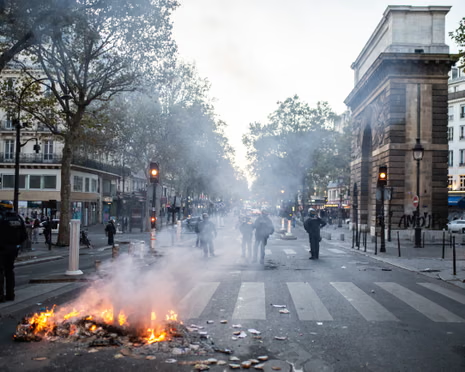
The 2025 French protests were a series of demonstrations that, according to the supplied reporting, began as protests against deteriorating school infrastructure and an overstretched education system. Hundreds of thousands demonstrated across France, and parts of the movement escalated into violence, arson, attacks on public buildings and looting.
Violence and arrests
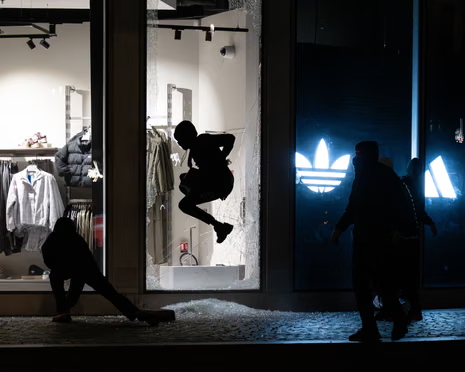
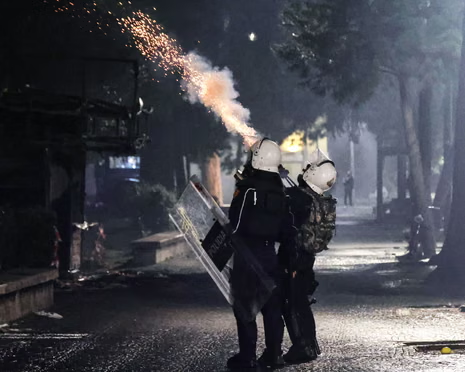
Authorities reported that several public buildings, including a town hall, were attacked and set ablaze, and that an estimated 2,000 shops were ransacked or looted. Nearly 2,400 people were arrested, with about 70 percent described as adults. Almost 1,000 police and gendarmes were reported injured, while around 60,000 security personnel were deployed nationwide.
Government response
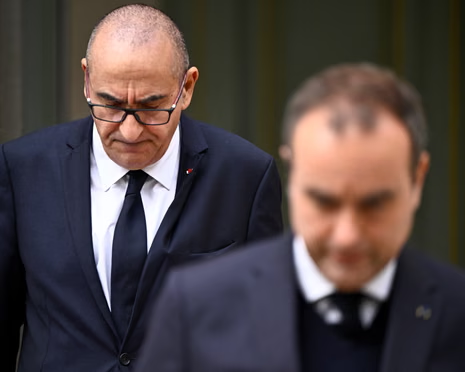
Prime Minister Sébastien Lecornu said prefects had been asked to implement partial curfews in localized urban areas to prevent further disorder. He attributed the violence to extreme-left groups and criminal elements, while President Emmanuel Macron condemned unbridled violence. Interior minister Laurent Nuñez said the security deployment had not been enough to control determined organized groups in major cities including Paris, Marseille and Lyon. Justice minister Gérald Darmanin said intelligence failings had left the state vulnerable and that many arrested people had police records, with about 80 percent being prosecuted.
Repercussions
The disorder affected online resale platforms, including Vinted, Leboncoin and Cdiscount, where authorities and ministers sought to block transactions linked to suspected stolen goods. Financial markets also reacted: French government bond yields rose, widening the risk premium over German debt, and the euro fell against the pound. Several European governments advised citizens in France to avoid demonstrations and follow local authorities. The European Commission condemned arson, looting and attacks on public buildings while affirming the right to peaceful protest.
Limitations
The available sources focus on the violent aftermath and official response and do not provide a complete chronology of the protests or the full range of participants.
Related translated reports
French PM blames ‘ultra-left’ for exploiting protests as he seeks partial curfews – Europe live
Sébastien Lecornu says new measures will be put in place from tonight Macron criticises ‘unbridled violence’ after 2,400 arrests across France French PM Lecornu says he has asked prefects to implement “a number of partial curfews” in certain “localised” urban areas to stop further disorder, which he attributes to “the extreme-left” and some criminal elements. We will no doubt hear more on this from local authorities, as in the example of Marseille ( 10:32 ). Continue reading...
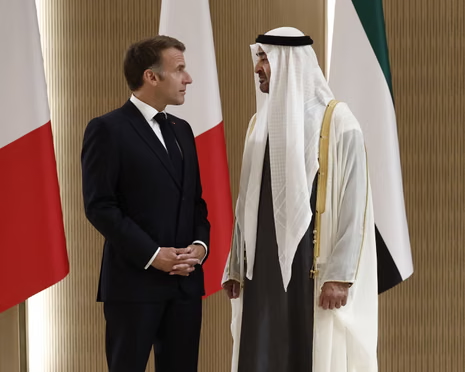
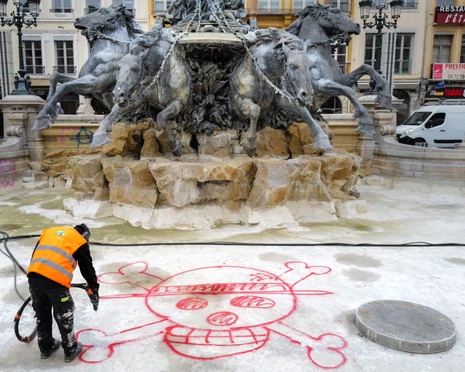
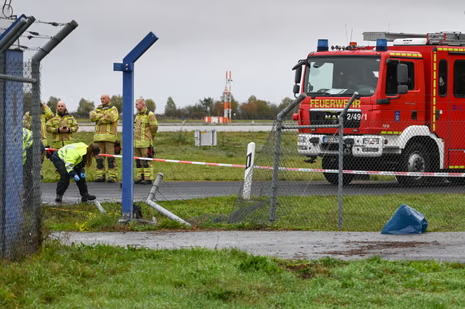
Meanwhile, as France was busy cleaning up its streets, the country’s president Emmanuel Macron – who last night delivered an address to the nation on the events – arrived in Kuwait for a Gulf trip aimed at securing additional petrol and diesel supplies to bring down pump prices, Reuters reported. During the trip, he is also visiting the United Arab Emirates. Europe correspondent Over the weekend, several public buildings including a town hall were attacked and set ablaze and an estimated 2,000 shops were ransacked and looted, authorities have said. Nearly 2,400 people – 70% of them adults – were arrested and almost 1,000 police and gendarmes injured. Interior minister Laurent Nuñez said 60,000 police and other security forces had been deployed around the country, but acknowledged it had not been enough to control determined, organised groups of violent rioters in major cities including Paris, Marseille and Lyon. “You couldn’t look shopkeepers in the eye after hundreds of shops had been looted and say we hadn’t lost control,” the minister told French radio, but added that the responsibility of “rioters, looters and ultra-left militants” should not be glossed over. The justice minister, Gérald Darmanin , also said intelligence failings had left the state vulnerable. “ There’s no good policing without good intelligence, he said, adding that many of those arrested had police records and “about 80%” were being prosecuted. After widespread looting reported over the weekend, several reselling platforms – including Vinted – saw a sudden surge of new (and often heavily mispriced) listings from France , suggesting some sellers , erm , wanted to quickly dispose of some of their new belongings. The French finance ministry is set to chair a round of talks with Vinted, Leboncoin, Cdiscount and other online platforms this evening to make sure they block such transactions. Vinted said this afternoon that it is actively working with authorities to identify and prevent any attempt to resell stolen goods, adding that there is “zero tolerance” for such activity, according to a statement quoted by BFMTV. Business reporter France has been hit by a fresh wave of selling in its bond and stock markets after violent protests over the weekend left public buildings burned, hundreds of shops looted and thousands of arrests across the country. Almost 2,400 people have been arrested in France, the interior ministry said on Sunday, with police deploying teargas in confrontations with protesters . The chaos has spooked investors in France’s government debt, with the yield on its 10-year yield rising by 10 basis points to 4.89% on Monday. Yields rise when prices fall. This widened the difference between the French and German 10-year borrowing costs – which is a metric for the risk premium attached to French debt – towards the highest levels seen in 14 years. Analysts at Goldman Sachs said European sovereign risk was back in focus, with fiscal concerns about France raising the question of whether there could be a repeat of the eurozone debt crisis of 15 years ago. “The risks of disorderly market escalation and real economy contagion look notably lower. B ut the fundamental fiscal challenges for some countries – especially in France – look harder now than in 2011-15 ,” the investment bank said. “The issue of how to deal with fundamental sovereign risk remains unresolved in the Euro area, requiring credible fiscal consolidation,” the analyst added. The two-year French bond yield rose by eight basis points to 3.63%. Concerns about France’s instability knocked the euro down to a 17-month low against the pound on Monday morning, with sterling rising to €1.188. Political reporter On Truth Social today, Donald Trump has repeated his baseless claims that the riots sweeping France – which initially began as protests against deteriorating school infrastructure and an overstretched education system – are due to mass migration . “The migrants have taken over France. They must CLOSE THE BORDERS, FAST!” Trump wrote on social media. Worth remembering that French authorities have not linked the riots to immigrants. Over the weekend, hundreds of thousands demonstrated throughout the country. However, chaos erupted at a number of protests, which saw buildings burned, hundreds of shops destroyed and looted and at least 2,400 people arrested. French president Emmanuel Macron and the prime minister, Sébastien Lecornu, have blamed the violence on “factious” ultra left-wing groups. Meanwhile, several European governments advised citizens travelling to France to avoid large crowds and exercise caution, warning of a deterioration in security conditions after thousands were arrested and shops looted in protests over the weekend, Reuters reported. Italy said its citizens should register their presence in France on a website or an app to enable them to be located, as it warned them to avoid large crowds and exercise extreme caution. The German foreign ministry said further riots in the coming days couldn’t be ruled out and urged German nationals to follow instructions from local police. It warned citizens that they could face fines or claims for damages if they failed to leave unauthorised demonstrations when asked to do so. Czechs in France are advised to avoid demonstrations, marches and public gatherings, ČTK news agency reported. The security situation in France has deteriorated, according to the Czech foreign affairs ministry. Poland said in its country guidance that visitors should avoid places where demonstrations are taking place, though there was no change to its overall guidance about whether France was safe to visit. The Dutch government in an advisory last updated on 7 October warned travelers to France to avoid protests. Similarly, Denmark, Sweden , Finland and Norway have issued advisories urging their citizens in France to avoid demonstrations and follow the guidance of local authorities. Albania has also experienced days of disturbances, and today prime minister Edi Rama has accused protesters of crossing a “red line” after a police station was set ablaze during anti-government demonstrations. “Protests are a right, whereas violence is a crime; this red line must be drawn clearly at this critical stage of our democratic development,” AFP reports Rama said in a Facebook post. About 300 people have been injured in the clashes, more than half of them police, according to the authorities. Petrol bombs were thrown into a police station and the interior ministry entrance on Sunday. The British prime minister has added his voice to the chorus of politicians condemning the violence in France . A spokesperson for Andy Burnham in Downing Street said “Clearly, the violence we’re seeing on the streets of France is unacceptable. While the power to protest is at the heart of democracy, this can never excuse violence.” British nationals in France were told by the UK government to “follow local advice from the authorities” if they were concerned about the situation. German police have said that two men turned themselves in after a security fence was damaged at the airport in the city of Leipzig. The incident had sparked fears as it took place at the same airport where an attack with an explosives-laden drone happened in August, an incident German authorities attributed to Russia . Authorities had been investigating how a gaping hole was cut into a fence around the airport. The two men say they lost control of the car and crashed through the fence, then left the scene of the accident and arranged for the car to be towed away. AP reports that German police say the car has been seized and the investigation is continuing. As promised, we have an update from Sweden , with the Centre party’s Elisabeth Thand Ringqvist given a chance to lead talks about the new government in the country. Thand Ringqvist welcomed the opportunity to lead the discussions and said she would look to progress the talks, but made it clear she had no intention of becoming the next prime minister. She will try to break a deadlock among the four opposition parties that emerged with a theoretical majority in the new parliament after last month’s elections, but continue to disagree on the composition of the future government. The Centre party has ruled out being in government with the Left, while the Left has demanded a place in government in return for its cooperation. Without an agreement, the opposition bloc would not have a majority in the new parliament. Thand Ringqvist will have to report back on the progress of her talks by the end of the week. The move by the parliament’s speaker Andreas Norlén comes days after the Social Democrats leader and the September election winner Magdalena Andersson failed in her efforts to unite the opposition in the first attempt. Outgoing prime minister Ulf Kristersson told Swedish broadcaster SVT it was the “logical” decision to give the theoretical opposition bloc another go at forming the next administration. The European Commission has condemned “unacceptable” acts of “arson, looting and attacks on people or public buildings” in France over the weekend, but stressed the right to peaceful protests was “a fundamental right … and must be protected.” EU internal affairs spokesperson Markus Lammert said: “The right to peaceful protest is a fundamental right in all democratic countries and must be protected. Those who demonstrate peacefully must not be conflated with those who commit violence. Arson, looting and attacks on people or public buildings are unacceptable. We support the efforts of the French authorities to protect people, property and public institutions in full respect of fundamental rights. It is national authorities that are competent for law enforcement matters, and investigations are currently ongoing at national level.”