Alberta independence referendum
A 2026 Alberta referendum question asking voters whether the province should remain in Canada or move toward a binding vote on separating from Canada.
Also known as: 2026 Alberta independence referendum · Alberta separation referendum · Alberta sovereignty referendum · Alberta independence question
Overview
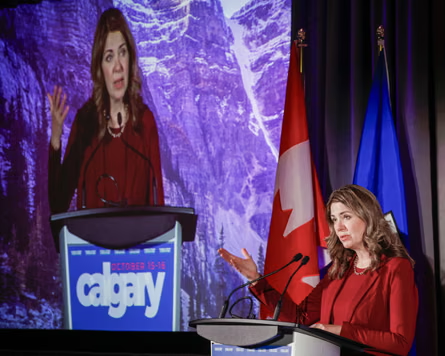
The Alberta independence referendum is a provincial ballot question held as part of the 2026 Alberta referendums. It asks voters to choose between remaining in Canada and taking steps toward a binding referendum on separating Alberta from Canada. The question was announced by Premier Danielle Smith on May 21, 2026, after she had earlier announced nine other referendum questions for a vote scheduled on October 19, 2026. Some reporting has also described the issue as asking whether Alberta should hold a second, binding independence referendum.
Background
Alberta separatism, also referred to as Alberta independence or Alberta sovereignty, encompasses movements that have advocated separating the province from Canada. Supporters have pointed to a perceived power disparity with Ottawa, dissatisfaction with national economic policy, especially around the petroleum industry and equalization payments, and broader feelings of Western alienation. Some separatist groups have also supported Alberta joining the United States.
Political context
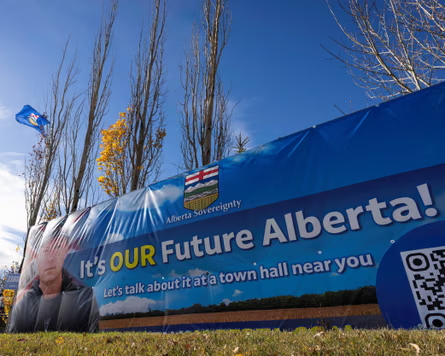
The 2026 question developed from advocacy under Alberta's Citizen Initiative Act, including a petition campaign by Stay Free Alberta that collected more than 300,000 signatures calling for a provincial referendum on separation. The Republican Party of Alberta supports a binding referendum on independence and a subsequent non-binding referendum on joining the United States. The vote has exposed divisions within Alberta and within the separatist movement itself.
Debate
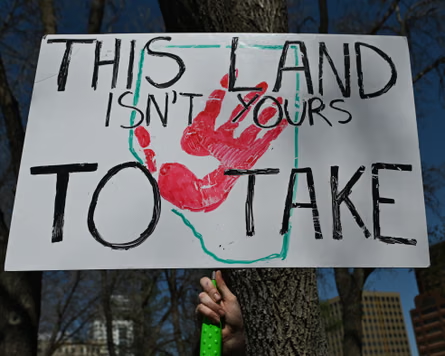
Opponents of independence have emphasized the economic costs and uncertainty of separation, while some separatist advocates have argued that a transition could be planned and managed. First Nations groups have also raised legal and constitutional concerns, noting that treaties signed before the creation of Alberta affect the province's status and arguing that Alberta does not have an unrestricted constitutional right to separate.
Related translated reports
‘This is not poker’: Alberta goes to polls in referendum that has exposed divisions, not least among separatists
Voters to be asked whether province should remain part of Canada or hold a second, binding independence vote Albertans are going to the polls to decide their place in Canada, in a referendum that has exposed deep divisions within the province, not least in the separatist movement itself. On Monday, voters will respond to the question of whether Alberta should remain in Canada, or hold a second, binding independence referendum. Continue reading...
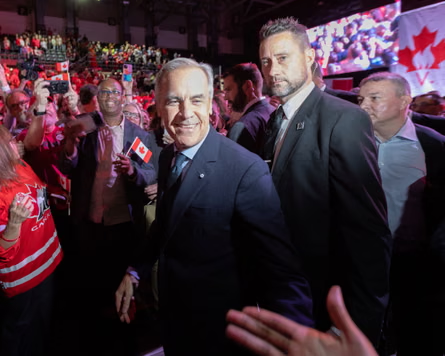
Albertans are going to the polls to decide their place in Canada , in a referendum that has exposed deep divisions within the province, not least in the separatist movement itself. On Monday, voters will respond to the question of whether Alberta should remain in Canada, or hold a second, binding independence referendum. A minority have long argued that separation is the only way to address their belief that Alberta is short-changed by its financial relationship with Ottawa, and prevented from fully exploiting the province’s vast fossil fuel reserves. Any enthusiasm either side might have held headed into the referendum was muted after a deadly fire broke out at a major military base in the province. On Saturday afternoon, a blaze tore through the CFB Wainwright and into the nearby town. Canada’s armed forces announced with “profound sadness” that there had been multiple deaths and injuries. The premier of Alberta, Danielle Smith, argued for years that a referendum was not needed, but called one anyway after pressure from some within her United Conservative party. Nevertheless, Smith did not campaign in favour of independence, saying in June she estimated the cost of separating at about C$400bn (£212bn) for the transition and another $25bn-$50bn in annual costs associated with starting a new country. Smith’s caution prompted some of her supporters to accuse her of betraying the independence movement. Opponents of independence have focused heavily on the costs of separation, with the University of Calgary’s school of public policy saying in June it could be up to $170bn over a five-year period and be highly unpredictable in the long term. The issue has not divided neatly along partisan lines. The former premiers Jason Kenney and Rachel Notley – from the rightwing Conservative and leftwing New Democratic party – have appeared on stage together, setting aside a bitter ideological rivalry that more usually defines Albertan politics. Mark Carney, who grew up in the province, visited both Calgary and Edmonton last week to campaign for a united Canada. “At this pivotal moment, Albertans have a choice: to build a stronger Alberta and a greater Canada to leave for our children, or to burden them with years of deep division and great uncertainty,” the prime minister told a raucous crowd. Carney, who previously served as the governor of the Bank of England, saw first-hand the effects of the Brexit vote and the economic upheaval that followed. “This is not poker. A vote against Canada is a dangerous bluff that will lead to years of deep uncertainty and lost opportunities,” he said. “Our country and your futures are too precious to play games with.” Carney, whom recent polls identify as the most popular politician in Alberta, joined the former deputy premier of Alberta Thomas Lukaszuk at a rally for the latter’s Forever Canadian group. Lukaszuk has driven more than 40,000km (24,855 miles) around Alberta in a 1992 motorhome named the Unity Bus and distributed at least 100,000 lawn signs. Rather than campaigning frequently, Carney has pointed to big projects his government is looking to move ahead with that would benefit the province, including a pipeline to the Pacific coast to increase the flow of Alberta crude oil to Asia. “I won’t sugar-coat it: some of those threads have needed to be repaired. The frustrations that many Albertans have felt are real,” said Carney. Energy policy has long been at the heart of Alberta’s grievance with Ottawa, stemming from the 1980 national energy programme, which sought greater federal control over the energy sector, provoked fierce opposition in Alberta and helped erode Liberal support across western Canada. The sense that the province’s wealth was being siphoned eastward is older still: a 1915 cartoon, “The Milch Cow”, depicted Alberta, Saskatchewan and Manitoba as farmers feeding a cow whose milk was funnelled into buckets labelled Ottawa, Toronto and Montreal. “Growing up, I remember. I remember how Ottawa made Albertans feel like our resources weren’t our own,” Carney told the crowd. “And more recently, we were made to feel that our energy contributions were running against the tides of history.” The movement seeking to capitalise on those grievances, however, has been marked by competing interests, personal rivalries and allegations surrounding some of its leading figures. Jeff Rath, a bombastic lawyer linked to the Alberta Prosperity Project, is alleged to have mismanaged millions of dollars of First Nations trust funds, while David Parker, a longtime rightwing political organiser, was at the centre of a voter-data scandal that exposed the personal information of nearly 3 million Albertans and remains under investigation. Keith Wilson, one of the principal intellectual and legal architects of the province’s modern separatist movement, recently published the Alberta transition plan , a 214-page blueprint for turning it into an independent country. Rejecting comparisons to Brexit and the economic fallout, Wilson said: “Every single thing we found that needs to be addressed to do the transition is absolutely doable,” calling most of the tasks “super easy”. Wilson dismissed the idea that negotiations between an independent Alberta and Canada’s federal government would be acrimonious and lengthy. “It would be economic suicide for them to challenge Alberta,” he said. “You want to cut off trade with us? OK. By the way, go buy axes and chainsaws because you’re going to have to cut down all the maple trees to keep warm this winter because you’re not going to get our energy products.” Even within the separatist camp, there are doubts about how quickly independence could be achieved. Bill Jones, a member of the Wildrose Independence party, said its leaders were moving too quickly without the institutions a new country would need, from a police force to a pension system. “We – Alberta – were always meant to be a colony, to get resources that were here to go east,” said Jones. “And that mindset is still there.” “I don’t see the evidence for our independence. If we go out today, we’d be a failed state for generations. The great-great-grandchildren would be still suffering. And that’s the problem.” Monday’s referendum will also include nine other measures unrelated to separation, including proposals affecting social programmes, judicial appointments and the senate. One remain campaign has distributed thousands of “ no to the nine ” lawn signs around the province. Even some separatists, angry at Smith, have started a “ decline the 9 ” campaign. Smith, for her part, has pushed a “ yes to the rest ” message in response. In Calgary, the city’s mayor said he was “duty bound” to speak out about the perils of an attempt to fracture the country. “There will be catastrophic impacts that would arise from separation,” said Jeromy Farkas. “And the unfortunate bullshit implication of separation is that it’s invited a conversation about who is a ‘real Canadian’? Who is a ‘real Albertan’? If you are living here in Calgary, you are welcome here. We need to continue to signal that. We need to telegraph that stability. “We stand to lose so much from simply even having this debate.” In October, further details emerged about meetings between unelected Alberta separatists and both Republican operatives and staff at the US state department . Among items allegedly discussed were how oil royalties could be directed to the US in exchange for assistance establishing a new country. They also allegedly offered up Alberta’s fresh water resources. No matter the results on Monday, the referendum could have looked far different if not for the intervention of First Nations, which successfully sued to force the Alberta government to either dismiss the question of separation or change the wording. Key to their argument was the fact that the land of modern-day Alberta is covered by five treaties signed with the crown before the creation of the province. The president of the Blackfoot Confederacy, Chief Troy “Bossman” Knowlton, said: “These treaties are living documents, but the ignorance of the separatists, and their bigotry, does not allow their mind to accept the fact that they’re not symbolic documents. They have power, and the reality is Alberta does not have the constitutional right to separate.” Knowlton said that if separatists had proactively reached out to First Nations before pushing ahead with independence, it might have led to a different outcome. “But they treated us as a speed bump they could just drive over.” He added that the First Nations’ legal victory was followed by what he viewed as recriminations from the province, including an unexplained halt to talks on land claims and cooperation with Alberta’s government. “At the end of the day, we want Alberta to continue to be a beacon of light,” he said. “Because when the first newcomers came to these lands centuries ago, that’s what our chiefs said: we’ll share these resources we have here. So do we want prosperity for Alberta? You’d better believe it.”