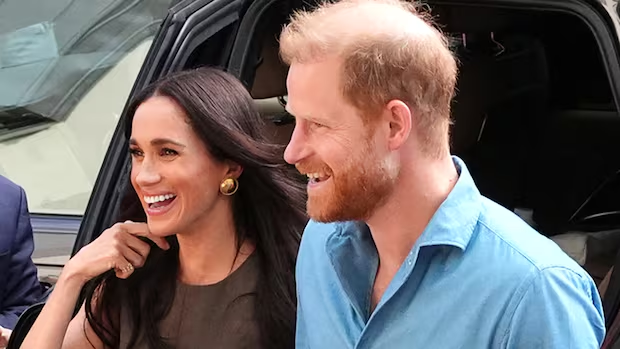
British monarchy
The British monarchy is the constitutional, hereditary institution through which a monarch serves as head of state of the United Kingdom, supported by a royal family that performs ceremonial, diplomatic and representational duties.
Also known as: Monarchy of the United Kingdom · British royal family
Overview
The British monarchy, formally the monarchy of the United Kingdom, is a form of government in which a hereditary monarch reigns as head of state, with powers regulated by the British constitution. It differs from absolute monarchy because the monarch is not alone in making decisions and must exercise authority within established legal, conventional and parliamentary limits. The monarch is frequently perceived as a visible symbol of national unity.
Since 8 September 2022, the monarch has been King Charles III, who ascended the throne after the death of his mother, Queen Elizabeth II. The monarch and the immediate royal family undertake official, ceremonial, diplomatic and representational duties. In practice, the monarch's role includes being Head of the Armed Forces, bestowing honours and appointing the prime minister in a non-partisan manner.
Constitutional and political role
Although formally the monarch has authority over the government, that authority may be used only according to laws enacted in Parliament and within constraints of convention and precedent. The United Kingdom is therefore understood as a constitutional monarchy, a system in which the monarch's powers are limited by a legal framework rather than exercised independently.
Research sources also note that the monarchy has been described as a unique soft power and diplomatic asset. This reflects the institution's role in representation and public diplomacy as well as its constitutional functions.
Historical development
The monarchy traces its origins to the petty kingdoms of Anglo-Saxon England and early medieval Scotland, which consolidated into the kingdoms of England and Scotland by the 10th century. The Norman and Plantagenet dynasties expanded royal authority throughout the British Isles, including the creation of the Lordship of Ireland in 1177 and the conquest of Wales in 1283.
The evolution of the British monarchy into a constitutional and ceremonial institution is closely tied to the development of the British constitution. In 1215, King John agreed to limit his powers under Magna Carta, and English kings began summoning Parliaments to approve taxation and enact statutes. Over time, Parliament's authority expanded at the expense of royal power. The Crown of Ireland Act 1542 granted English monarchs the title King of Ireland, and from 1603 the English and Scottish kingdoms were ruled by a single sovereign under the Union of the Crowns. The monarchy was abolished during the Interregnum between 1649 and 1660 before being restored.
Length of reign and continuity
Queen Elizabeth II became the longest-reigning monarch in British history on 9 September 2015 when she surpassed Queen Victoria. She later became the first British monarch to celebrate a Sapphire Jubilee and to reign for 70 years. At her death aged 96, she had reigned for 70 years and 214 days.
Relatability and public image
A recurring challenge for the British monarchy is how to appear relatable to a public that lives far beyond royal walls. Recent examples include Catherine, Princess of Wales, speaking about sharing domestic duties with Prince William and riding the London Underground with Princess Charlotte. Royal commentators have described these moments as attempts to show that, despite extraordinary circumstances, working royals experience the same human concerns as other people.
Commentators note that the emphasis on relatability has long historical roots. Since the political upheavals of the 19th century, which saw various European monarchs lose their thrones, monarchies have increasingly recognised that public support depends not only on elite backing but also on appearing accessible. Queen Victoria's Highland journal has been described as an early example of a monarch presenting a more relatable image.
The pursuit of relatability also creates a balancing act. Removing too much pomp, pageantry and mystique can raise questions about what makes the monarchy distinctive, while too much distance can weaken its connection with the public. News coverage has linked the current focus on relatability to concerns about continuity, including the perceived need to reassure the public about the preparedness of the heir to the throne.
Related translated reports
Doing the dishes and riding the subway? Why the royals keep trying to look relatable
Members of the Royal Family are offering glimpses into their everyday lives, the most recent examples of attempts to deal with a fundamental challenge that is a priority for the monarchy: how to appear relatable to a public that lives far beyond royal walls.
It all seemed a bit prosaic, really, chatting about doing the dishes with her husband or riding on the subway with her daughter. But there was Catherine, Princess of Wales, telling seniors how she and Prince William share the washing-up duties, and a few days later, taking a trip on the London Underground with Princess Charlotte. Beyond that glimpse into their everyday lives, though, these recent moments reflect an attempt to deal with a longstanding and more fundamental challenge that is a priority for the monarchy: how to appear relatable to a public that lives far beyond royal walls. "The monarchy isn't trying to convince us that William and Catherine are ordinary people," royal historian Justin Vovk said in an interview. "It's about trying to convince us that despite extraordinary circumstances, they experience the same human concerns as everybody else." Efforts to do that convincing have long been a priority for monarchies throughout Europe. Catherine, Princess of Wales, right, sits with residents onboard a West Sussex Minibus, a volunteer-led community transport group, during a visit to Pulborough, southern England, on Sept. 30. (Arthur Edwards/AFP/Getty Images) "Since … the political upheavals of the 19th century, which saw various monarchs … losing their thrones … there was a real consciousness that you no longer needed just the support of the elite, you needed to be relatable," said Judith Rowbotham, a social and cultural scholar and visiting research professor at the University of Plymouth in southwestern England, in an interview. "Queen Victoria writes her highland journal — suitably sanitized — but that's an attempt to make herself relatable." What's thought of as relatable nearly 200 years ago differs from what William and Catherine and other working royals may try to do or show today. But the overall significance is the same, Rowbotham suggests. "Relatability is something that modern monarchies, certainly modern European monarchies, see as genuinely important," she said. "Particularly at a time when people are worried about money, when people are questioning government actions over taxes … the fact that yes, they live in a lavish house, but they live ordinary lives in a lavish house … that's the impression they want to give, that they don't have live-in staff, they're not surrounded by flunkies and footmen." As much as there is that desire to appear relatable, there is little to suggest it can ultimately eliminate the actual separation between the monarchy and the public. This 1969 photo is one of a series taken to show the informal life of Prince Charles, centre, as he sits with Queen Elizabeth, background centre, Prince Philip, second from left, Prince Edward, left, Princess Anne, background, and then Prince Andrew, right, at Sandringham House, in Sandringham, England. (The Associated Press) "There will always be distance between the monarchy and the people," said Vovk. "But all of [it], stretching from Queen Victoria up to William and Catherine is about trying to close as much of the distance as they can that is within their control." And there's a basic reason behind that, Vovk suggests. "The monarchy's relevance, its viability, is now predicated on its perceived relatability and accessibility," he said. "People don't want a Royal Family that is distant and isolated and feels unfamiliar. They want a Royal Family that they feel they can connect with, that they feel like if they were to bump into them on the street, they could just go up to them and talk to them." That, however, creates something of a paradox. "If you strip away all of the pomp and the pageantry and some of the mystique around royalty, it raises the question of what makes it so special, anyway? Why have it at all?" Vovk said. "So it is a balancing act." Pomp and pageantry are on full display as King Charles, left, and Queen Camilla, right, make their way along the Mall following their coronation on May 6, 2023, in London, England. (Charles McQuillan/The Associated Press) Other factors can play into the monarchy's focus on relatability at any given time. Queen Victoria's seclusion, particularly after the death of her husband, Prince Albert, drove concerns about relatability during her reign. Rowbotham sees another circumstance closely connected to the monarch at play right now. "We don't know how long Charles is going to be around, given that he's in his 70s, given that he is still being treated for cancer," she said. "This time, it's a question of assuring the monarchy's survival by making it clear that there is an heir who is well-prepared and ready to take over the duty. "That's why I think … they're paying so much attention to the whole issue" of relatability, Rowbotham said. With move to 'forever home,' Prince and Princess of Wales could offer hint of 'more egalitarian' monarchy Vovk sees a greater level of transparency from the current royals compared to previous generations when it comes to relatability. "We're seeing the curtain being pulled back on the aspects of royal life that are no different or at least have minimal difference from the average person — so, you know, siblings bickering, not liking doing chores, spouses sharing domestic responsibilities." On the constitutional or political side of the monarchy, however, he sees less revelation. "There's still some degree of gatekeeping going on here with what amount of royal life is being disclosed and what isn't. That will always be the case with something that is connected with the political life of the nation." Benjamin Santiago, left, teaches Prince Edward, right, how to drive a robot using a controller at Queen's Park in Toronto on Oct. 2. (Grant and Martin Curtis/Duke of Edinburgh's International Award — Canada) Benjamin Santiago had never had an experience like it. "It's not every day that you get to give a robot controller to royalty and teach them how to drive it," the Grade 12 student at St. Joseph's Catholic High School in London, Ont., said in an interview. Benjamin, a 17-year-old member of the school robotics team, had that opportunity earlier this month when he passed the controller to Prince Edward, the Duke of Edinburgh, at an event in Toronto. The gathering that drew education leaders, school board representatives, industry partners and students to Queen's Park highlighted the recent announcement by the provincial Ministry of Education to expand access to the Duke of Edinburgh Award program to schools across Ontario. That comes as the award, founded by Edward's late father, Prince Philip, is evolving and working to blend trades and skills-based experiences into public education to boost opportunities for young Canadians. "It was amazing. I'm super grateful," Benjamin said of his opportunity to meet Edward. "The prince was super enthusiastic and really just interested about who we are and what our goals were as Ontario students." In the royal encounter, Benjamin saw the potential to boost support for an area of education close to his heart. Benjamin says Prince Edward was 'super enthusiastic and really just interested about who we are and what our goals were as Ontario students.' (Grant and Martin Curtis/Duke of Edinburgh's International Award — Canada) "If someone like the prince can feel the controller and feel how it is to be an engineer in high school and then later on become an engineer in post-secondary … the funding towards programs like robotics may increase." Edward has had a longstanding interest in youth and promoting opportunities for them, something that has been a frequent focus on his visits to Canada. "He really took the time to really focus his attention on the students, which is something that I really personally admired about this, but also to make sure that every student felt seen and heard," Laura Briscoe, senior director for business development, communications and experiential education for the Duke of Edinburgh's International Award — Canada, said in an interview. "He wants to know the realities of youth in Canada and how the award can support their lifelong learning and development, and I found him to be very responsive and open to hearing feedback, whether it's constructive feedback, what are the barriers, where are the gaps, what are we missing?" More 'soft power signals': On heels of King's visit, Prince Edward takes week-long trip to P.E.I., Ontario Prince Edward makes royal visit to Canada — pandemic-style The Queen's Park gathering was a "wonderful experience" for everyone there, said Kathy Cepo, Benjamin's chemistry teacher and one of his robotics coaches. "The prince was so engaged with these students and they felt like they were the only people in the room," she said in an interview. "He was praising them the entire time and so proud of them." Ukraine President Volodymyr Zelenskyy, left, speaks with King Charles, right, during an audience at Buckingham Palace in London on Wednesday. (Aaron Chown/Getty Images) Few world leaders have shaken hands with King Charles as often as the president of Ukraine. Volodymyr Zelenskyy was back in the U.K. this week, meeting Charles at Buckingham Palace on Wednesday. "I thank His Majesty King Charles III for the audience," Zelenskyy posted afterward on X . "It is important for me to have the opportunity to personally thank him for his unwavering support for Ukraine. We appreciate all the assistance provided by the United Kingdom." It was his third meeting with the King this year, and came as the U.K. doubled down on support for Ukraine and called for its international partners to increase pressure on Russian President Vladimir Putin to respect the U.S. call for an energy ceasefire. The King meeting with Zelenskyy "on a bit of a consistent basis is a way of … reaffirming Britain's overall support for Ukraine, even though governments are changing," said Vovk. "It's a way to reassure President Zelenskyy that the United Kingdom stands with Ukraine." While a monarch is meant to be above politics, meeting with Zelenskyy would also come at the request of the U.K. government. "The King isn't being party political, taking sides. He's doing his constitutional duty," said Rowbotham. Meghan, Duchess of Sussex, left, and Prince Harry, right, greet well-wishers as they arrive at the Community Recording Studio, a youth and community charity that offers a wide range of creative activities, sports, mentoring and youth development programs, in Nottingham, England, on Thursday. (Christopher Furlong/Getty Images) They aren't official working members of the Royal Family anymore. But the casual passerby could be forgiven for being a bit confused Thursday as Prince Harry and Meghan, Duchess of Sussex, carried out events connected with their private charitable interests in the city where they did their first public outing as an engaged couple nearly a decade ago. It was their first joint appearance in public since they returned to the U.K. from California in late August. "It's great to be back," Harry said. "Wonderful and great to be back in Nottingham, too." Charles confirms Harry and Meghan to remain non-working royals after their return to U.K. They began by visiting a recording studio run by a youth and community charity that has received support from a 1.1-million-pound ($2.1-million Cdn) donation announced by Harry last year. At their next stop at the Himmah charity, which tackles food poverty, Meghan was reunited with four contributors to a charity cookbook released to raise funds in the wake of London's 2017 Grenfell Tower fire disaster. She had donated 10,000 pounds ($18,800 Cdn) from the book's proceeds to help the Himmah hub. Thursday's visit was the first pre-arranged and advertised occasion since their return, Rowbotham said, but it was not an official royal event. Harry and Meghan moving back to the U.K. "However, it was carefully arranged to ensure media reportage and a suitable turnout of sympathetic public by choosing a location — Nottingham — which was … where they were for their first post engagement royal visit." But it was on a much different scale, she said. "No local dignitaries were there in official capacity." Vovk saw the visit as their first outing as part of "the new Sussex court." He also sees the potential of a "problem of optics" for the monarchy where "Harry and Meghan are engaging in activities that to the average observer look really more or less the same [as] what the monarchy does." Prince Harry and Meghan, Duke and Duchess of Sussex, visit the Himmah Hub in Nottingham, England, on Thursday. (Annabel Lee-Ellis/The Associated Press) Vovk expects to see an escalation in public appearances and informal events from the senior working royals. "I think the monarchy is now going to have to pick up the pace in terms of the kinds of engagements and public accessibility they're doing just in order to keep that clear distinction between Harry and Meghan [having] titles but they are technically private individuals from a legal, constitutional perspective," he said. Why Prince Harry and Meghan face more challenges after their return to the U.K. The 'shockwaves' of Prince Harry and Meghan's return to the U.K. The biggest danger and concern for the royals, he said, is "that the brand itself could be misappropriated, misrepresented, in a way that has never really been a factor before." Rowbotham doesn't see a threat to the institution itself, although she expects it will be discussed as such. "We like sitting quietly and reading. Occasionally, when I'm deep in a book, I'll hear him roaring with laughter about something." — Queen Camilla, in a television documentary, offering some insight into the reading habits of her and her husband, King Charles. Catherine, Princess of Wales, third from left, and Prince William, third from right, help behind the till during a visit to an Ikea store in Belfast, Northern Ireland, on Oct. 9. (Phil Noble/Getty Images) British police say search warrants they secured to search properties linked to Andrew Mountbatten-Windsor had been issued unlawfully and must be quashed, but said the investigation into King Charles's younger brother was ongoing. [CBC] Andrew Mountbatten-Windsor faced a 1.8-million-pound ($3.4-million Cdn) bill to cover repair and restoration of his former Royal Lodge home in Windsor after the lease was officially surrendered. King Charles reportedly covered some of the costs. [The Guardian] King Charles spoke of his " special connection" to Wales while delivering an address to the Welsh Parliament. [The Independent] Zara Tindall has opened up about the tough-love upbringing she received from Princess Anne and Mark Phillips — including being told she would get no help when she decided to follow her parents into top-level equestrian sport. [Daily Mail] The Prince and Princess of Wales met hundreds of royal fans in south Belfast as part of a surprise visit to Northern Ireland. [Belfast Telegraph] Prince William brought traffic to a halt just down the road from Buckingham Palace to play cricket with some of the game's biggest names. [The Independent] Prince William joins cricket stars for an informal game on The Mall in London, England, on Tuesday, in the leadup to the annual Earthshot Prize awards in Mumbai next month. (Isabel Infantes/Reuters) Senior Writer Janet Davison is a CBC senior writer and editor based in Toronto. With files from Reuters