Overview of Panama’s Magnitude 7.7 and 6.6 Earthquakes and State of Emergency
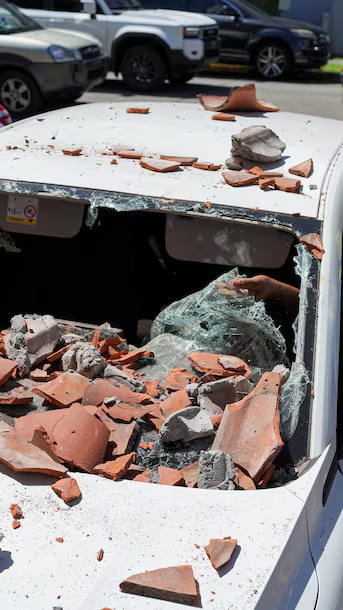
On Friday, Panama was struck by powerful magnitude 7.7 and 6.6 earthquakes and more than 100 aftershocks, causing widespread infrastructure damage across all 10 provinces and 2 Indigenous territories and injuring 27 people. However, thanks to strict building codes, no deaths or missing persons were reported. On Saturday, the Panamanian government declared a state of emergency, while the United States and several Latin American countries quickly provided humanitarian aid and material support. The Panama Canal continued normal operations, and the main airport resumed service after a brief disruption.
Background
- The Panama Canal is a major global trade route, and its operational status has significant implications for global supply chains.CBC
Key actors
Confirmed facts
How sources covered it
- Focuses on the overall scale of earthquake damage, the aftershock activity and the role of strict building codes in preventing widespread deaths, while also highlighting the rapid international aid response.GUARDIAN
- Provides more detailed geographic information about the epicenter, emphasizes the operational recovery of critical infrastructure such as the Panama Canal and the airport, and describes the specific difficulties faced by communities cut off by landslides.CBC
Reactions
- The U.S. Department of State mobilized a disaster response team to assist with search-and-rescue and assessments and pledged $5 million in aid; U.S. Southern Command delivered 2,000 pounds of food using two helicopters supported by the State Department’s Bureau of International Narcotics and Law Enforcement Affairs.GUARDIAN CBC
Impact analysis
- [Occurred] Temporary transport and logistics disruption: Tocumen International Airport briefly suspended operations after the earthquakes but resumed service several hours later; Panama Canal operations were unaffected.CBC
- [Expected] Post-disaster reconstruction and recovery: with large numbers of public schools and homes damaged and some communities still cut off, the Panamanian government and international aid funding, such as the U.S. $5 million contribution, are expected to be heavily directed toward infrastructure repairs and the relocation and support of affected residents.GUARDIAN CBC
Open questions
Timeline
- Tocumen International Airport temporarily suspended operations and reopened several hours later.CBC
Related news
Panama declares emergency after twin earthquakes and aftershocks strain communities Click to expand the full report Collapse full report
Panama's government declared a state of emergency Saturday after Friday's 7.7- and 6.6-magnitude earthquakes caused damage in all 10 provinces and two Indigenous territories, with more than 100 aftershocks reported and no deaths attributed by officials.
Panama's government declared a state of emergency on Saturday after two powerful earthquakes on Friday - one magnitude 7.7 and another 6.6 - generated aftershocks that shook communities for hours. Seismologists recorded more than 100 aftershocks, including ones measuring magnitude 5.8, 5.5 and 5.2. Officials did not attribute any deaths to the quakes, but reported damage in all 10 of Panama's provinces and two Indigenous territories, with buildings toppled near the epicentre and evacuations across the Central American country. The earlier quake, also felt in neighbouring Colombia, was centred about 10km (6 miles) south-west of the remote community of Pitaloza Arriba, in the central province of Herrera, according to the US Geological Survey, and struck at a depth of 10km (6 miles). Presidential minister Juan Carlos Orillac announced the emergency at a news conference in the capital, Panama City, saying homes, schools, healthcare facilities, roads and hotels were among the damaged facilities. Malitzie Rivera, deputy director of the National Civil Protection System, said 27 people had been reported with injuries, ranging from minor to moderate. Most of the damage was concentrated in the central provinces of Veraguas, Herrera, Cocle and Los Santos. The Civil Protection agency reported that about 420 homes and the same number of public schools had been damaged, along with seven hotels, at least 13 churches and nine bridges. In La Villa de Los Santos, a colonial-era community about 64km (40 miles) north-east of the epicentre, homes and a historical Catholic church collapsed, and people who spent the night on the streets were waiting for the government's guidance on what to do next. Tony Jimenez, whose home partially collapsed, said while sitting with relatives under a tent: "We've been here since 1 pm yesterday; we haven't moved. It was a terrible thing. I can tell you with absolute certainty that in my 90 years, I had never experienced anything like it. It was intense - truly intense." Officials did not report any missing people on Saturday but said some communities remained cut off due to landslides and road damage. Carlos Valdes, head of the seismology department at the National Autonomous University of Mexico, said the country appeared to have avoided widespread deaths, and that this could be due to strict building codes, especially those governing construction of skyscrapers in the capital. Messages of support and offers of assistance came from across the region shortly after the earthquakes. Mulino thanked fellow Latin American leaders on Friday, saying he had spoken with the presidents of Chile, Uruguay and Guatemala, among others. The US Department of State said on Saturday that it had mobilised a disaster response team to help local authorities with search and rescue expertise as well as aerial and on-the-ground assessments, and the US government pledged $5m for humanitarian assistance. The US military's southern command said two helicopters, supported by the state department's drug-control bureau, had delivered 2,000 pounds (907kg) of food to people affected by the earthquakes.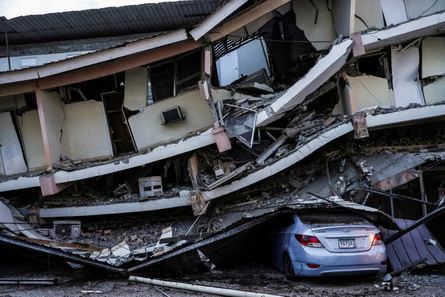
Twin quakes leave trail of damage across Panama as government declares nationwide emergency Click to expand the full report Collapse full report
Panama's government announced a nationwide state of emergency on Saturday after two strong earthquakes and hours of aftershocks left damage across all 10 provinces and two Indigenous territories. Officials attributed no deaths to the disaster but counted 27 people injured.
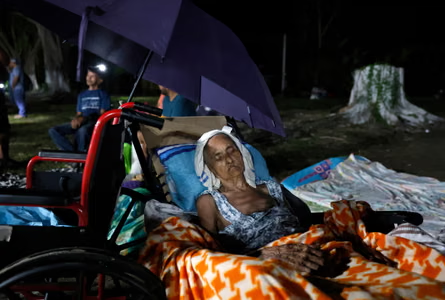
Panama spent Saturday under a state of emergency as aftershocks from a pair of powerful earthquakes continued to unsettle towns shaken a day earlier. Authorities said no deaths had been attributed to the disaster, yet damage was recorded in every one of the country's 10 provinces as well as in two Indigenous territories. The trouble began Friday, when earthquakes of magnitude 7.7 and 6.6 brought buildings down near the epicentre and set off evacuations around the Central American nation. Seismologists have since logged upwards of 100 aftershocks, among them tremors of magnitude 5.8, 5.5 and 5.2, and the initial quake also triggered tsunami warnings. The U.S. Geological Survey placed the first event about 10 kilometres southwest of Pitaloza Arriba, a remote community in the central province of Herrera, at a depth of 10 kilometres. The shaking was felt across the border in neighbouring Colombia as well. At a news conference in the capital, Panama City, Presidential Minister Juan Carlos Orillac announced the emergency measure and listed homes, schools, health-care facilities, roads and hotels among the structures harmed. Malitzie Rivera, deputy director of the National Civil Protection System, told reporters that 27 people had been hurt, with injuries ranging from minor to moderate. The central provinces of Veraguas, Herrera, Cocle and Los Santos absorbed most of the destruction. According to the civil protection agency, roughly 420 homes and about as many public schools were damaged, while seven hotels, at least 13 churches and nine bridges were also affected. In La Villa de Los Santos, a colonial-era settlement lying about 64 kilometres northeast of the epicentre, houses and a historic Catholic church fell. Residents who had spent the night outdoors waited for officials to tell them what to do next. "We've been here since 1 p.m. yesterday; we haven't moved," said Tony Jimenez, whose home partly caved in, as he sat beneath a tent with relatives. "It was a terrible thing. I can tell you with absolute certainty that in my 90 years, I had never experienced anything like it. It was intense — truly intense." The church that collapsed, San Atanasio, had been declared a National Historic Heritage Site in 1938. A Canadian in Panama was shown feeling an aftershock during a live broadcast on Hanomansing Live, and an Associated Press photograph taken by Aris Mariota on Friday captured a vehicle crushed beneath a fallen building in Penonome. Scenes of crumbling structures and deep cracks splitting roads added to unease across Latin America, a region recently battered by deadly quakes. In June, two back-to-back earthquakes of magnitude 7.2 and 7.5 struck Venezuela's La Guaira state, killing more than 6,500 people and leaving 17,000 homeless. A 7.4 magnitude quake then hit Colombia in August, claiming at least 289 lives. Carlos Valdes, head of the Seismology Department at the National Autonomous University of Mexico, suggested the comparatively low toll in Panama might stem from the country's strict building codes, notably those covering skyscraper construction in the capital. No missing people were reported as of Saturday, although officials cautioned that landslides and damaged roads had cut some communities off. Rising sea levels and rough surf forced the evacuation of roughly 300 people from Isla Cana, off the Pacific coast of Los Santos. In Penonome, some 150 kilometres from the capital, a shelter was accommodating 13 people, five of them children. The city's cathedral, facing the district's main square, suffered a partial collapse and cracking, and the governor's office building along with the Dos Continentes hotel also sustained damage. In Panama City, one of the water treatment plants serving the area was running at just 20 per cent capacity on Saturday, and six hospitals set up tent facilities furnished with cots. Tocumen International Airport, among the busiest in the region with more than 20 million passengers in 2025, temporarily halted operations after the first quake before reopening hours later on Friday. Hundreds of travellers flying with major Panama-based carriers such as Copa Airlines were nonetheless left stranded at airports around the region, their connections through Tocumen — also one of the area's biggest travel hubs — cancelled or delayed. At Mexico City's airport on Saturday, airline staff rushed to help families with babies sleeping on the floor, and one Venezuelan woman shouted in panic that flying through Panama was one of the few ways she could reach home in Caracas. Along the global trade route of the Panama Canal, the canal authority reported operations continuing normally, saying the safety of employees, vessels and crews was its priority and that specialized technical teams were inspecting facilities for possible damage. The last earthquake to cause widespread destruction in Panama struck in 1991, when a magnitude 7.4 event centred in nearby Costa Rica killed 23 people, injured 559 and left thousands homeless in the border region of Bocas del Toro. Quakes are frequent in Panama, particularly along its border with Costa Rica and its Pacific coast, where several tectonic plates — including the Cocos, Nazca and Caribbean plates — interact. The country also sits along the "Ring of Fire," a 40,000-kilometre arc of volcanoes and fault lines encircling the Pacific Basin where most of the world's earthquakes occur. Messages of support and offers of assistance poured in from around the region almost immediately. Mulino on Friday thanked fellow Latin American leaders, saying he had spoken with the presidents of Chile, Uruguay and Guatemala, among others. The U.S. Department of State said Saturday it had mobilized a disaster response team to assist local authorities with search and rescue expertise along with aerial and on-the-ground assessments. The U.S. government additionally pledged $5 million US for humanitarian assistance. U.S. Southern Command added that two helicopters, supported by the State Department's drug-control bureau, had delivered 2,000 pounds of food to Panamanian communities affected by the earthquakes.