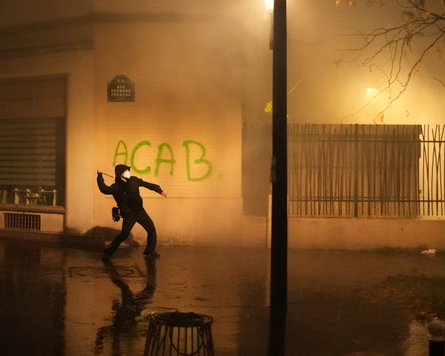
In-Depth Overview of French High School Students’ Protests and Nationwide Unrest
Protests by French high school students over a lack of educational resources have escalated into nationwide unrest and mass demonstrations. The protests first erupted in mid-September in the suburbs of Paris before spreading across the country, leading to hundreds of schools closing, thousands of arrests, and widespread looting. Recently, hundreds of thousands of people took part in nationwide demonstrations in support of the students’ demands, but some protests turned into clashes between police and demonstrators, with signs of far-right groups becoming involved. The events have become deeply entangled in political maneuvering ahead of the 2027 presidential election. French intelligence services have accused far-left and anarchist groups of manipulating the protests, allegations strongly denied by the parties concerned and student representatives. The government and unions have sharply disagreed over estimates of the size of the demonstrations, while debate over police conduct and the government’s authoritarian tendencies continues to intensify.
Background
- A crisis of resources in the education system: French high schools face a lack of resources, dilapidated facilities, shortages of chairs, and staff shortages. The latest PISA report shows a sharp decline in students’ reading comprehension and mathematics scores, central concerns driving the student protests.ABCNEWS GUARDIAN
- Political and electoral context: The protests are taking place on the eve of France’s 2027 presidential election. They have affected domestic election campaigning and drawn widespread international attention, becoming a focal point of political maneuvering among parties, with both the far right and the far left drawn into the controversy.ABCNEWS BBC GUARDIAN
- Social media and modes of organization: Students have largely organized demonstrations spontaneously through social media messages or student-led groups. Belgian officials have warned of the “TikTokification” of violence, highlighting social media’s role in spreading protests and unrest.BBC
- Disputes over policing and democratic rights: Protesters and activists accuse the government of using authoritarian methods to suppress the right to democratic protest. Police have used riot gear to push demonstrators to the margins, prompting concerns about the erosion of democratic rights in France.GUARDIAN
Key actors
- Emmanuel Macron and the French government: Ordered police to disperse protests blocking schools and stop violence; the Interior Ministry and Laurent Nuñez reported arrest figures and blamed “high-risk groups” for the violence. The government has been accused by opponents of failing to ensure national security and respond to the disorder, and of refusing to listen to public demands.ABCNEWS BBC GUARDIAN
- Jean-Luc Mélenchon and La France Insoumise (LFI): Firmly support the students, condemn police actions, and have proposed lowering the voting age; warned that Macron must “give in” and address social problems or face weekly protests. They have been accused by intelligence services and the right of using violence as an electoral strategy, an allegation they firmly deny.ABCNEWS BBC GUARDIAN
- High school students and student organizations, such as Lisa Cordat of the FSE: The main participants in the protests, voicing frustration over the lack of educational resources and emphasizing that they organized spontaneously through social media. They deny being manipulated by politicians.ABCNEWS BBC GUARDIAN
- French intelligence services and the Interior Ministry: Reported the involvement of left-wing anarchist groups and the far left in the protests, saying that vandals and looters had infiltrated the student movement; the Nice prosecutor confirmed that members of far-right groups had been arrested.ABCNEWS BBC GUARDIAN
- Unions and civilian protesters, including Nadège and Jérôme Rodrigues: Organized and joined mass demonstrations in support of the students’ demands, criticizing the government for refusing to listen and for its authoritarian tendencies, and stressing the importance of preserving the right to lawful protest.GUARDIAN
Confirmed facts
- Serious injuries occurred during the protests, including a 14-year-old student whose jaw was shattered by a tear gas canister and a 15-year-old student whose hand was blown off by a stun grenade.ABCNEWS
- Widespread looting took place on Saturday, with more than 3,000 shops and businesses ransacked, mostly in opportunistic acts.BBC
- French intelligence services reported that left-wing anarchist groups were involved in the student protests. National Assembly President Yaël Braun-Pivet proposed a parliamentary inquiry into the unrest and how it was organized.BBC
- The government estimated that at least 400,000 people took part in nationwide demonstrations, while unions estimated the turnout at twice the government’s figure, or about 800,000.GUARDIAN
- The Nice prosecutor reported that 59 people were detained, 11 of whom were suspected of belonging to far-right groups.GUARDIAN
- At the end of a demonstration in Paris, masked men dressed in black threw bottles and stones at police, who used tear gas, water cannon, and stun grenades to disperse the crowd.GUARDIAN
Claims and disputes
- Whether the far-left party LFI is using violence as an electoral strategy for the 2027 election: French intelligence services reported that LFI relies on violence as an electoral strategy, but LFI and Jean-Luc Mélenchon firmly deny the claim.BBC
- Whether the student protests have been “manipulated” or “weaponized” by politicians or far-left groups: Government officials, including Sébastien Lecornu, and intelligence services say they have, while student representatives such as Lisa Cordat and Mélenchon deny this, saying the students organized spontaneously.BBC
- Who is responsible for the unrest: Mélenchon blames the centrist prime minister for the disorder; Marine Le Pen blames Mélenchon and his allies as well as the Macron government, saying they have “lost momentum”; the National Rally blames immigrants for the disorder, although French authorities have not linked immigration to the violence.BBC
- Discrepancies in estimates of demonstration turnout: The government estimates that at least 400,000 people took part, while unions put the figure at double that amount. The two sides differ significantly over the actual scale of participation.GUARDIAN
How sources covered it
- Emphasizes the protests’ underlying causes—the shortage of resources in the education system and declining PISA scores—as well as specific injuries in clashes between police and demonstrators, including students seriously wounded, and the protests’ broad impact on the presidential election.ABCNEWS
- Emphasizes the political maneuvering surrounding the protests, intelligence reports about far-left involvement, mutual accusations among political figures, and social media’s role in organizing protests and the “TikTokification” of violence.BBC
- Emphasizes the differing estimates of turnout at mass demonstrations nationwide, details of clashes involving police, “high-risk groups,” and far-right groups, and ordinary people’s criticism of the government’s authoritarian tendencies and refusal to listen.GUARDIAN
Reactions
- Riot police used large amounts of tear gas and batons to disperse the crowds.ABCNEWS
- The Macron government issued written orders directing police to disperse protests blocking schools and swiftly stop violence and acts of destruction.ABCNEWS
- Jean-Luc Mélenchon firmly backed the students, condemned police actions, invited students onstage, and proposed lowering the voting age to 16 and abolishing selective university admissions.ABCNEWS
- Conservative former prime minister Edouard Philippe condemned those who “vandalize, set fires, or attack others.”ABCNEWS
- Mar, a teacher, complained that the violence served politicians’ purposes by diverting attention from legitimate protests for better public services and other causes.BBC
- Ordinary people, including Elisabeth and Lina, said they felt unsettled and afraid because of the violence and destruction. They stressed the need to distinguish peaceful protesters from violent vandals and hoped politicians would focus on the underlying causes.BBC
- Nadège, a 43-year-old communications worker, supported the demonstrators, saying that despite the fear, the right to lawful protest must be upheld.GUARDIAN
- A 21-year-old student said France was increasingly resembling an authoritarian regime seeking to prevent the right to democratic protest.GUARDIAN
- Jérôme Rodrigues said the government was afraid and pushing demonstrators to the outskirts of cities, and that police shields could not resolve people’s struggles.GUARDIAN
- Pierre, a retired banking consultant, criticized the government for completely refusing to listen to the people’s demands.GUARDIAN
- Jesse, a charity worker, said they felt angry and proud, and supported school students’ demands for better conditions.GUARDIAN
- Protesters in Orléans chanted the anti-fascist slogan “Macron resign, Le Pen in jail” in opposition to a National Rally meeting.GUARDIAN
Impact analysis
- Impacts to date: Hundreds of schools have closed, more than 3,000 shops have been looted, hundreds of people injured, and thousands arrested. Hundreds of thousands have taken part in nationwide demonstrations. The protests have affected French presidential election campaigning and drawn international attention.ABCNEWS BBC GUARDIAN
- Expected or potential impacts: Gabriel Attal called for a selective social media blackout to quell the violence; the president of the National Assembly proposed a parliamentary inquiry to establish how the unrest was organized; and Belgian officials warned of the possible cross-border effects of the “TikTokification” of violence.BBC
- Growing political polarization and social division: The involvement of far-right groups in the unrest, as in the arrests in Nice, and protesters’ forceful chants targeting the National Rally and Macron point to deepening divisions in society.GUARDIAN
Open questions
- Will the National Assembly’s parliamentary inquiry formally proceed, and will it ultimately be able to establish the real organizers and underlying causes of the unrest?BBC
- Will the French government implement Gabriel Attal’s proposal for a social media blackout, and how would this affect the organization of protests and freedom of expression?BBC
- How extensive was the actual involvement of far-left groups and anarchists in the violence, and did it amount to a systematic electoral strategy, as intelligence services claim?BBC
- How will the large discrepancy between the government’s and unions’ estimates of demonstration turnout affect public perceptions of government transparency and the scale of the protests?GUARDIAN
- How extensively were far-right groups involved in the protests and unrest, and what were their motives for organizing?GUARDIAN
Timeline
- Le Figaro published a French intelligence report detailing claims that the student demonstrations had been “manipulated.”BBC
- French intelligence services informed government circles that left-wing anarchist groups were involved in the student protests.BBC
- Strikes, blockades, and demonstrations spread to other Paris suburbs and across the country, leading to hundreds of schools closing.ABCNEWS
- Police arrests nationwide exceeded 6,600.ABCNEWS
- A reporter met Lisa Cordat of the FSE student union in the suburb of Saint-Denis.BBC
- Hundreds of thousands of people took part in largely peaceful demonstrations in cities across France in support of school students’ demands.GUARDIAN
- At the end of a demonstration in Paris, masked men dressed in black threw bottles and stones at police, who responded with tear gas, water cannon, and stun grenades.GUARDIAN
- The Nice prosecutor reported that 59 people were detained, 11 of whom were suspected of belonging to far-right groups.GUARDIAN
Related news
France’s student protest wave spreads nationwide and enters presidential race Click to expand the full report Collapse full report
Student-led demonstrations that began over staffing shortages at a high school near Paris have expanded across France, bringing thousands of arrests, hundreds of injuries, school closures and growing political pressure ahead of the presidential election.
PARIS — A protest movement that began at a high school outside Paris has grown into a nationwide challenge for France, closing schools, drawing university students into demonstrations and becoming an issue in the campaign to choose President Emmanuel Macron’s successor. Most participants have demonstrated peacefully, but clashes around some protests have included fireworks aimed at police, tear gas used against crowds and episodes of vandalism. Thousands of people have been arrested and hundreds injured, while some schools have been damaged or set on fire. The movement began last month at a high school in Creteil, southeast of Paris, where students protested staffing shortages. Class walkouts, blockades and demonstrations then spread through other Paris suburbs and across the country, including smaller towns. Hundreds of schools have closed because of damage or attacks on employees. Students have raised a wide range of complaints about underfunded schools, deteriorating buildings and inadequate staffing, particularly in poorer neighborhoods. French media have shown footage of rats, leaking buildings, damaged furniture and collapsed ceilings. Students have also complained about classrooms that become excessively hot during summer heat waves and too cold in winter, as well as long school days that can run from 8 a.m. until 6 p.m. and what they describe as a complicated and unfair university admissions system. Some university students have joined the demonstrations. The protests come amid broader debate in France over whether the education system is falling behind internationally and whether it still provides disadvantaged children with opportunities for social advancement. The latest PISA assessment showed sharp declines in reading comprehension and mathematics scores. Police tactics have become one of the most contentious parts of the unrest. Riot police have repeatedly used tear gas and batons to disperse gatherings. By last week, more than 6,600 arrests had been made nationwide, an unusually large number for a French protest movement. Several teenagers have suffered severe injuries in incidents involving police weapons. A tear gas grenade shattered the jaw and many teeth of a 14-year-old, while a 15-year-old lost a hand in an incident involving a police stun grenade. Other young protesters have also sustained injuries described as life-changing and blamed on police weaponry. Macron’s government says it supports the right to peaceful protest, while directing police to clear demonstrations that prevent access to schools and to act quickly against violence and vandalism. Authorities say officers and school staff have themselves been attacked with powerful fireworks and other projectiles capable of causing injury. The Interior Ministry says acid has also been thrown in some incidents and that people seeking to loot or destroy property have attached themselves to the student movement. On Tuesday, climate and social justice activist Greta Thunberg joined students at a high school in Saint-Denis, a Paris suburb, as another round of nationwide marches and strikes took place alongside school blockades. The unrest has also become part of the presidential campaign ahead of voting scheduled for April and May. Macron cannot seek a third consecutive term under the constitution. Far-left candidate Jean-Luc Mélenchon has strongly backed the students and criticized police conduct. His party brought high school activists onto the stage at a rally Sunday and later proposed reducing the voting age to 16 and ending selective university admissions. Far-right leader Marine Le Pen has instead called for expanded police powers to confront rioters. Conservative former Prime Minister Edouard Philippe, regarded as one of Le Pen’s principal presidential rivals, has denounced people who “break things, burn things or assault people.” France has a long history of large street movements, including the student protests of 1968, weeks of unrest in suburban areas in 2005, the yellow vest movement of 2018 and 2019, and the 2023 demonstrations against raising the retirement age. Student unrest has also appeared elsewhere in Europe. In neighboring Belgium, some schools in Liege closed a day after violence and arrests in the city. Several Italian cities also saw student demonstrations last week, although they were smaller than those in France and centered on a wider range of domestic issues.Unrest in France Leaves Officials and Citizens at Odds Over Underlying Causes Click to expand the full report Collapse full report
Following severe urban violence, French society and political figures are deeply divided over accountability, intelligence failures, and the broader socioeconomic frustrations fueling protests across Europe.
Disagreements run deep across France and neighboring nations regarding the triggers behind some of the most destructive urban unrest in modern history. Speaking near a Parisian street littered with shattered glass and storefronts marked by anti-police graffiti dated 17 October, a resident named Elisabeth expressed profound distress over media portrayals. Accompanied by a friend who viewed the events as a civil war, Elisabeth argued that the chaos did not reflect the general populace or the true nature of the protests. While opportunistic looting characterized much of the activity, the violence itself appeared organized. Observers questioned the timing following weeks of student demonstrations and debated who might benefit from the destruction. Intelligence briefings from earlier in the month had indicated left-wing anarchist involvement, marked by circled capital A spray-paint signatures. Broadcast footage showed masked individuals attacking police vehicles with heavy tools. A Le Figaro report from 29 September detailed how radical left political movements and student unions allegedly manipulated demonstrations. Intelligence documents suggested that the far-left La France Insoumise (LFI) party utilized violence for electoral gains ahead of the 2027 presidential election, an accusation firmly rejected by LFI. Concurrently, the extensive looting of more than 3,000 commercial locations appeared opportunistic, with some young individuals openly attempting to sell stolen designer goods online without concealing their identities, pointing to an underlying sense of impunity. President Emmanuel Macron faced sharp criticism for failing to ensure public safety, though authorities announced that online platforms and police would collaborate using CCTV and social media footage to prosecute offenders. Political figures offered varied responses. Former Prime Minister Gabriel Attal advocated for targeted social media blackouts to curb unrest fueled by online content. In Belgium, Interior Minister Bernard Quintin similarly highlighted the "TikTokisation" of riots after witnessing violent demonstrations in Brussels and Liège, attributing the disorder to known far-left factions. French Prime Minister Sébastien Lecornu and Interior Minister Laurent Nuñez explicitly blamed hard-left and ultra-left groups for instigating insurrections and worsening the situation. These claims were vehemently refuted by LFI leader Jean-Luc Mélenchon, who participated in Saturday's march. Lisa Cordat of the FSE student union rejected claims of political manipulation, emphasizing that student grievances over state education originate organically from the ground up. Amid a highly volatile political climate six months ahead of presidential elections, citizens expressed exhaustion with political finger-pointing. A 25-year-old named Lina described feeling abandoned and fearful as politicians sought scapegoats rather than addressing root causes. Mélenchon accused the prime minister of incompetence or strategic manipulation aimed at projecting an image of order to mask fiscal failures, as France grapples with rising public debt. President Macron demanded explanations and a revised policing strategy following acknowledgments of insufficient officer deployment. Meanwhile, Marine Le Pen, leading in opinion polls with the anti-immigration National Rally party, capitalized on the unrest through a formal video address. She blamed Mélenchon's associates for the chaos and criticized the Macron administration for rendering France powerless, while her party echoed narratives linking the violence to migration—a connection unsupported by French authorities. Other voices, including a teacher named Mar, argued that politicians exploited the violence to campaign and eclipse weeks of legitimate public service protests. This disillusionment extends beyond France; similar youth-led demonstrations erupted in Italy, Portugal, Belgium, and Albania, driven by soaring living costs, declining public services, and broader anxieties regarding housing, climate change, and artificial intelligence. Pew research indicates high levels of democratic dissatisfaction, with 69% in France, 68% in Spain, 62% in Italy, and 69% in the United States expressing discontent. Citizens interviewed across France underscored the necessity of separating peaceful demonstrators from violent actors, raising questions about whether Europe's protest wave reflects accumulated frustration, pleas for institutional attention, or a desperate sense of having nothing left to lose.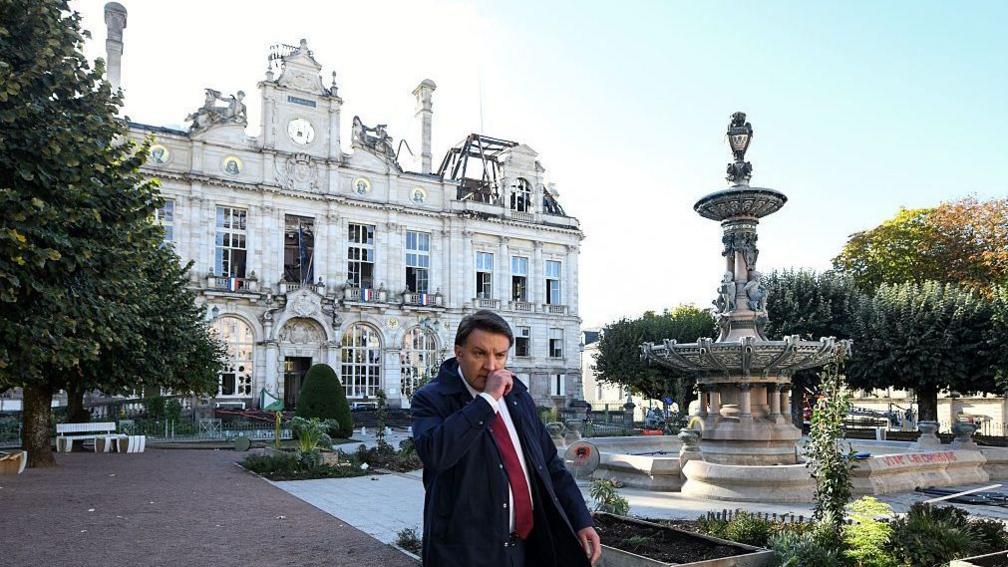
Mass protests sweep France over school conditions, policing and cost-of-living concerns Click to expand the full report Collapse full report
Hundreds of thousands of people demonstrated across France in support of school students demanding more teachers and repairs to deteriorating schools, while wider anger focused on living costs and policing. The government put nationwide turnout at at least 400,000, while unions estimated twice that number. Authorities reported 1,314 arrests, 75 fires and 24 shops looted, with clashes breaking out after largely peaceful marches in several cities.
Hundreds of thousands of people took to the streets across France on Saturday, backing high school students who have been demanding more teachers, improved facilities and repairs to deteriorating school buildings. The demonstrations, which were largely peaceful, came as Emmanuel Macron faced mounting social and political pressure during his final months as president. The French government estimated nationwide participation at at least 400,000 people, while trade unions put the figure at roughly twice that level. The interior ministry said 1,314 people were arrested, 75 fires were recorded and 24 shops were looted, figures that were lower than those reported during the previous weekend's unrest. In Paris, government estimates put attendance at at least 110,000. Demonstrators marched along the eastern edge of the capital, expressing solidarity with high school students while also protesting against the cost of living and what they described as excessive policing. Some accused the government of responding to school protests over the previous month with riot police rather than political measures. For much of Saturday afternoon, the Paris demonstration had a relaxed atmosphere, with brass bands performing and families, including children and grandchildren, joining the march. Placards criticised government policing and carried messages including “Oppression breeds rebellion” and “The right to protest”. Violence broke out near the end of the demonstration at Porte de Vincennes. Groups of masked men dressed in black, who had not appeared to participate in the earlier peaceful march, emerged and some threw bottles and stones at police. Officers responded with teargas, water cannon and stun grenades. A rubbish bin was set on fire and fireworks were launched towards police. Riot police also charged a larger group of protesters after the Paris march and used batons against them. Elsewhere, police used teargas to stop demonstrators from entering city centres in Lyon, Lille, Montpellier, Nantes and Toulouse. Clashes in Marseille included several bin fires. At least two people were seriously injured: one in Clermont-Ferrand and another in Toulouse, where the injured person was reported to have lost fingers. Interior minister Laurent Nuñez said that during demonstrations around the country, what he described as “high-risk groups” had separated from the main marches and attempted to carry out violent acts. More than 70,000 police officers were deployed in French cities. Many shops were boarded up and museums were closed as authorities prepared for the possibility of renewed violence after the previous Saturday, when peaceful demonstrations were accompanied by one of France's most violent days of unrest in years. Public buildings were burned, hundreds of shops were damaged and looted, and at least 2,700 people were arrested nationwide during that earlier unrest. In Nice, prosecutors said on Sunday that 59 people had been taken into police custody. Eleven of them were suspected of belonging to extreme-right groups and were accused of gathering with the intention of committing violence. According to a statement provided to public broadcaster FranceInfo, some suspects were arrested in two vehicles containing masks, gloves, gas sprays and truncheons. Local media had reported that extreme-right groups entered central Nice on Saturday and targeted demonstrators. Anger at Macron was widespread during Saturday's protests, particularly over his government's ban on non-union demonstrations it considered “illegitimate” and restrictions preventing protesters from entering city centres. At the Paris demonstration, Nadège, a 43-year-old communications worker, said she had been exposed to teargas at a peaceful protest the previous weekend. She said she had returned to demonstrate peacefully and defend the legal right to protest, adding that people had become afraid and that maintaining those rights required courage. A 21-year-old student from a Paris science faculty that had been blockaded by protesters said demonstrators increasingly felt that France was becoming an authoritarian system seeking to restrict the democratic right to protest in the streets. Jean-Luc Mélenchon, the radical-left presidential candidate who joined the Paris rally, said Macron needed to “give in” and respond to the country's social problems or face continuing demonstrations. Mélenchon said he believed the protests could recur every week if the situation remained unchanged. The current crisis began with high school demonstrations in mid-September. Students aged 15 to 18 protested against staff shortages, leaking and crumbling school buildings and insufficient chairs in overcrowded classrooms. The movement developed into the country's largest youth mobilisation in years, drawing support from teachers, parents and trade unions. Police investigations are under way after some children and other protesters were maimed or injured by explosive police weapons. Some participants on Saturday wore the yellow vests associated with the gilets jaunes anti-government demonstrations of 2018 and 2019. Jérôme Rodrigues, a prominent figure in that movement, said the government was pushing demonstrations away from centres of power because it was afraid. He argued that police shields would not address the difficulties faced by people struggling financially and predicted that protests would probably continue. Pierre, a 60-year-old retired banking consultant, said he had joined the demonstration to support school students. Referring to his eight-year-old granddaughter, he said he wanted her to have a brighter future and accused the government of refusing to listen to public demands. Jesse, a 40-year-old charity worker from northern Paris who carried a “Free Hugs” sign, said she was angry and wanted to support students seeking better conditions. She said she was proud of the schoolchildren and believed people needed to stand together. Although she did not consider attending a peaceful demonstration to be going to war, she said it could sometimes feel that way and that she had prepared unusually carefully, wearing old clothes in case they were damaged by teargas or torn. In Orléans, thousands of people marched while chanting anti-fascist slogans in opposition to a congress held by Marine Le Pen's far-right, anti-immigration National Rally. Demonstrators criticised both Le Pen, described as a frontrunner in next year's presidential election, and Macron, who is due to leave office next year. The crowd chanted: “Macron, resign. Le Pen in prison.”