Sydney’s Eastern Beaches Closed After Whale Carcass Washes Ashore, Raising Safety and Cultural Handling Considerations
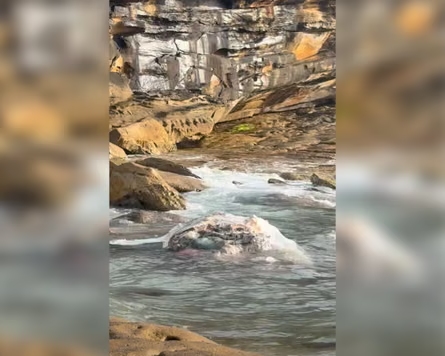
On 2026-10-22, a humpback whale carcass was discovered at Lurline Bay in Sydney's eastern suburbs, prompting Randwick Council to close Maroubra and Coogee beaches as a precaution against attracting sharks. Removal efforts face challenges because the carcass is highly decomposed and located in a difficult-to-access area. The council is currently working with the local Indigenous ranger group Gamay Rangers to discuss a culturally and environmentally sensitive approach to handling the carcass.
Background
- Whale carcasses washing ashore and attracting sharks are not unprecedented in the area. In April 2026, a carcass at Era Beach led to the closure of several beaches in Royal National Park for several days; in July of the same year, a juvenile humpback whale also washed ashore at Greenhills Beach (testing negative for avian influenza).ABCAU
- Scientists note that because the current whale population is large, natural deaths and carcasses washing ashore are relatively likely to occur.ABCAU
Key actors
- Vanessa Pirotta (whale scientist): Provided a scientific perspective, assessed the whale's age, warned of the risk of attracting sharks, and explained the relationship between whale population size and the frequency of such incidents.ABCAU
- Local residents and onlookers: Gathered at Lurline Bay to view the whale carcass and expressed curiosity and surprise about its appearance and condition.GUARDIAN
Confirmed facts
- The whale carcass is highly decomposed and located in a difficult-to-access area, making recovery challenging.ABCAU
- Rope was entangled around one of the whale's pectoral fins.ABCAU
- The carcass has not yet been removed, and the council is discussing a culturally and environmentally sensitive handling approach with Gamay Rangers to ensure respect for Indigenous culture.GUARDIAN
- The public has been asked to stay away from the area and not enter the water at high tide.GUARDIAN
Claims and disputes
- The whale's age/size: Randwick Council initially identified it as a “baby” whale, while whale scientist Dr Vanessa Pirotta said it was more likely a “young adult or teenaged humpback whale”.ABCAU
How sources covered it
- Focuses on the scientific context of the incident (a large whale population making natural events more frequent), shark safety risks, the importance of Indigenous cultural ceremony, and the recent history of similar incidents in the area.ABCAU
- Focuses on the council's removal strategy, emphasizing cultural and environmental sensitivity, local residents' immediate reactions to the carcass's appearance, and another contemporaneous incident involving a stranded whale in Tasmania to provide broader regional context.GUARDIAN
Reactions
- Vanessa Pirotta: Strongly advised against swimming in the area, expected sharks to be attracted, and noted that the large whale population makes such incidents likely to occur.ABCAU
- Rob Cooley (Gamay Rangers): Said recovery would be difficult because the area is hard to access and the carcass is highly decomposed (“basically falling apart”), and said cultural advisers would be arranged to conduct a ceremony.ABCAU
- Local residents/onlookers: Expressed surprise at the whale's appearance, saying its skin looked unusual and “almost fake,” and showed curiosity about whether it was newborn or juvenile and about the incomplete condition of the carcass.GUARDIAN
Impact analysis
- Expected impact: Sharks are highly likely to be attracted to the carcass, posing an ongoing safety threat to swimmers and surfers in nearby waters.ABCAU
Open questions
- What was the whale's exact cause of death? (Was the rope entangled around its pectoral fin related to its death?)ABCAU
Timeline
- A whale carcass washed onto rocks at Era Beach in Royal National Park and attracted sharks, leading to the closure of several beaches for several days.ABCAU
- A juvenile humpback whale washed ashore at Greenhills Beach in Sydney's Sutherland Shire and tested negative for H5N1 avian influenza.ABCAU
- The whale carcass washed onto rocks between Coogee and Maroubra beaches and was believed to have been dead for some time.GUARDIAN
- The dead whale was discovered at Lurline Bay.ABCAU
- Gamay Rangers responded to the council's call and attended the site.ABCAU
- Curious locals remained at Lurline Bay throughout the morning to view the whale.GUARDIAN
- Authorities were working to rescue a large whale stranded in shallow water at Turners Beach on Tasmania's north-west coast.GUARDIAN
Related news
Shark Concerns Prompt Closure of Eastern Sydney Beaches Following Whale Death Click to expand the full report Collapse full report
Randwick Council has closed Coogee and Maroubra beaches after a decomposing whale carcass, believed to be a young humpback, washed ashore at Lurline Bay. The precautionary measure aims to mitigate shark attraction risks while authorities coordinate removal efforts with Indigenous rangers.
Swimming and surfing have been suspended at two of Sydney’s most popular eastern beaches, Coogee and Maroubra, following the discovery of a dead whale lodged against the rocky shoreline at Lurline Bay this morning. Randwick Council acted swiftly to close the areas, citing the potential danger posed by sharks drawn to the decaying remains. In a statement posted on social media, the council confirmed that lifeguards are monitoring the situation and collaborating with local stakeholders to arrange for the carcass's removal. "Maroubra and Coogee Beaches will remain closed until further notice," the post read, emphasizing the ongoing assessment required before reopening. Mayor Clare Willington described the incident as a natural phenomenon, noting that ecological processes would eventually break down the remains. However, she stressed that the primary objective was to minimize any impact on beachgoers in the vicinity. Supporting this cautious approach, marine scientist Dr. Vanessa Pirotta advised the public to strictly avoid swimming in the area. While the council initially identified the specimen as a baby whale, Dr. Pirotta suggested it is more likely a juvenile or adolescent humpback, pointing out that the region sees frequent whale traffic during this season due to large population numbers. The retrieval operation presents significant logistical challenges. Rob Cooley of the Gamay Rangers, an Indigenous ranger group based in La Perouse, reported that the animal is in an advanced state of decomposition, describing it as "basically falling apart." Furthermore, its location within a rugged, cliff-surrounded cove makes access difficult. Notably, a rope was found entangled around one of the whale’s pectoral fins, raising questions about human interaction prior to its death. Recognizing the cultural significance of humpback whales as totem animals for the Bidjigal people, the Gamay Rangers plan to engage cultural advisors to conduct appropriate ceremonies at the site. This event marks another instance of whale mortality affecting Sydney’s coast this year; earlier incidents included a juvenile humpback calf washing up at Greenhills Beach in July, which tested negative for H5N1 avian influenza, and a carcass-induced shark scare that forced closures in Royal National Park in April.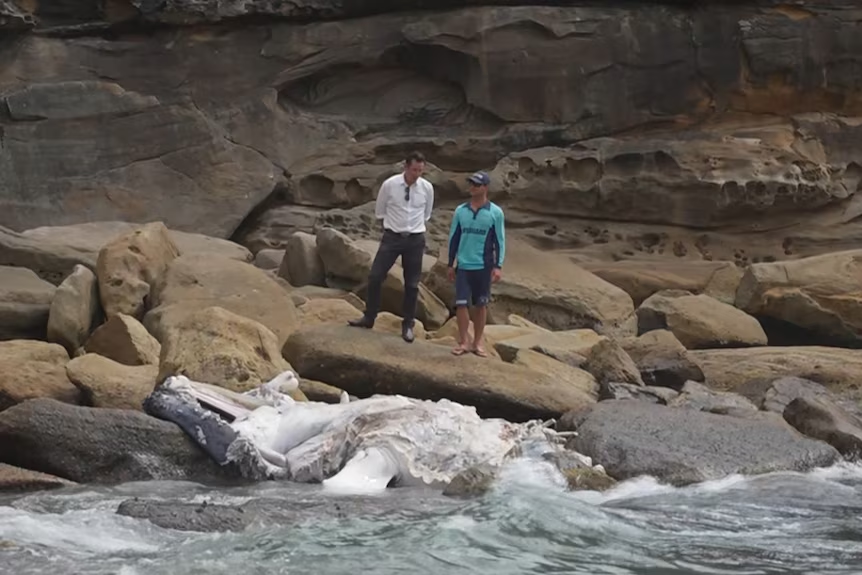
Long-dead whale wedged in rocks between Coogee and Maroubra forces closure of both beaches Click to expand the full report Collapse full report
Lifeguards will keep two of Sydney's busiest eastern suburbs beaches shut until further notice while Randwick council consults Indigenous rangers about a 'culturally respectful' removal, with the carcass's species and how it reached the bay still unknown.
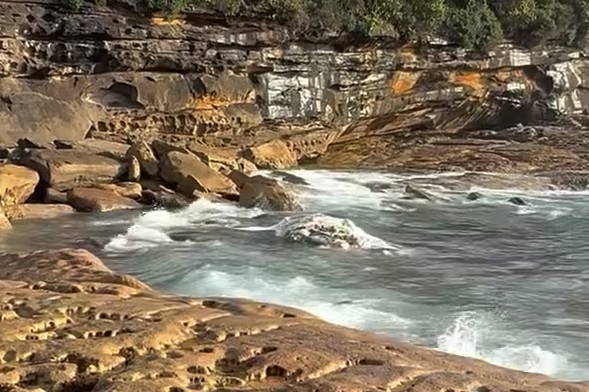
The heavily deteriorated body of a whale has come to rest among rocks between Coogee and Maroubra, shutting two of Sydney's most popular swimming and surfing beaches as a precaution while authorities work out how to handle the remains. Randwick council, which is managing the response in the city's eastern suburbs, said lifeguards would keep both beaches closed until further notice as they monitor the scene and coordinate with local stakeholders and authorities to arrange the whale's removal. The council is receiving support from rangers and the New South Wales Department of Primary Industries, and has described the spot where the carcass ended up as a "difficult-to-access location surrounded by cliffs and rock ledge". It is also weighing whether to shut the surrounding area and the rock shelf walkway, which forms part of a heavily used coastal path, in order to keep crowd numbers under control. For now, nothing is being moved. Talks are continuing with the Gamay Rangers about an approach that would take both cultural and environmental sensitivities into account, the council said. Dr Clare Willington, the mayor, gave an assurance that any removal would be carried out in a way that was "culturally respectful" to Indigenous Australians. "The whale is an important totem animal to the local Bidjigal people," she said. "This is a natural occurrence and in time nature will deal with the carcass. Our focus is to manage and limit any impact to swimmers and surfers at nearby beaches." Residents and visitors are being urged to stay away from the area and to follow instructions from lifeguards and authorities. The carcass itself is relatively small and has broken down considerably, with what appear to be bite marks along the blubber. Swells had been nudging it against the rocks before it became lodged in a crevice when the tide went out. To the surprise of many watching from shore, it gives off little apparent smell. Authorities have yet to identify the species or establish how the animal made its way into the bay, though it is thought to have died some time ago. The sight has drawn a steady stream of curious locals to Lurline Bay throughout the morning. Among them was Meeri Pajala, a Finnish au pair living in Sydney, who said she had never seen anything like it. "It almost looks fake to me," she told Guardian Australia. "That skin looks so weird." Glenda, a local who asked for her surname not to be published, said she often watches whales passing the coast and came to look after hearing the news. "My interest is in if it's newborn, or if it's juvenile," she said. "I thought it would be more complete." The closure comes as authorities in Tasmania work to free a large whale found stuck in shallow waters off Turners Beach, on the state's north-west coast. "Members of the public are asked to avoid the area and not enter the water on the incoming tide due to the anticipated danger," Tasmanian police said.