Oleshky ceasefire and humanitarian evacuation corridor
A localized ceasefire agreement in the Russian-occupied city of Oleshky, announced by the White House in October 2026, intended to facilitate humanitarian aid delivery and civilian evacuation after months of severe blockade.
Also known as: 2026 Oleshky truce · Melania Trump-brokered Oleshky ceasefire
The Oleshky ceasefire refers to a localized pause in military hostilities agreed upon by Russia and Ukraine for the city of Oleshky (also known as Tsiurupynsk) in the Kherson Oblast. Announced by the White House on October 23, 2026, the agreement was set to take effect on October 29, 2026. The primary objectives were to allow the delivery of humanitarian aid and to establish safe corridors for the evacuation of remaining civilians.
Background: Humanitarian Crisis in Oleshky
Oleshky has been under Russian occupation since the early days of the full-scale invasion in February 2022. By late 2026, the city faced a dire humanitarian situation described by Ukrainian officials and international observers as a "humanitarian blockade." Reports indicated that the population had dwindled from approximately 25,000 pre-war residents to an estimated 2,000. Those remaining suffered from acute shortages of food, medicine, clean water, and electricity.
According to reports from The Guardian and other outlets, residents resorted to eating garden weeds and foraged plants such as purslane to survive. The local morgue was destroyed, and sanitation systems collapsed, leading to deaths from starvation and disease. Ukrainian Foreign Minister Andrii Sybiha raised the issue at the UN General Assembly in September 2026, stating that Russia was "deliberately making life there impossible" and accusing Moscow of starving the population. Witnesses drew parallels between the conditions in Oleshky and the Holodomor, the man-made famine in Soviet Ukraine in the 1930s.
Efforts to deliver aid had previously failed. In September 2026, Ukrainian military authorities attempted large-scale drone airdrops of emergency supplies after Russia reportedly rejected earlier ceasefire proposals for civilian evacuation. Access to aid was further complicated by reports that occupying authorities restricted assistance to those who accepted Russian citizenship.
Negotiation and Announcement
The ceasefire was brokered with significant involvement from US First Lady Melania Trump. The White House stated that Mrs. Trump and her representatives worked directly with both Russian and Ukrainian leadership to define the terms of the localized truce. This marked a notable instance of direct diplomatic intervention by the US First Lady in the conflict, building on her previous efforts regarding the repatriation of Ukrainian children displaced during the war.
Ukraine’s top negotiator, David Arakhamia, confirmed the agreement via Telegram. He described the process as lengthy and involving various political levels, expressing gratitude to Pope Leo XIV—who had publicly called for intervention—and to Melania Trump. Arakhamia stated that the goal was to create "permanent humanitarian corridors for the safe evacuation of civilians and the delivery of aid."
In a public statement, Melania Trump emphasized the urgency of the situation, noting that the remaining population consisted primarily of elderly residents needing immediate medical attention and basic sustenance. She asserted that without her intervention, bringing aid into the city and evacuating vulnerable groups would have been impossible. Under the terms outlined, evacuating residents were offered the choice to relocate to either Russian-controlled territory or government-held Ukraine.
Status and Verification
As of the announcement on October 23, 2026, neither the Kremlin nor the Ukrainian government had issued independent official confirmations of the specific details beyond the statements attributed to their respective negotiators and the White House. International correspondents noted that verification of the ceasefire's implementation was ongoing. The agreement represented a rare breakthrough in the stalled negotiations regarding the fate of civilians in frontline occupied zones, where accusations of genocide and war crimes against the Ukrainian population have persisted throughout the conflict.
Related translated reports
White House Announces Brokerage of Oleshky Ceasefire by Melania Trump Amid Dire Humanitarian Conditions
According to the White House and Ukrainian negotiator David Arakhamia, a ceasefire has been brokered to establish humanitarian corridors in the Russian-occupied town of Oleshky, where residents have faced critical shortages of food and supplies. The announcement coincides with major flight disruptions in Moscow following long-range drone strikes, a fatal shooting in Trappes under investigation as a terrorist attack, and heightened security measures across France ahead of weekend protests.
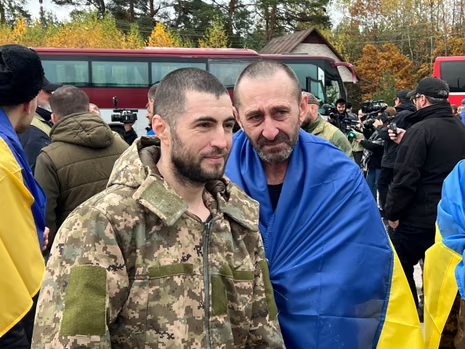
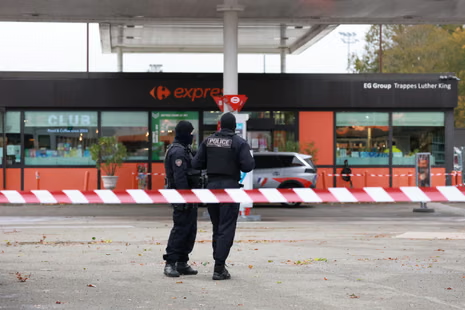
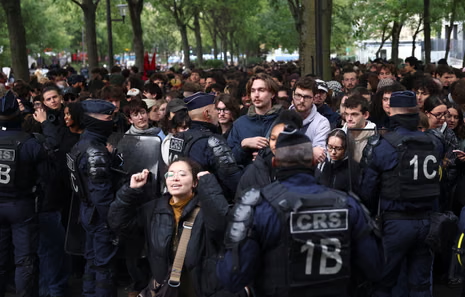
According to the White House and top Ukrainian negotiator David Arakhamia, a ceasefire has been brokered to establish humanitarian corridors in the Russian-occupied Ukrainian town of Oleshky, where roughly 2,000 residents have faced severe shortages of food, electricity, and water. Arakhamia confirmed that operations to unblock the settlement and set up safe evacuation pathways will soon commence, while expressing gratitude to Pope Leo and United States First Lady Melania Trump for their diplomatic roles. In her statement, Melania Trump emphasized that civilian evacuations and aid delivery would have been impossible without her intervention, noting she collaborated with both Russian and Ukrainian leaders. The ceasefire is scheduled to take effect on October 29, allowing aid to enter and residents to evacuate toward either Russia or Ukraine. Simultaneously, long-range Ukrainian drone strikes prompted the cancellation or suspension of dozens of flights across Moscow's major airports, with Sheremetyevo International reporting widespread disruptions. European Commission President Ursula von der Leyen expressed deep alarm following a separate reported drone attack that struck a civilian vessel carrying Ukrainian and Azerbaijani crew members off the coast of Romania. In Ukraine, President Volodymyr Zelenskyy noted that a large-scale prisoner exchange resulted in the return of 270 individuals, including nine civilians. In France, authorities are investigating a morning shooting in Trappes, west of Paris, that left one person dead and four others wounded, including a 12-year-old girl. Mayor Ali Rabeh stated that the random gunfire appeared to be a racist and potentially Islamophobic attack, while Interior Minister Laurent Nuñez classified the incident as a terrorist crime. President Emmanuel Macron and other officials thanked law enforcement for detaining the suspect as the National Anti-Terrorism Prosecutor's Office took over the case. French security forces are also preparing for weekend demonstrations following widespread last-minute legal challenges against prefectural bans on public gatherings. Interior Minister Laurent Nuñez announced the deployment of 70,000 police officers, gendarmes, and specialized elite units such as GIGN and RAID to protect public buildings and prevent a repeat of recent looting and violence. Concurrently, the French and British governments confirmed a joint air force exercise simulating a nuclear strike, featuring French Rafales escorted by British RAF Typhoons.