Bukang-i
A female dusky shark that became stranded in a canal at Busan's North Port in September 2026, drawing widespread public attention and becoming an honorary ambassador.
Also known as: Bukangi · 부캉이
Overview
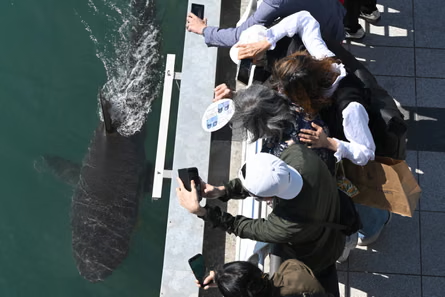
Bukang-i (Korean: 부캉이) is a female dusky shark that has been trapped in the canal of North Port Waterfront Park (북항친수공원) in Dong District, Busan, South Korea, since September 18, 2026. Named after Bukhang, the Korean name for the city's North Port, the shark measures about 3 metres long and belongs to a species classed as endangered worldwide.
Stranding and Public Attention
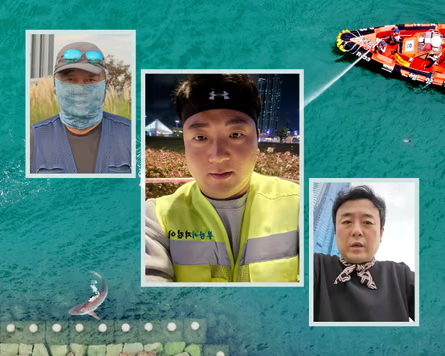
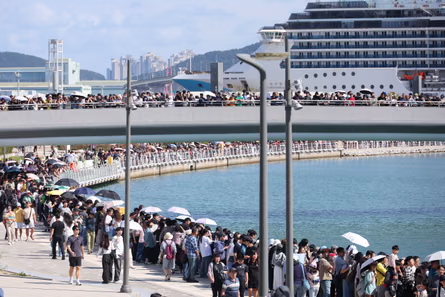
The shark's prolonged presence in the canal drew over 1.6 million visitors to the waterfront park. During her time in the canal, local self-appointed guardians, often referred to as jagyeongdan, patrolled the area nightly to protect the animal from disturbances by onlookers. Bukang-i's national celebrity status led to commercial and civic phenomena, including a commemorative soju, a baseball mascot wearing a shark cape, and an appointment as an honorary ambassador of Busan.
Rescue Efforts
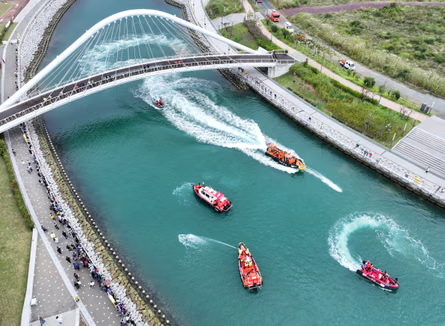
Authorities made multiple attempts to guide the shark back out to open water, though initial efforts proved unsuccessful before she was eventually guided out on a subsequent attempt.
Related translated reports
Night-watch guardians guide endangered shark Bukang-i out of Busan canal
South Korea’s oceans ministry said a stranded female dusky shark nicknamed Bukang-i was guided out of a Busan canal on Wednesday, on the third attempt after more than a month there. Ordinary volunteers, many of them YouTubers, spent nights protecting the animal and warning people against shining torches or lasers, which officials and experts linked to possible distress and injury.
Busan’s canal became an unlikely stage for a month-long rescue effort after a female dusky shark, about 3 metres long, was found stranded there on 18 September. The animal, nicknamed Bukang-i after Bukhang, the Korean name for the city’s North Port, belongs to a species classed as endangered worldwide. The city said more than 1.6 million visitors came to see it at a park that once drew about 2,000 people on a busy Saturday, and the shark became a national celebrity. On Wednesday, after more than a month in the canal, South Korea’s oceans ministry said the shark was successfully guided out on the third attempt. Officials expect her to move into open water in time. Authorities had previously made two failed attempts to steer her back to sea, and further efforts were paused because additional force was thought likely to distress her. Until she left, the shark remained in the canal, drawing crowds by day and leaving a handful of men to keep watch after dark. A group of self-appointed night watchers, known in South Korea as jagyeongdan, a term that sits somewhere between a vigilante group and a neighbourhood watch, gathered around the harbour-side canal in Busan and took turns protecting the shark. Many were YouTubers who livestreamed the waterway and stayed through the night, wearing hi-vis vests and carrying selfie sticks, while calling out visitors who used torches or lasers. Some of their videos were viewed hundreds of thousands of times. Choi Won-jin, one of the protectors, who has run a YouTube channel for 10 years covering trending issues in South Korea, said he arrived when the canal lights went out and waited for people whom Koreans online call 'lantern villains'. 'They bring fishing lamps, or the kind of lights people use at a campsite,' he said. 'We’re ordinary members of the public. So we have no choice but to put it nicely, and get them to understand as best we can.' Na Tae-soo, a nearby YouTuber among the watchers, said most visitors complied when asked not to shine lights. 'Don’t, please don’t switch the torch on,' he said. 'The animal thrashes about at night because of the torches, and it’s dangerous.' His footage showed the shark sharply twisting away from a beam of light at 2am and hitting the side of the canal. The national institute of fisheries science later confirmed an abrasion on her snout and said a visitor’s torch was likely to have startled her into injury. The men patrolled the canal’s park after dark, checked that conditions were in order, ate snacks as the night passed and aired frustrations on livestreams. Korean media reported that 105 officials from seven agencies watched over the shark, with a team on standby to reach the water within three minutes. Choi disputed that account, saying that after dark the protection effort was almost entirely up to him and the other volunteers. The waterfront was closed to the public from midnight until 5am, but the YouTubers said the rule was impossible to enforce across a park of that size. While livestreaming from the walkway one night, Choi filmed a man tipping food waste into the water. Nobody saw the shark feed, though experts said feeding could happen in an instant and sharks of her size did not need to eat often. Experts had also hoped cooler water would encourage the shark to leave. The fisheries institute said dusky sharks prefer water between 18C and 26C, while experts put 15C as the point below which her physiological functions would begin to decline and about 11C as the point at which survival would become precarious. Busan city officials had expected the canal to reach that temperature after the middle of November. The institute recorded 46 large sharks off the east coast in the first half of this year, nearly four times as many as in the same period a year earlier, attributing the rise to warmer seas and more of the fish that sharks feed on. The public affection for Bukang-i also spawned commercial and civic responses, including a commemorative soju, a baseball mascot dressed in a shark cape, an honorary city ambassadorship, and reports of increased sales at nearby shops. South Korea’s president, Lee Jae Myung, visited the canal in mid-October. None of the shark’s guardians believed she should be forced out. Choi said the city should protect her where she was until she left of her own accord. Kim Jong-hwan, who runs a small business and livestreamed the shark almost every day while also watching by day, said he initially went to pass information to followers, then began observing her. 'I went to pass on information [to my followers], and after that I started observing her,' he said. 'Watching her over time, with the water pumps being fired and then the nets, I came to find those things being done to her objectionable. So we ended up cheering her on,' he said. 'She’s just an animal, and she came in by her own choice,' Kim said. 'If it gets cold, if there’s no food, if the water doesn’t suit her, she’ll leave by herself. I’d like her to just be left alone, to rest there comfortably until then, and go.'