Helen Haines
Australian politician and health researcher who has served as the independent member of Parliament for the Victorian division of Indi since 2019.
Also known as: Helen Mary Haines
Helen Mary Haines (born 21 September 1961) is an Australian politician and health researcher. She has served as the independent member of Parliament (MP) for the Victorian division of Indi since the 2019 federal election.
Early Life and Career
Born and raised in the Western District of Victoria, Haines trained as a nurse and midwife in Melbourne. She graduated from Deakin University with a bachelor's degree in nursing while working as a matron, and later earned a master's degree and a doctorate from the University of New South Wales and Uppsala University, respectively. Prior to entering politics, she worked in nursing and midwifery services and as a health researcher in academia.
Political Career
Haines was elected to the House of Representatives at the 2019 federal election, winning the regional Victorian seat of Indi following the retirement of incumbent independent MP Cathy McGowan. As a member of Parliament, she has focused her advocacy on rural healthcare, housing, resilience against climate change in regional Australia, government integrity, and anti-corruption measures.
Related translated reports
Nugent held after alleged Haines attack as Australian police chiefs flag febrile political environment
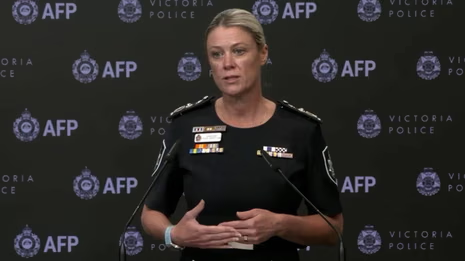
AFP and Victoria police said they had no intelligence that Brendan Nugent allegedly drove a Toyota LandCruiser into independent MP Helen Haines, as Nugent was kept in custody, Victoria announced new protective measures, and the AFP said one person had been charged every week over alleged threats to MPs.
Brendan Nugent, a 43-year-old Tarrawingee man, appeared at Wangaratta Magistrates Court on Wednesday morning charged with dangerous driving causing serious injury, intentionally causing serious injury, a federal offence of causing harm to a commonwealth public official, and cannabis possession. He did not request bail and will remain in custody until a committal mention on 4 February. In court he looked downcast in a grey jumper and stared straight ahead. Magistrate Allison Vaughan noted Nugent had mental health and neurological concerns and was in custody for the first time, and asked for a mental health professional to see him immediately after the appearance. His lawyer, Chirag Patel, said Nugent was not on any prescribed medication and was not withdrawing from any substances, and that he was also suffering from concussion and idiopathic transverse myelitis - a rare inflammatory disorder of the spinal cord. The charges relate to an alleged targeted attack on independent MP Helen Haines, who had one leg amputated after the alleged attack. Her husband, Phil Haines, said at a Wednesday press conference that doctors had worked to save her second leg but it was also amputated, and that she was in stable condition. Australian Federal Police commissioner Krissy Barrett and Victoria Police chief commissioner Mike Bush said they had no intelligence indicating Nugent would allegedly drive a Toyota LandCruiser into Haines. Barrett described the political environment as 'febrile' and said one person had been charged every week over alleged threats to MPs, as Victoria announced new steps to protect politicians. Bush said extra police staff had been deployed to Wangaratta to reassure the local community and he was confident this was an isolated incident. Neither Bush nor Barrett alleged a motive for the attack, which remains under investigation. Earlier, at a Melbourne press conference, Bush said investigators were considering whether to lodge further charges against Nugent. 'That's always a consideration,' he said. 'Of course, we have to locate and follow the evidence, but this is a very serious and tragic incident, and we will be looking at all serious charges.' He also said, 'There was nothing known to us that would have arisen, or piqued our interest, or given any indication that Nugent was an immediate threat.' Barrett was asked whether the AFP had been aware of Nugent's social media posts, which included references to conspiracy theories and conflict in the Middle East. 'We didn't have any specific intelligence that would have indicated something as atrocious as happened on Monday afternoon,' she said. 'I can confirm we had no holdings or no intelligence to suggest that there was any threat to MP Haines.' Barrett said, 'The shocking alleged attack yesterday is what many had been dreading for some time.' The AFP and Australia's domestic intelligence agency, Asio, provided additional safety briefings to federal MPs on Wednesday, and about six such sessions had been held this year. She said MPs were increasingly worried about threats, referencing a 'growing volume of online abuse, threatening rhetoric, and intimidation, increasing political polarisation and anti-government sentiment'. She also raised concerns about 'conspiracy-driven and grievance-based behaviours, lone actors motivated by a convergence of personal grievance, mental health vulnerabilities, and ideological concerns, and the potential for violence to emerge with little or no forewarning - particularly where individuals have no previous protection intelligence footprint'. Bush highlighted similar concerns and said Victoria police would create a centralised process to help monitor threats against MPs. 'We want a single-stop shop to report these things and have the ability to be very proactive,' he said. On Tuesday, Victorian Animal Justice party MP Georgie Purcell said she had received more security support as the partner of federal MP Josh Burns than in her own role, and urged Victoria police to create a dedicated unit similar to one that exists within the AFP for politicians or people in high-profile roles. 'They have teams that can monitor fixated people, shifts in language, in behaviour, see if they're escalating, and then work out whether the continued behaviour could constitute an event,' Purcell said. Bush, who was due to address state MPs and ministers on Wednesday afternoon, said there were no resourcing restraints that would prevent Victorian politicians from receiving the protection they felt they deserved.