Nord Stream pipeline sabotage
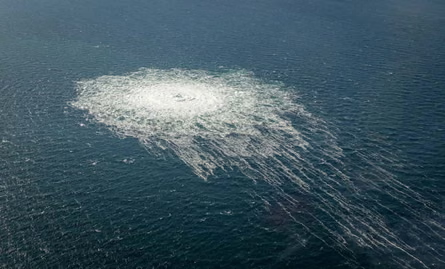
A series of underwater explosions on 26 September 2022 that severely damaged the Nord Stream 1 and Nord Stream 2 natural gas pipelines beneath the Baltic Sea.
Also known as: Nord Stream sabotage · 2022 Nord Stream pipeline explosions
Overview
The Nord Stream pipeline sabotage refers to a series of underwater explosions that occurred on 26 September 2022, severely damaging the offshore natural gas pipeline system running from Russia to Germany beneath the Baltic Sea. The blasts affected three of the four physical pipes comprising the Nord Stream 1 and Nord Stream 2 networks, rendering them inoperable. The incidents occurred in international waters within the exclusive economic zones of Denmark and Sweden, near the Danish island of Bornholm.
Infrastructure Background
The Nord Stream system consists of two main parallel projects designed to transport natural gas directly from Russia to Germany, bypassing transit countries such as Ukraine and Poland:
- Nord Stream 1 (NS1): Consisting of two pipes running from Vyborg in northwestern Russia to Lubmin in northeastern Germany, NS1 entered service in 2011 and served as a primary conduit for Russian natural gas supplies to Germany until flows were halted indefinitely by Gazprom in August 2022.
- Nord Stream 2 (NS2): Running from Ust-Luga in Russia to Lubmin, Germany, NS2 was completed in September 2021 to expand transit capacity. However, it never entered commercial operation, as the German government suspended its certification process in February 2022 amid escalating geopolitical tensions preceding Russia's full-scale invasion of Ukraine.
Investigations and Legal Proceedings
Following the explosions, separate national investigations were initiated by Germany, Denmark, and Sweden, though the Swedish and Danish inquiries were ultimately closed in early 2024. In late 2025, German authorities pursued criminal proceedings concerning the attack. In November 2025, former Ukrainian special forces officer Serhii Kuznetsov was extradited to Germany to stand trial in Hamburg, facing accusations including acting as an accomplice to the sabotage, causing an explosion, and damaging civilian infrastructure. Kuznetsov and Ukrainian authorities have denied involvement in the attacks.
Related translated reports
Hamburg trial examines alleged Ukrainian role in Nord Stream pipeline explosions
Former Ukrainian special forces officer Serhii Kuznetsov denies involvement in the September 2022 sabotage of the Nord Stream gas pipelines. Prosecutors in Hamburg accuse the 50-year-old of helping carry out the underwater explosions, while his lawyers challenge the proceedings and argue that military obligations prevent him from disclosing details of his service.
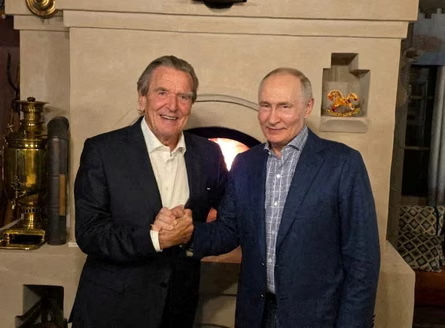
A German court has begun hearing the case against Serhii Kuznetsov, a former Ukrainian special forces officer accused of participating in the September 2022 explosions that severely damaged the Nord Stream gas pipelines linking Russia and Germany. The trial in Hamburg concerns an operation that disrupted a major energy connection between the two countries and became the focus of competing allegations over responsibility. Prosecutors accuse Kuznetsov of involvement in attacks on civilian infrastructure, including causing an explosion, damaging property and interrupting public services. The charges also include alleged complicity in war crimes. Kuznetsov and Ukraine deny any role in the sabotage. Appearing in court on Wednesday in a grey suit, white shirt and black tie, Kuznetsov entered alongside his lawyers and saluted. He and his legal team remained silent for about 10 minutes while the federal prosecutor general read the indictment, which was translated into Ukrainian at the same time. According to the prosecution's allegations, Kuznetsov helped prepare and execute the placement and detonation of at least four explosive devices, each weighing as much as 27kg, at a depth of approximately 80 metres in the Baltic Sea near Denmark's Bornholm island. Investigators believe six other people were involved: four deep-sea divers, an explosives specialist and a yacht captain. The group allegedly used a rented yacht and explosives equipped with timers. Kuznetsov's defence team questioned the legitimacy of holding the trial. His lawyers told the court that he had spent 11 months in detention, almost entirely in solitary confinement, and described his treatment as being “like a pawn on a chessboard”. They also argued that his position as a military officer prevented him from speaking about certain actions, leaving him to defend himself “with his hands tied”. The explosions occurred on 26 September 2022, damaging three of the four pipelines in the Nord Stream 1 and Nord Stream 2 networks. Built to transport Russian natural gas beneath the Baltic Sea, the systems connected Vyborg in western Russia with Lubmin, near Greifswald in northern Germany. Nord Stream 1 had served as Russia's principal gas supply route to Germany before Moscow halted deliveries in August 2022. Nord Stream 2 had been completed and was ready to transport gas, but it never entered service: Germany suspended the authorisation process shortly before Russia launched its full-scale invasion of Ukraine. The sabotage came as European governments were seeking to reduce their dependence on Russian energy following the Kremlin's aggression. It also drew attention to Germany's reliance on Russian gas and the difficulties of establishing responsibility for covert operations during wartime. Initial speculation among security observers pointed to Russia, which denied involvement and accused the United States. Washington also rejected the allegation. In July, however, German federal prosecutors accused Ukrainian state authorities of ordering the operation. They said its objective was “to permanently halt gas supplies via the pipelines and prevent Russia from using the revenue from natural gas trade to finance its war effort.” Ukrainian president Volodymyr Zelenskyy has denied that Ukraine was responsible. Kuznetsov was detained in August 2025 while on a family holiday in Italy. Italian police said he surrendered without resistance, and he was travelling with a false passport. He was transferred to Germany in November 2025 after legal attempts to block his extradition failed. Another suspect, Volodymyr Zhuravlyov, who works as an air-conditioning installer and dives as a hobby, was arrested in northern Croatia in August under a European warrant. He is contesting extradition to Germany after applying for asylum in Croatia and denies involvement in the attack. The case has political implications for Germany, given Ukraine's position as a country at war and a recipient of substantial German support. The German government has declined to comment on the proceedings. Demonstrators gathered outside the Hamburg court on Wednesday, some carrying Ukrainian flags and signs. One Ukrainian man living in exile in Germany said: “It's a scandal that a Ukrainian is being accused of a war crime here today, when Russia is constantly committing war crimes in Ukraine.” The case has also become an issue in German domestic politics. The far-right, pro-Kremlin Alternative für Deutschland (AfD), which has been gaining support in opinion polls, has used the allegations to argue that Germany should stop assisting Ukraine. The party also advocates restoring the pipeline connection, saying cheaper gas could help ease the cost-of-living crisis. Nearby, pro-Ukrainian demonstrators stood only a few feet from supporters of the far-left BSW party. The BSW shares the AfD's position on Russia in this respect and also supports restoring the pipelines. Its supporters called for a parliamentary inquiry into the political motives behind the sabotage. Nord Stream had been politically contentious even before the explosions. Russian president Vladimir Putin and Gerhard Schröder, Germany's chancellor at the time, had overseen the development of Nord Stream 1, which allowed Russian gas to reach Germany without transiting Ukraine. After leaving the chancellorship, Schröder was appointed by Putin as chair of the supervisory board of Nord Stream AG. Schröder was seen attending Putin's birthday celebration the previous week. The Hamburg court rejected a request by Russian parties to participate in the case as co-plaintiffs. Gazprom, which owns the Nord Stream 2 pipeline, argued that it should be allowed to join because of what it described as severe economic losses caused by the attack. The court said that although repairs would be expensive, restoring the pipelines would not be economically impossible. Reports indicate that Kuznetsov is expected to maintain his right to remain silent during the proceedings. His military identification reportedly shows that he was still serving when the pipelines were blown up. His lawyers are expected to submit affidavits from two senior military officers supporting their argument that he is prohibited from disclosing details of his military activities. Kuznetsov is also reported to have received orders from a man regarded as the alleged mastermind of the operation. That man is among those who have provided statements in support of Kuznetsov. The trial is scheduled to resume on 27 October. Sixteen hearing dates have been set at Hamburg's Hanseatic Higher Regional Court through 17 December, and additional sessions are expected in January and February.