2026 Panama earthquakes
A series of powerful earthquakes, headlined by a magnitude-7.7 tremor, struck Panama on October 9, 2026, causing widespread infrastructure damage and prompting a national state of emergency.
Also known as: 2026 Panama earthquake
On October 9, 2026, a powerful magnitude-7.7 earthquake struck the Azuero Peninsula in Panama, centered near Pitaloza Arriba in the central province of Herrera at a depth of 10 km. It was followed by a magnitude-6.6 aftershock and more than 100 subsequent aftershocks, marking the largest earthquake sequence to hit the country since 1882.
Impact and Damage
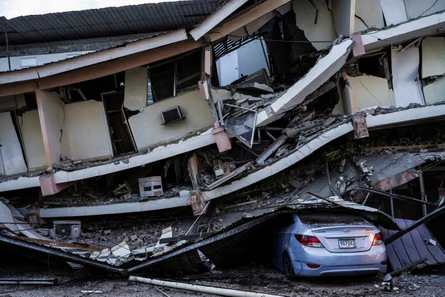
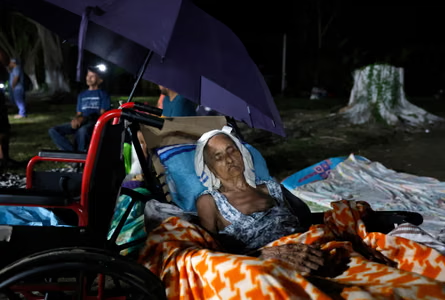
The earthquakes caused widespread damage across all 10 of Panama's provinces and two Indigenous territories, with the heaviest destruction concentrated in the central provinces of Veraguas, Herrera, Cocle, and Los Santos. Infrastructure impacts included hundreds of damaged homes and public schools, as well as affected healthcare facilities, hotels, churches, and bridges. In historic areas such as La Villa de Los Santos, buildings and a colonial-era church collapsed. While officials reported no widespread fatalities, at least two deaths and 27 injuries were attributed to the disaster. Landslides and road damage left some remote communities temporarily cut off, and power outages affected multiple provinces.
Government Response and International Aid
In response to the disaster, the Panamanian government declared a national state of emergency. Regional neighbors offered support, and the United States mobilized a disaster response team alongside a $5m humanitarian assistance pledge and military helicopter support to deliver emergency food supplies to affected areas.
Related translated reports
Panama declares emergency after twin earthquakes and aftershocks strain communities
Panama's government declared a state of emergency Saturday after Friday's 7.7- and 6.6-magnitude earthquakes caused damage in all 10 provinces and two Indigenous territories, with more than 100 aftershocks reported and no deaths attributed by officials.
Panama's government declared a state of emergency on Saturday after two powerful earthquakes on Friday - one magnitude 7.7 and another 6.6 - generated aftershocks that shook communities for hours. Seismologists recorded more than 100 aftershocks, including ones measuring magnitude 5.8, 5.5 and 5.2. Officials did not attribute any deaths to the quakes, but reported damage in all 10 of Panama's provinces and two Indigenous territories, with buildings toppled near the epicentre and evacuations across the Central American country. The earlier quake, also felt in neighbouring Colombia, was centred about 10km (6 miles) south-west of the remote community of Pitaloza Arriba, in the central province of Herrera, according to the US Geological Survey, and struck at a depth of 10km (6 miles). Presidential minister Juan Carlos Orillac announced the emergency at a news conference in the capital, Panama City, saying homes, schools, healthcare facilities, roads and hotels were among the damaged facilities. Malitzie Rivera, deputy director of the National Civil Protection System, said 27 people had been reported with injuries, ranging from minor to moderate. Most of the damage was concentrated in the central provinces of Veraguas, Herrera, Cocle and Los Santos. The Civil Protection agency reported that about 420 homes and the same number of public schools had been damaged, along with seven hotels, at least 13 churches and nine bridges. In La Villa de Los Santos, a colonial-era community about 64km (40 miles) north-east of the epicentre, homes and a historical Catholic church collapsed, and people who spent the night on the streets were waiting for the government's guidance on what to do next. Tony Jimenez, whose home partially collapsed, said while sitting with relatives under a tent: "We've been here since 1 pm yesterday; we haven't moved. It was a terrible thing. I can tell you with absolute certainty that in my 90 years, I had never experienced anything like it. It was intense - truly intense." Officials did not report any missing people on Saturday but said some communities remained cut off due to landslides and road damage. Carlos Valdes, head of the seismology department at the National Autonomous University of Mexico, said the country appeared to have avoided widespread deaths, and that this could be due to strict building codes, especially those governing construction of skyscrapers in the capital. Messages of support and offers of assistance came from across the region shortly after the earthquakes. Mulino thanked fellow Latin American leaders on Friday, saying he had spoken with the presidents of Chile, Uruguay and Guatemala, among others. The US Department of State said on Saturday that it had mobilised a disaster response team to help local authorities with search and rescue expertise as well as aerial and on-the-ground assessments, and the US government pledged $5m for humanitarian assistance. The US military's southern command said two helicopters, supported by the state department's drug-control bureau, had delivered 2,000 pounds (907kg) of food to people affected by the earthquakes.