2026 Brazilian presidential election
General elections held in Brazil to determine the president, vice president, members of the National Congress, and state governors, culminating in an October runoff between incumbent Luiz Inácio Lula da Silva and senator Flávio Bolsonaro.
Also known as: 2026 Brazilian general election
Overview
General elections were held in Brazil on 4 October 2026 to elect the president, vice president, National Congress, state governors, and legislative assemblies. Because no presidential candidate secured more than 50% of the valid votes in the first round, a runoff election was scheduled for 25 October 2026.
Candidates and First Round
The runoff contest features incumbent left-wing president Luiz Inácio Lula da Silva, seeking a fourth non-consecutive term, against right-wing senator Flávio Bolsonaro. Flávio Bolsonaro, the eldest son of former right-wing president Jair Bolsonaro, led the first round of voting with 47% of the vote, while Lula da Silva followed with 45%.
Key Issues and Campaign
The election has centered on contrasting visions for the country's economy, security, and foreign policy. Flávio Bolsonaro campaigned on promises of tax and public spending cuts, a tough crackdown on organized crime, and releasing his father—who is serving a sentence for plotting a coup after the 2022 election. Meanwhile, Lula da Silva and the Workers' Party framed the election as a defense of democracy and national sovereignty, emphasizing social progress and criticizing perceived foreign interference.
Related translated reports
Brazil’s runoff pits Lula against Jair Bolsonaro’s son
Voters are choosing between President Luiz Inácio Lula da Silva, seeking a fourth non-consecutive term, and Senator Flávio Bolsonaro, whose father, former president Jair Bolsonaro, is imprisoned for plotting a coup.
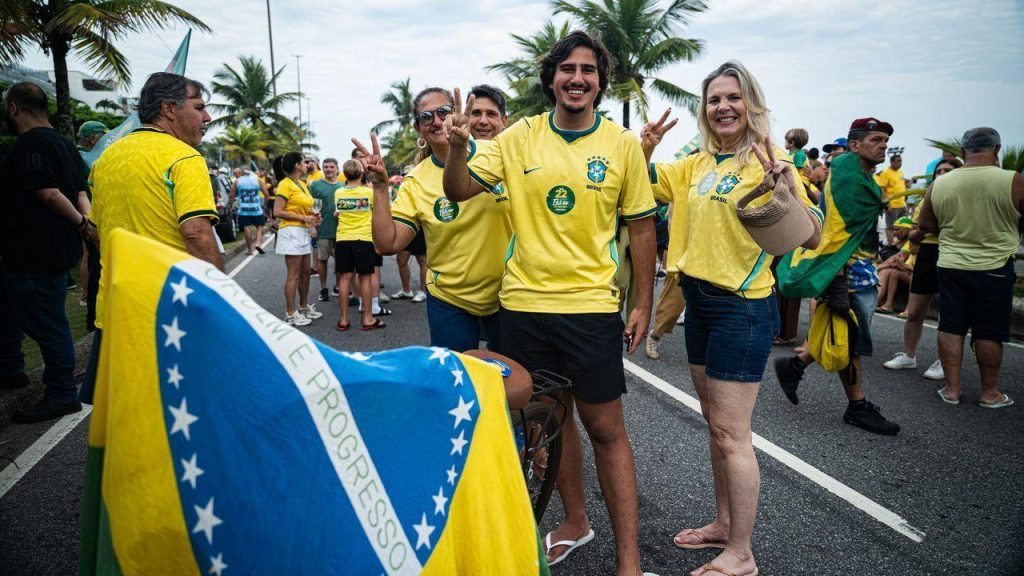
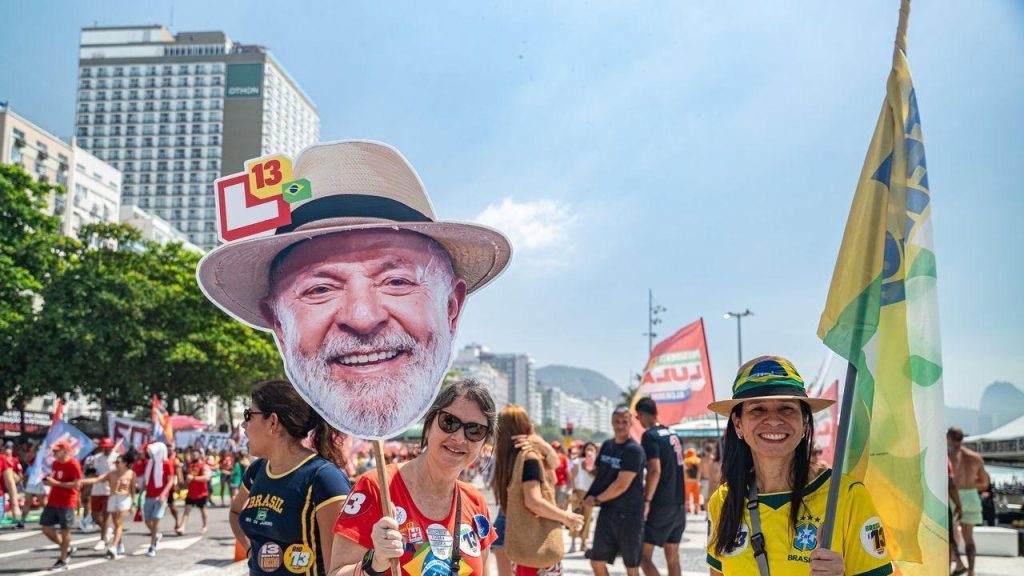
Voting is under way in Brazil in a closely contested presidential runoff between 80-year-old incumbent Luiz Inácio Lula da Silva and 45-year-old right-wing senator Flávio Bolsonaro. Lula, a left-winger, is seeking a fourth non-consecutive term. Flávio Bolsonaro is the son of former president Jair Bolsonaro, who was sentenced to more than 20 years in prison for plotting a coup after losing the 2022 election. Jair Bolsonaro is now serving his sentence under house arrest because of ill health. Flávio Bolsonaro led the first round on 4 October, a result US President Donald Trump described as a “very big” victory. No candidate who finished behind in Brazil’s first round has ever gone on to win the runoff. Flávio Bolsonaro voted at a polling station in Rio de Janeiro early on Sunday and told reporters that “time has come for real change”. His final campaign events drew jubilant supporters, who backed his promises of a tough drive against organised crime, along with tax and public-spending cuts. He campaigned on the eve of voting in Belo Horizonte, the capital of Minas Gerais, a state that has been a must-win for presidential candidates since the 1980s. In a video posted on social media, he told supporters: “The time is almost here. There are only a few hours left before we shape the future of our nation for the next 30 or 40 years.” He has also pledged to release his father. Supporters of Jair Bolsonaro rallied in Barra de Tijuca, Rio de Janeiro, where he has a home, wearing Brazil’s national colours. One told BBC News: “Brazil needs change, and Flávio is the person that represents that today, after so many years of the Left destroying the economy and the country.” Another said she valued his pledge to “end violence in Brazil, end terrorism, narco-trafficking, and to reduce interest rates”. Lula’s supporters have held large rallies since Flávio Bolsonaro’s first-round lead, seeking to increase participation after 33 million people did not vote earlier this month. On Saturday, Lula addressed a large crowd on Rio de Janeiro’s Copacabana beach, saying the election was about “sovereignty”. He said voters would choose between someone who kissed the Brazilian flag and someone who kissed the American flag. Lula’s administration has accused the US of interfering in Brazil’s election; Washington has called the allegation “baseless”. Lula told the crowd: “We’re going to win the election for one simple reason: it’s true that the people want change [but] they want to move forward. They don’t want to go backward.” A Lula supporter, Roberta, told BBC News: “This movement is to show we have strength. We’ve woken up, we’re coming to the street to make a difference and turn the vote around.” A man wearing Brazil’s yellow-and-green football shirt said Bolsonaro supporters had “appropriated” it, but Lula supporters were reclaiming it. Lula and his Workers’ Party have described the contest as a “battle for democracy”. They argue Jair Bolsonaro’s conviction for plotting a coup showed that “Bolsonarismo” threatened Brazil’s democratic institutions. They have also highlighted financial scandals that plagued the party for years and turned many voters against it, a line of attack used by Flávio Bolsonaro, who has labelled the Workers’ Party corrupt. Relations between Lula and Trump have been rocky during Lula’s latest term. Lula has said Brazil “does not fit into anyone’s backyard”, apparently referring to what Trump has called the “Donroe Doctrine”. The US administration’s national security strategy asserts that US dominance in the Western hemisphere should not be interfered with. Flávio Bolsonaro, by contrast, says cooperation with Washington against powerful criminal gangs could restore state sovereignty in areas where the gangs hold considerable power. Lula plans to watch Sunday evening’s results in São Paulo. Flávio Bolsonaro is expected to be in Brasília, where his father is under house arrest.