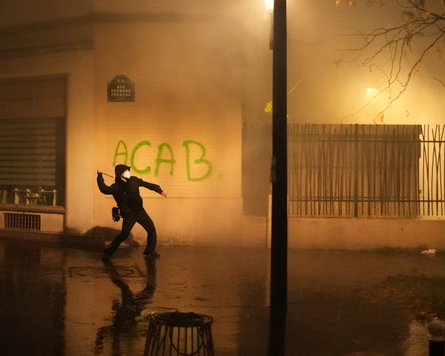
2026 French school protests
A nationwide wave of demonstrations and high school blockades in France beginning in September 2026, sparked by poor school and economic conditions and growing into a broader social movement.
Also known as: 2026 French student protests
Overview
The 2026 French school protests are a sustained wave of demonstrations and high school (lycée) blockades that began in France in September 2026. Initially sparked by high school students protesting against poor conditions in schools, the movement rapidly evolved into a broader national mobilization supported by teachers, parents, trade unions, political organizations, and participants from prior movements such as the yellow vests.
Causes and Grievances
The protests originated from student frustrations regarding structural and economic issues within the education system, including:
- Teacher shortages and overcrowded classrooms
- Run-down, dilapidated buildings and a lack of basic infrastructure
- High classroom temperatures during the 2026 European heatwaves
- Stress linked to the university application platform Parcoursup
Participants also highlighted broader socio-economic concerns, such as the rising cost of living, high inflation, and limited public investment in social programs.
Mobilization and Clashes
By October 2026, nationwide mobilizations drew hundreds of thousands of participants across France. While many marches remained peaceful—featuring students, families, and labor unions—several demonstrations encountered severe unrest, police charges, teargas, and property damage. The protests also coincided with broader civil unrest across Europe driven by similar economic pressures.
Related translated reports
Mass protests sweep France over school conditions, policing and cost-of-living concerns
Hundreds of thousands of people demonstrated across France in support of school students demanding more teachers and repairs to deteriorating schools, while wider anger focused on living costs and policing. The government put nationwide turnout at at least 400,000, while unions estimated twice that number. Authorities reported 1,314 arrests, 75 fires and 24 shops looted, with clashes breaking out after largely peaceful marches in several cities.
Hundreds of thousands of people took to the streets across France on Saturday, backing high school students who have been demanding more teachers, improved facilities and repairs to deteriorating school buildings. The demonstrations, which were largely peaceful, came as Emmanuel Macron faced mounting social and political pressure during his final months as president. The French government estimated nationwide participation at at least 400,000 people, while trade unions put the figure at roughly twice that level. The interior ministry said 1,314 people were arrested, 75 fires were recorded and 24 shops were looted, figures that were lower than those reported during the previous weekend's unrest. In Paris, government estimates put attendance at at least 110,000. Demonstrators marched along the eastern edge of the capital, expressing solidarity with high school students while also protesting against the cost of living and what they described as excessive policing. Some accused the government of responding to school protests over the previous month with riot police rather than political measures. For much of Saturday afternoon, the Paris demonstration had a relaxed atmosphere, with brass bands performing and families, including children and grandchildren, joining the march. Placards criticised government policing and carried messages including “Oppression breeds rebellion” and “The right to protest”. Violence broke out near the end of the demonstration at Porte de Vincennes. Groups of masked men dressed in black, who had not appeared to participate in the earlier peaceful march, emerged and some threw bottles and stones at police. Officers responded with teargas, water cannon and stun grenades. A rubbish bin was set on fire and fireworks were launched towards police. Riot police also charged a larger group of protesters after the Paris march and used batons against them. Elsewhere, police used teargas to stop demonstrators from entering city centres in Lyon, Lille, Montpellier, Nantes and Toulouse. Clashes in Marseille included several bin fires. At least two people were seriously injured: one in Clermont-Ferrand and another in Toulouse, where the injured person was reported to have lost fingers. Interior minister Laurent Nuñez said that during demonstrations around the country, what he described as “high-risk groups” had separated from the main marches and attempted to carry out violent acts. More than 70,000 police officers were deployed in French cities. Many shops were boarded up and museums were closed as authorities prepared for the possibility of renewed violence after the previous Saturday, when peaceful demonstrations were accompanied by one of France's most violent days of unrest in years. Public buildings were burned, hundreds of shops were damaged and looted, and at least 2,700 people were arrested nationwide during that earlier unrest. In Nice, prosecutors said on Sunday that 59 people had been taken into police custody. Eleven of them were suspected of belonging to extreme-right groups and were accused of gathering with the intention of committing violence. According to a statement provided to public broadcaster FranceInfo, some suspects were arrested in two vehicles containing masks, gloves, gas sprays and truncheons. Local media had reported that extreme-right groups entered central Nice on Saturday and targeted demonstrators. Anger at Macron was widespread during Saturday's protests, particularly over his government's ban on non-union demonstrations it considered “illegitimate” and restrictions preventing protesters from entering city centres. At the Paris demonstration, Nadège, a 43-year-old communications worker, said she had been exposed to teargas at a peaceful protest the previous weekend. She said she had returned to demonstrate peacefully and defend the legal right to protest, adding that people had become afraid and that maintaining those rights required courage. A 21-year-old student from a Paris science faculty that had been blockaded by protesters said demonstrators increasingly felt that France was becoming an authoritarian system seeking to restrict the democratic right to protest in the streets. Jean-Luc Mélenchon, the radical-left presidential candidate who joined the Paris rally, said Macron needed to “give in” and respond to the country's social problems or face continuing demonstrations. Mélenchon said he believed the protests could recur every week if the situation remained unchanged. The current crisis began with high school demonstrations in mid-September. Students aged 15 to 18 protested against staff shortages, leaking and crumbling school buildings and insufficient chairs in overcrowded classrooms. The movement developed into the country's largest youth mobilisation in years, drawing support from teachers, parents and trade unions. Police investigations are under way after some children and other protesters were maimed or injured by explosive police weapons. Some participants on Saturday wore the yellow vests associated with the gilets jaunes anti-government demonstrations of 2018 and 2019. Jérôme Rodrigues, a prominent figure in that movement, said the government was pushing demonstrations away from centres of power because it was afraid. He argued that police shields would not address the difficulties faced by people struggling financially and predicted that protests would probably continue. Pierre, a 60-year-old retired banking consultant, said he had joined the demonstration to support school students. Referring to his eight-year-old granddaughter, he said he wanted her to have a brighter future and accused the government of refusing to listen to public demands. Jesse, a 40-year-old charity worker from northern Paris who carried a “Free Hugs” sign, said she was angry and wanted to support students seeking better conditions. She said she was proud of the schoolchildren and believed people needed to stand together. Although she did not consider attending a peaceful demonstration to be going to war, she said it could sometimes feel that way and that she had prepared unusually carefully, wearing old clothes in case they were damaged by teargas or torn. In Orléans, thousands of people marched while chanting anti-fascist slogans in opposition to a congress held by Marine Le Pen's far-right, anti-immigration National Rally. Demonstrators criticised both Le Pen, described as a frontrunner in next year's presidential election, and Macron, who is due to leave office next year. The crowd chanted: “Macron, resign. Le Pen in prison.”