2026 Israeli legislative election
Scheduled Israeli legislative election to elect all 120 members of the 26th Knesset on October 27, 2026.
Also known as: 2026 Knesset election
Overview
The 2026 Israeli legislative election is scheduled to be held on October 27, 2026, to elect all 120 members of the 26th Knesset and determine the governing coalition succeeding the 37th government led by Prime Minister Benjamin Netanyahu. The outgoing 25th Knesset marked the first Israeli legislature to complete a full four-year term without early dissolution since 1988, following the political crisis of 2018–2022. However, the government's tenure experienced significant political turmoil, including mass protests over judicial reform, the October 7 attacks, the subsequent Gaza war, and recurring coalition crises regarding Haredi military conscription.
Campaign and Key Contenders
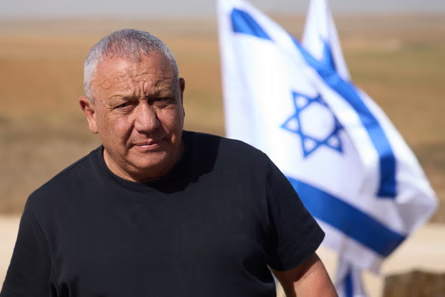
The election features a contest between Benjamin Netanyahu's far-right coalition, Gadi Eisenkot's opposition Yashar party, and alliances such as Together—led by former prime ministers Naftali Bennett and Yair Lapid. The election uses a closed-list proportional representation system requiring parties to meet a 3.25% electoral threshold to enter the legislature.
Gaza Policy and Impact
The campaign has largely focused on the goal of destroying Hamas and addressing the trauma of Israeli society, while the humanitarian catastrophe in Gaza has received minimal attention from major candidates. Palestinians in Gaza have expressed deep pessimism regarding the election outcome, fearing it will shape future military and humanitarian policy, with candidates competing on tough stances toward the territory amid severe infrastructure destruction, shortages, and displacement.
Related translated reports
Gaza Palestinians see little hope in Israel election as candidates stress defeating Hamas
Palestinians in Gaza say Israel’s election offers little prospect of relief as Benjamin Netanyahu and opposition leader Gadi Eisenkot both pledge to end Hamas rule. With nearly a million people displaced, shortages worsening and much of Gaza destroyed after three years of war, residents fear their suffering has become part of Israeli electoral competition rather than a focus of policy.
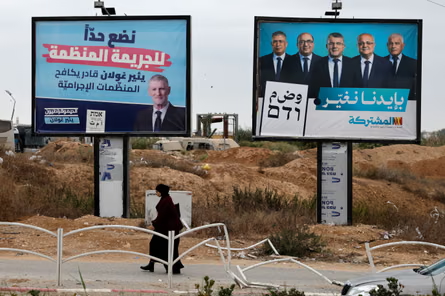
Palestinians in Gaza are watching Israel’s election with deep anxiety, fearing that whoever wins will have enormous influence over their lives while offering little sign of a change in policy toward the devastated territory. Nearly a million displaced Palestinians are living amid severe sanitation problems, shortages of water and the continuing danger of Israeli strikes. Yet Gaza’s humanitarian crisis has barely featured in the Israeli campaign, which has instead centred heavily on security and the future of Hamas following the 7 October attacks and their impact on Israeli society. Benjamin Netanyahu’s far-right coalition and the opposition Yashar party led by Gadi Eisenkot have both promised to bring Hamas rule to an end. Both also support Donald Trump’s controversial peace plan, but neither leader has presented a detailed vision for what would happen in Gaza afterward. Sami Abu Rumi, 47, originally from Rafah and now displaced in al-Mawasi in Khan Younis, said Palestinians hoped for an Israeli government that would be less willing to pursue killing and displacement. At the same time, he said he regarded the thinking of successive Israeli governments as broadly similar. Eisenkot, a former Israeli military chief whose party has been ahead of Netanyahu’s Likud in polling, has promised to repair Israel’s international standing after three years of war. His record, however, is firmly associated with the military establishment. He was a senior commander during Israel’s 2006 war with Hezbollah and later became associated with the “Dahiya doctrine”, which advocated using overwhelming force in civilian areas from which militants operated. Eisenkot’s son and two nephews were killed while fighting in Gaza. Critics argue that the doctrine has subsequently been reflected in operations in Gaza, producing destruction they say amounts to war crimes. Abu Rumi said the election rhetoric offered Palestinians little reassurance. Eisenkot speaks about defeating Hamas, he said, while Netanyahu highlights Israeli military operations and Palestinian deaths. In Gaza, meanwhile, families are trying to obtain food, medical treatment and schooling for their children while living among destroyed homes and infrastructure. The Arab-led Joint List sought to force Gaza into the campaign earlier this week with a 48-second election advertisement featuring drone footage of the territory’s ruins. Its narration accused Israeli society of behaving as though the killing of tens of thousands of people and the destruction of entire cities were normal. The party said it would refuse to remain silent, contrasting its message of life with what it described as other parties’ demand for further destruction. Arab parties are considered extremely unlikely to become part of a coalition led by Eisenkot, although they could potentially support such a government from outside. For many Palestinians in Gaza, however, the distinction offers little reason for optimism. Haneen Hamdouna, 45, from Beit Lahia and also displaced to al-Mawasi, said she did not believe any Israeli contender truly had Gaza’s interests in mind. Whether Netanyahu, Eisenkot or another politician prevailed, she said, attacks on Gaza appeared to have become part of Israeli election politics. Hamdouna said Palestinians had repeatedly hoped that a new Israeli government might prove better than its predecessor, only to be disappointed. Even if the number of aid trucks entering Gaza increased from 100 to 200, she said, such a shift would not necessarily amount to a meaningful improvement in daily life. For many residents, the immediate effort to obtain food and water leaves little time to follow the campaign closely. Concern about renewed hunger is growing as markets face shortages of fresh produce and other basic goods. Residents say commercial deliveries have been halted for roughly a week, pushing prices sharply higher. Flour is now selling for more than three times its earlier price, while reduced humanitarian assistance has increased fears that families could again face a severe food crisis. Some Palestinians are nevertheless following the Israeli vote closely, not because they expect major improvements but because they fear the consequences of the result. They worry that Gaza’s suffering has become a recurring element of Israeli campaigns, with politicians seeking to demonstrate who can adopt the hardest line toward the territory. Karim Mareesh, 43, said one friend had planned to celebrate his son’s wedding in the coming days but postponed it until after the Israeli election. The man feared that another term for the far-right government could lead to renewed war and another displacement, potentially costing him his tent and the wedding supplies he had worked to save. After three years of war, large parts of Gaza have been transformed into fields of broken concrete and bomb craters. Israeli restrictions affecting food and humanitarian assistance have also contributed to severe hunger, described in the report as being used as a weapon of war. More than 20,000 Palestinian children have been killed since 7 October 2023. Noor AlMoghanni, 20, from Gaza City, said statements about confronting Palestinian suffering increasingly sounded to her like attempts to ease people’s pain with promises they no longer trusted. She said that whether Netanyahu wins or loses, she expects conditions in Gaza to remain fundamentally unchanged. In her view, the objective remains the destruction of Gaza and the basic structures that sustain life there.