2026 Serbian parliamentary election
Snap parliamentary election held in Serbia on October 25, 2026, resulting in a historic victory for the student-led protest movement and ending the 14-year rule of the Serbian Progressive Party.
Early parliamentary elections were held in Serbia on October 25, 2026, to elect members of the National Assembly. The snap elections were called by then-President Aleksandar Vučić following nearly two years of anti-government protests triggered by a fatal railway station canopy collapse in Novi Sad.
Results and Impact
The student-led anti-corruption movement, running as the Student List, achieved a decisive victory, winning approximately 52.7% to 53.3% of the vote and securing an absolute majority of seats in parliament. Right-wing populist leader Aleksandar Vučić conceded defeat for his Serbian Progressive Party (SNS), which had been in power since 2012, marking a major political transition and ending the party's long-standing dominance.
Background and Campaign
- The protests began in response to a railway station disaster in Novi Sad blamed on corruption and negligence.
- The Student List fielded candidates from a cross-section of Serbian society, including doctors, actors, academics, and sports personalities.
- The campaign platform focused on anti-corruption measures, purging rule-breaking officials, removing party loyalists from public enterprises, and freeing the public broadcaster from political control.
Related translated reports
Student movement unseats long-serving Serbian leader Vučić in snap election upset
Following a historic vote framed as a referendum on the nation's direction, Serbia's dominant right-wing leader of 12 years conceded defeat to a grassroots coalition.
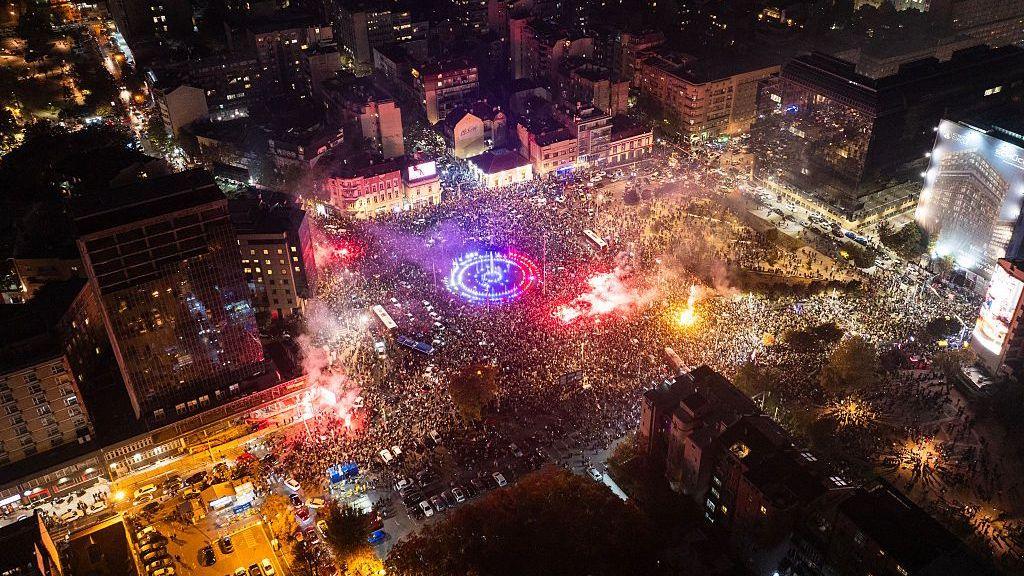
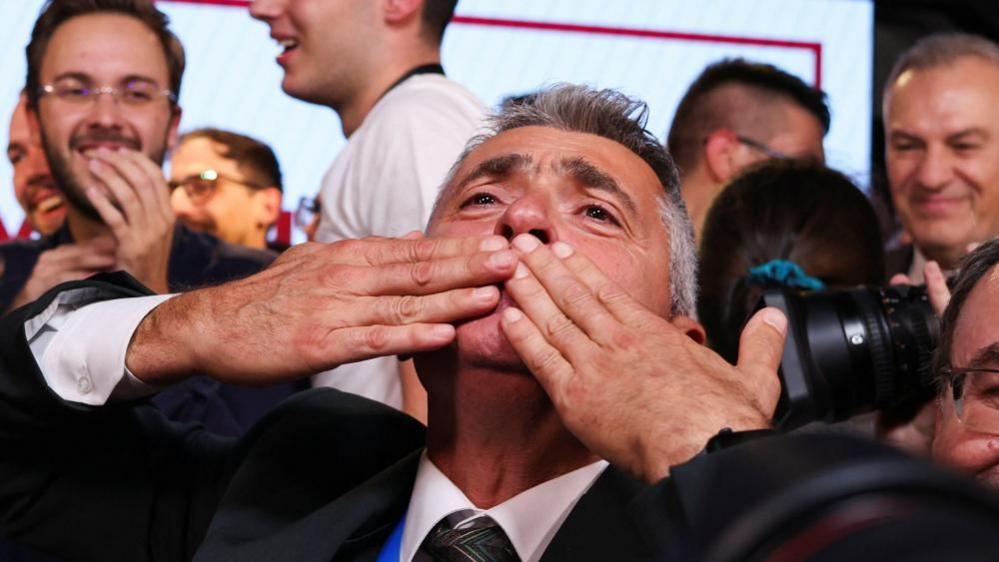
Aleksandar Vučić, who has steered Serbian politics for over a decade, acknowledged defeat in snap parliamentary elections after a youth-driven protest movement surged to victory. Street celebrations erupted across Belgrade, Novi Sad, and other municipalities as crowds gathered to mark the outcome. The political coalition behind the movement emerged less than two years prior following a fatal railway station tragedy widely attributed to negligence and graft, ultimately contesting the ballot with figures representing a broad cross-section of society. Speaking at the headquarters of the Serbian Progressive Party (SNS) in the capital, Vučić conceded that the vote's outcome was unequivocal. Preliminary figures released by the election commission late Monday morning—with 97% of ballots tallied—indicated the student-backed coalition captured 2.25 million votes, securing 52.7% support, compared with 1.67 million votes and 39.2% for the former ruling SNS. Having served two terms as president, Vučić was ineligible to seek a third and had spearheaded the SNS ticket with the intention of transitioning back to the prime minister's office, a position he vacated in 2017. He called the snap election in the wake of two years of continuous demonstrations sparked by the collapse of a concrete canopy at the Novi Sad station, an accident that claimed 16 lives. Ilija Srdanović, a leading candidate for the Student List, told BBC Serbian that the country was on the cusp of becoming a free state, noting that the anti-corruption coalition had mobilized anti-government sentiment nationwide to dismantle tyranny. Festive demonstrations crowded urban thoroughfares, accompanied by honking horns, fireworks, and crowds chanting "victory." One student described the outcome as miraculous, while another participant in Belgrade, Selena Lebovic, remarked that the results felt unbelievable and drew tears of joy. According to Reuters, candidate Radomir Saicic declared during a celebratory address that the public had demonstrated that no obstacle could outweigh collective will and determination. In Belgrade, David Vasić told BBC Serbian from the crowded center of Novi Sad—the focal point where the protests originally began—that conditions were bound to improve. The Student List, characterized by a decentralized leadership structure and candidates largely unaccustomed to traditional politics, fielded contenders from various professional backgrounds, including academics, medical doctors, actors, and sports figures. Nebojša Vladisavljević, a political science professor at the University of Belgrade, observed that the outcome represented an unprecedented political avalanche that swept away an authoritarian administration, establishing two major political poles and granting the Student List absolute legitimacy to govern. The movement's electoral platform centered on purging officials implicated in cracking down on demonstrators, barring party loyalists from managing public enterprises, and liberating the state broadcaster from political influence. Vučić and the SNS have consistently denied allegations of corruption. During the campaign, Vučić—who advocated for European Union membership while declining to apply sanctions against Russia regarding its invasion of Ukraine—had promised higher public sector wages, increased pensions, and greater spending on state healthcare. International reactions varied. Kremlin spokesperson Dmitry Peskov commended Vučić's efforts in bilateral relations and expressed hope that the new political leadership would recognize the mutual value of cooperation with Moscow, while adding that "it takes two to tango." Hungarian Prime Minister Péter Magyar welcomed the defeat, noting that student leaders had shared how much inspiration they drew from his own party's victory in April, which ended 16 years of Viktor Orbán's tenure, contrasting with the SNS administration that began in 2012. European Commissioner for Enlargement Marta Kos stated that a fresh chapter was opening for Serbia, confirming that EU doors remain open for mutual progress. Voting procedures earlier in the day saw substantial queues outside polling centers nationwide, as well as at diplomatic locations serving diaspora communities in cities such as Ljubljana, Munich, Paris—where voters waited through heavy rain—alongside Los Angeles and Chicago. Tensions surrounded the election, with police cordoning off the area around the Republic Electoral Commission in Belgrade. Focus has now shifted toward identifying who will head the Student List as prime minister, while presidential elections approach in December, with parliamentary speaker Ana Brnabić currently managing executive duties in a caretaker capacity.