Aleksandar Vučić
Serbian politician who served as president of Serbia from 2017 to 2026 and previously as prime minister and first deputy prime minister.
Also known as: Aleksandar Vucic
Aleksandar Vučić, born on 5 March 1970 in Belgrade, is a Serbian politician who served as president of Serbia from 2017 to 2026. He previously served as first deputy prime minister from 2012 to 2014 and as prime minister from 2014 to 2017.
Political career
Vučić began his political career in 1993 as a member of the Serbian Radical Party. He later served as the party's secretary-general and was minister of information from 1998 until 2000.
In 2008, Vučić and Tomislav Nikolić left the Serbian Radical Party and co-founded the Serbian Progressive Party, commonly known as SNS. Vučić became president of SNS in 2012 and remained in that position until 2023. The party entered government in 2012 and became the dominant force in Serbian politics during much of the following period.
Presidency and 2026 election
Vučić was elected president in 2017 and served two consecutive terms. In September 2026, he called an early parliamentary election and later resigned as president in order to run for prime minister. He was not eligible to seek another consecutive presidential term.
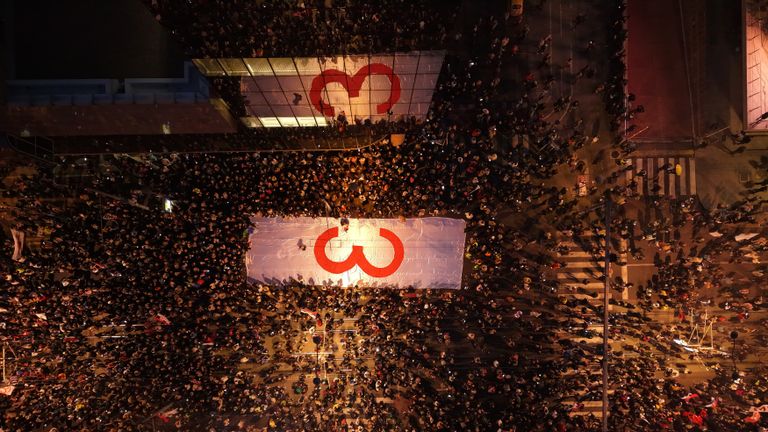
In the parliamentary election held on 25 October 2026, the SNS-led coalition headed by Vučić was defeated by the Student List. Preliminary and projected results showed the Student List winning a majority of seats, and Vučić conceded defeat on election night.
Related translated reports
Serbia’s Snap Election: A High-Stakes Duel Between Vučić and Student Protesters
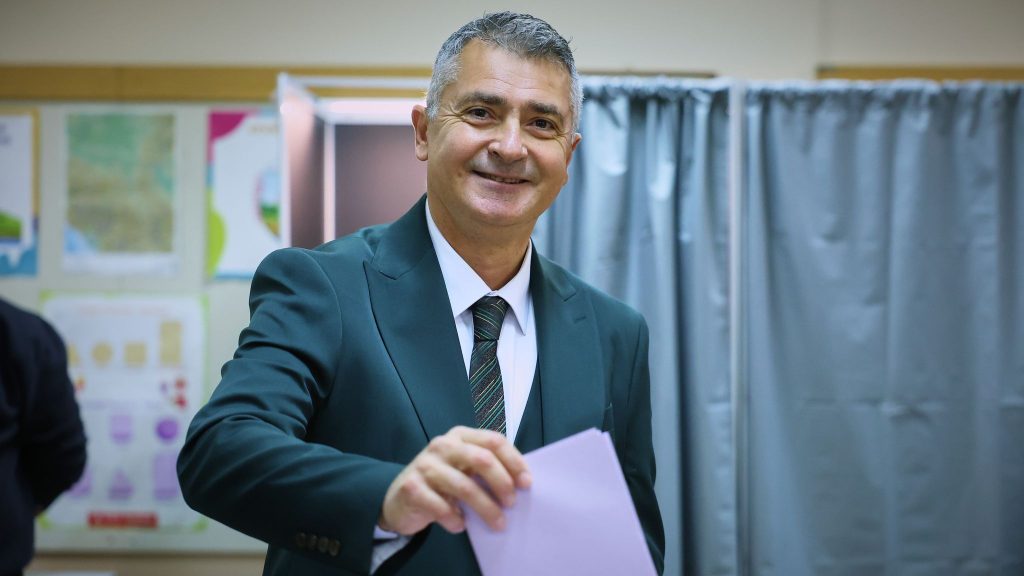
Voters in Serbia are casting ballots in a pivotal parliamentary election that pits former President Aleksandar Vučić’s ruling party against the youth-driven Students' List, marking the most significant challenge to his decade-long dominance.
Serbia is witnessing a critical political moment as citizens head to the polls for snap parliamentary elections widely interpreted as a referendum on the future of the nation. The contest features a tight race between Aleksandar Vučić’s right-wing Serbian Progressive Party (SNS) and the emerging Students' List, a movement born from nearly two years of anti-corruption protests.
Opinion surveys published shortly before the vote indicated a statistical dead heat. While one Thursday poll placed Vučić’s SNS slightly ahead at 47% compared to 40% for the students, other recent measurements suggested the opposition might be leading. This unpredictability makes the election the most uncertain in years and poses the greatest threat to Vučić’s rule since he first rose to prominence over a decade ago.
Origins of the Challenge
The mobilization of the student movement was triggered by the collapse of a train station canopy in Novi Sad in 2024, which killed 16 people. What began as demands for accountability and justice evolved into a broader crusade against perceived government corruption and creeping authoritarianism. Gaining widespread support across the Balkan nation of more than six million inhabitants, the Students' List is led by cardiologist Ilija Srdanović.
Vučić initiated this electoral cycle by resigning from his second term as president in September to run for Prime Minister again. His political trajectory includes serving as Deputy Prime Minister (2012–2014), Prime Minister (2014–2017), and President until last month. Despite the challenges, many Serbians continue to back him due to infrastructure modernization efforts, including new highways, railways, schools, and hospitals.
Election Mechanics and Stakes
>With 18 parties competing for seats in the 250-member National Assembly, high voter turnout is anticipated. However, smaller parties face the risk of failing to cross the 3% threshold required for representation. Polls close at 8 pm local time (7 pm UK time), with initial results expected approximately two hours later.A victory for the Students' List would represent a dramatic political shift in Serbia, echoing the recent defeat of Hungarian Prime Minister Viktor Orbán in April. Analysts suggest such an outcome could provide a blueprint for other student movements across Europe that have recently protested, sometimes violently, against deteriorating education standards.
Policy Platforms
Vučić’s campaign focuses on domestic economic improvements, pledging higher pensions, increased public sector salaries, investments in healthcare, and subsidies for young couples. Internationally, he has navigated a delicate balance, maintaining strong ties with China as a major investor and Russia as a traditional ally and primary natural gas supplier, while keeping the door open for European Union accession. However, EU relations have grown strained due to Brussels’ frustration with Serbia’s slow progress on judicial reforms, rule of law, and anti-corruption measures.
In contrast, the Students' List prioritizes domestic educational reform. The group has remained relatively quiet regarding its specific international ambitions, focusing primarily on internal governance and accountability.