António Costa
Portuguese lawyer and politician serving as president of the European Council since 2024, after serving as prime minister of Portugal from 2015 to 2024.
Also known as: António Luís Santos da Costa
António Luís Santos da Costa, born on 17 July 1961 in Lisbon, is a Portuguese lawyer and politician. He has served as president of the European Council since 2024.
Costa was prime minister of Portugal from 2015 to 2024 and secretary-general of Portugal's Socialist Party from 2014 to 2024. His earlier government roles included secretary of State for Parliamentary Affairs, minister of Parliamentary Affairs, minister of Justice and minister of Home Affairs. He was also mayor of Lisbon from 2007 to 2015.
In November 2023, Costa resigned as prime minister following an investigation involving members of his government over alleged corruption and malfeasance connected with lithium mining and hydrogen projects. Portugal's president subsequently dissolved Parliament and called a snap election.
As European Council president, Costa represents a central institution of the European Union in high-level political coordination. In the supplied news context, he publicly argued against withdrawing support from Ukraine and called for increased pressure on Russia.
Related translated reports
Applause in Brussels, cracks underneath: Europe’s pledge to Ukraine faces its sternest test
With American backing fading, EU leaders rallied around Volodymyr Zelenskyy in Brussels — yet lopsided budgets, reliance on US weaponry and a looming run of elections, fronted by Marine Le Pen's pledge to halt aid within six months, could fracture the coalition that has bankrolled Ukraine's resistance.
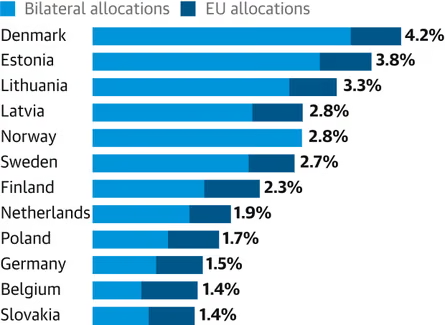
Volodymyr Zelenskyy could scarcely have hoped for a warmer reception. When Ukraine's wartime leader walked into the multicoloured summit hall at the European Council's Brussels headquarters last Friday morning, the EU's 27 national leaders burst into applause, rising from their seats to offer embraces and brisk handshakes. The choreography carried a deliberate message: whatever moods shift in Washington, this union intends to keep standing beside Kyiv. António Costa, the European Council's president, made sure the gesture translated into words. “This is no time to withdraw the support to Ukraine,” he told Zelenskyy and the assembled media, urging instead that pressure on Russia be stepped up. The Ukrainian leader replied in kind, saying pointedly that he was glad to be enjoying “huge support” from “real leaders”. The warmth in Brussels could hardly have contrasted more sharply with the news coming from across the Atlantic. That same day, Europeans had woken to another belligerent eruption from Donald Trump, who turned on Zelenskyy once again only days after sealing his diesel deal with the Kremlin. The US president judged Ukraine's leader harder to deal with than Vladimir Putin and pinned rocketing oil prices on him — without a word about the upward pressure created by his own war on Iran. On paper, Europe's deeds match its display of affection. The Kiel Institut's Ukraine Support Tracker calculates that European donors — including non-EU states such as the UK and Norway — have spent €236bn backing Ukraine from 2022 to April 2026, against a US outlay of €115bn. And where Trump is weakening sanctions, Brussels promises more: the EU has pushed through 21 rounds of sanctions on Russia and, last year, agreed to raise a €90bn loan for Kyiv — an unprecedented sum for a non-member state — while opening accession negotiations with Ukraine's government and sheltering 4.4 million Ukrainian refugees. Beneath the embraces, though, the picture darkens. Ukraine is heading into a fifth winter since Russia launched its all-out invasion, and the outlook behind Europe's stirring declarations is more complicated — and considerably less cheering for Kyiv. Three vulnerabilities stand out: the uneven sharing of Europe's bill, a hard dependency on American firepower, and — most critically — an electoral calendar that could fracture the consensus altogether. Start with the money, which flows unevenly. Germany is the second-largest donor, having spent €54bn since the war began — a contribution that has become all the more crucial now that Trump has halted virtually all new US funding. Even so, a Kiel Institut report judges the German effort “sizeable but not exceptional” relative to the size of the country's economy: four Nordic states combined have given more than Germany despite representing just a third of its population, and France and Italy, the EU's other big economies, also trail Berlin. Weighed against national income, the Kiel Institut finds, Ukraine's most generous backers are the Nordic, Baltic and other north European states. Denmark spends the equivalent of 4.17% of its gross domestic product on support for Ukraine, and Estonia 3.77%, while Germany manages 1.49%, France 1.1%, Italy 1% and the UK 0.86%. With Ukraine's enormous self-defence bill still climbing and Russia's relentless attacks continuing to wreak a heavy toll, these more open-handed donors might arguably feel that Europe's biggest economies — and other western allies — could do more to shoulder the ever-rising costs. Military hardware tells a harder story still. Europe cannot replicate US dominance in areas such as intelligence, a gap exposed brutally when the US SpaceX technologies Ukraine relies on for frontline drone operations, and for air defences shielding civilians from Russian air attacks, suffered disruption. Zelenskyy accused Washington of deliberately squeezing the country's access to its Starlink satellite internet network — an allegation that senior figures in the Trump administration have denied. Dependence extends to the US-made Patriot interceptors capable of downing Russian ballistic missiles, and this week the Ukrainian leader deepened the quarrel by accusing the Trump administration of blocking European countries from handing over their own Patriot stocks to Kyiv. Politics, most critically, could prove decisive. Europe is entering a supercycle of elections in which the far right is expected to make gains, with national votes due in Spain, France, Poland and Italy — four of the five biggest EU member states by population. Mujtaba Rahman, managing director for Europe at the Eurasia Group, maintains that Trump's opinions are not the chief menace to Ukraine; the real danger lies in European backing breaking apart. There is a risk, he suggested, that 2027 will be the year “when political reality, electoral reality, policy reality, economic reality catches up with Europe and prevents it being able to go further in its support for Ukraine”. France's elections could be the most consequential of the lot. The far-right leader and frontrunner Marine Le Pen is positioning herself as the figure to restore order and security after days of rioting and looting across French cities, and she has vowed to cease aid to Ukraine within six months of taking office “because we simply cannot do it any more”. Speaking to the Financial Times (£), she also promised to slash France's contributions to the EU budget, casting doubt on a proposed €100bn fund for Ukraine in the upcoming 2028-34 budget cycle. Beyond Ukraine, her victory could plunge the EU into a profound internal crisis that absorbs political energy and attention. In Rahman's view, the splintering has already begun. “European support for Ukraine is already fragmenting,” he argued, noting that only 24 EU countries approved the €90bn loan, with Hungary, Czechia and Slovakia opting out. A Le Pen win could tilt the balance, above all if anti-Ukraine parties make gains in Spain, Poland and Italy as well. “Le Pen is the biggest gamechanger because she will provide cover for many other countries to say: ‘enough is enough, we can't keep funding,’” he said. Such a scenario would sketch “a really dark picture for Ukraine, a really sad picture for Ukraine”, he warned — and the battlefield is not the problem. “Ukraine has done a remarkable job of holding the line. This is the risk Europe has been talking about for a very long time, and has promised Ukraine many times it would not allow to happen: that through strategic patience, Russia gains in the negotiating room what it has not been able to gain on the battlefield. And that is precisely the risk Ukraine is now confronting.” To head off that danger, EU leaders will look to another funding plan to shore up support. Ursula von der Leyen, the European Commission's head, has confirmed that Kyiv faces a €70bn funding gap in 2027, though she expects Ukraine's other international partners to help raise the sum. Jana Kobzová, co-director of the European Security Programme at the European Council on Foreign Relations, said the December summit of EU leaders will be the moment when “we should have a clear idea and mechanism” for delivering the €70bn ahead of the key elections. “I think the urgency and the consciousness on the side of the European leaders is already there,” she said. One element of the EU's Russia policy is at least insulated for now: a recent decision keeps sanctions in place for three years, sparing governments the divisive ritual of rollover votes every six months. Even so, Kobzová suggests a Le Pen victory six months from now could create a problem bigger than financing Ukraine itself. “If there is a huge shift in Europe as a result of these elections that are going to affect the way the EU itself works, then Ukraine might become collateral damage,” she said. For those who want to keep following the story, the complete edition of the Guardian's This is Europe newsletter lands in inboxes every Wednesday, and Guardian Europe columnists Rokhaya Diallo and Alexander Hurst will take readers' questions in a live session on the riots and protests in France at 3pm BST/4pm CEST on Friday 23 October.