Beau Lamarre-Condon
Former New South Wales police officer on trial in the NSW Supreme Court over the alleged murders of Jesse Baird and Luke Davies.
Beau Lamarre-Condon is a former New South Wales police officer who is on trial in the NSW Supreme Court over the deaths of Jesse Baird and Luke Davies.
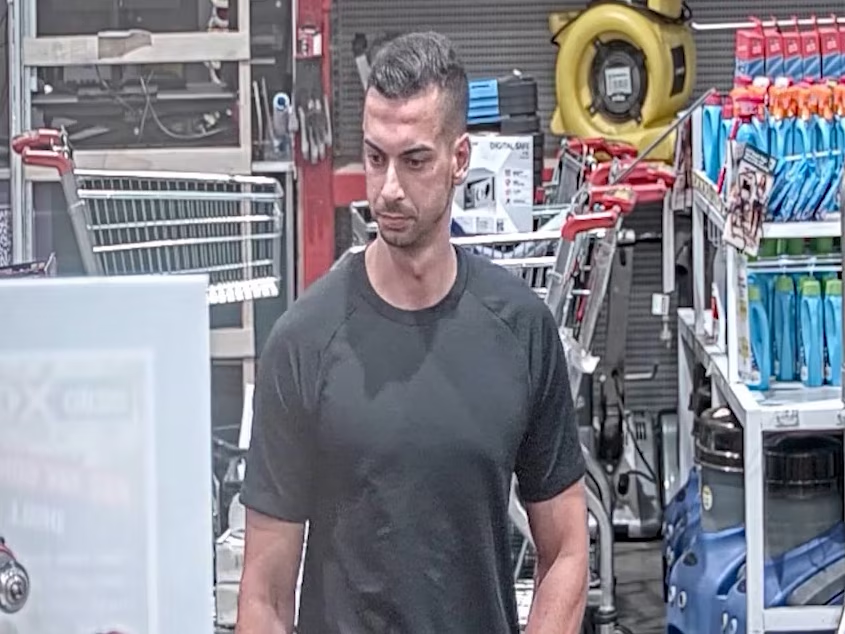
Prosecutors allege that Baird and Davies were shot on 19 February 2024 and that Lamarre-Condon later moved and attempted to conceal their bodies. CCTV shown during the trial records his movements in the following days, including visits to hardware stores, cash withdrawals and the use of several vehicles, including a hired white van.
Lamarre-Condon has pleaded not guilty. His defence argues self-defence and says the two men died during separate struggles involving a firearm at Baird's Paddington home.
Baird, an Australian television presenter and Australian Football League goal umpire, died on 19 February 2024. His remains and those of his partner were later found in the Bungonia area.
Related translated reports
Lamarre-Condon trial witness describes Goulburn farm trip and van’s vanished tarp as jury views hours of CCTV
The NSW Supreme Court jury in Beau Lamarre-Condon's double murder trial has been shown almost five hours of CCTV that prosecutors say charts the accused man's movements and alleged cover-up after the deaths of Jesse Baird and Luke Davies, while a friend has given evidence about a drive to a property near Goulburn, a van that smelled 'lemony', and a phone call that sounded final.
A woman who accompanied Beau Lamarre-Condon on a drive to a farm near Goulburn has told his murder trial she saw a blue tarp in the back of his hired white van on the way there — and that it had vanished by the return journey to Sydney. Her account came as the jury in the NSW Supreme Court case was shown close to five hours of CCTV footage, released by the court, which prosecutors say documents both the movements of the man accused of killing the young Sydney couple Jesse Baird and Luke Davies and his alleged attempts to conceal what happened to them. Mr Lamarre-Condon, 31, who was a serving police officer at the time, has pleaded not guilty to the murders and is arguing self-defence. His lawyers have indicated his case is that both men died during separate struggles involving his police pistol inside the Paddington share house where the Crown alleges they were shot. The prosecution says the killings happened on a Monday morning, and the footage spans the days following the deaths on 19 February 2024. The vision captures him switching between vehicles — from his Tesla to a hired Mazda, and then the hired white van the Crown alleges was used to transport the men's bodies, which had been placed in surfboard bags — and making repeated trips back to Mr Baird's Paddington street. He is also seen among shoppers at a series of Bunnings stores, selecting supplies and paying in cash. On the Tuesday, the court heard, he went to Bunnings in Alexandria for gumboots, a drill, hi-vis clothing and dust masks, made stops at ATMs and had sushi with a male friend at Cronulla. Early on the Wednesday he was dropped at St Vincent's Private Hospital in an Uber for what the jury was told was a minor procedure, before more ATM stops and a Bunnings trip to Rockdale, where the purchases ran to a tarpaulin, gloves, bin bags, a shovel, a wheelbarrow, two sets of white overalls in different sizes and six bags of quick-set concrete. In the afternoon, the court heard, he collected a friend — known during the trial by the pseudonym Elizabeth Kennedy — in the white van. Ms Kennedy testified that the pair booked accommodation for an upcoming trip before he asked whether she wanted to go for a drive. She said the vehicle smelled "lemony" and that she noticed a blue tarp in the back. She told the court she at times communicated with the accused through messages and calls on the encrypted app Signal, and that she was instructed to turn her phone off. During the roughly two-hour drive to Goulburn, she said, the windows stayed down and the air conditioning was running. CCTV shows the pair stopping at a Bunnings in Goulburn, where she said he asked her to pay for an angle grinder. They then arrived, according to her evidence, at a farm with dams, where Mr Lamarre-Condon said he knew the owners and needed to "break in and save the cattle" that were about to get out. She refused his request to help place garbage bags over the van's number plates. "I just thought he was up to something," Ms Kennedy told the court. She said she was left at the gate for 30 to 40 minutes while he drove toward a dam on the property, and that as it grew dark she had a panic attack. "I was hyperventilating and crying," she said, recalling that he was wearing gumboots when he returned. She described the drive back to Sydney as "an awful drive" because "it was freezing". On the way, she said, he made "cryptic" comments about her medication, having nightmares and whether she had thought about suicide, and told her he would need to return to Goulburn and would be "up all night", asking her to buy him a peach iced tea for the caffeine. The blue tarp she had earlier seen, she said, was no longer in the rear of the vehicle. The Crown alleges Mr Lamarre-Condon attempted, without success, to sink the men's bodies in a dam using cement and weights. The remains were ultimately found near a monastery in the Bungonia district, south-west of Sydney. Text messages between the accused and a colleague, meanwhile, show how he perceived his on-again, off-again relationship with Mr Baird. Under cross-examination by defence counsel John Stratton SC, Ms Kennedy was questioned about her mental health diagnoses, including borderline personality disorder and bipolar disorder. Mr Stratton put an alternative version of the trip to her, suggesting his client had called her on Signal, told her about the deaths and asked whether he should go to police. She denied replying: "I watch a lot of crime documentaries — we have to hide the bodies, they won't believe you." She also rejected the suggestion she had made a reference to Taylor Swift by likening events to the song No Body, No Crime. "He was the one who put that song on in the car," Ms Kennedy said. Mr Stratton suggested his client had told her before the trip, "if you don't want to help me, I understand", and had lifted the tarpaulin to show her the head of Mr Baird in the van. "He never mentioned anything about helping him with anything … he definitely didn't want me to know there was anything in the back," she said. The jury heard Ms Kennedy gave police an induced statement — a promise that what she told them could not be used to prosecute her — and was granted a certificate with the same effect in relation to her evidence in court. Jurors were told that arrangement did not extend to protection against potential falsity of evidence or perjury. During cross-examination she also rejected suggestions Mr Lamarre-Condon had warned her she could be charged with being an accessory if she helped him, saying she did not know anything about the alleged murders. She denied wearing one of the pairs of white overalls and a mask, and denied using a knife to put holes in a surfboard bag containing Mr Davies's body when it would not sink. Asked in evidence-in-chief about repeated attempts to call Mr Lamarre-Condon the following day, Ms Kennedy said she "wanted answers about his behaviour" after seeing news about Mr Baird's disappearance. She said a panicked Mr Lamarre-Condon — by that point planning to meet with police on the Friday — told her on a call: "If I can't go to Europe with you I'm so sorry, I love you." "It sounded like a final phone call," she told the jury. The trial, now in its fifth week, continues on Friday.