Cambridge Analytica
Defunct British political consulting firm known for its role in the Facebook–Cambridge Analytica data scandal and its work for political campaigns including Donald Trump’s 2016 presidential campaign.
Also known as: Cambridge Analytica Ltd. · CA · SCL USA
Cambridge Analytica was a British political consulting firm founded in 2013 as a subsidiary of SCL Group. It was established by SCL executives Nigel Oakes, Alexander Nix and Alexander Oakes, with Nix serving as chief executive.
The company became widely known through the Facebook–Cambridge Analytica data scandal. Personal data from as many as 87 million Facebook profiles was collected through an application called This Is Your Digital Life, developed by Aleksandr Kogan and Global Science Research. The information was obtained without the informed consent of many affected users.
Cambridge Analytica used data and analytics in political campaigning. Its clients included the 2016 presidential campaigns of Ted Cruz and Donald Trump. The controversy over its use of Facebook data prompted investigations and legal disputes involving Facebook and data privacy practices.
Cambridge Analytica ceased operations in 2018 following the backlash from the scandal. Its parent company, SCL Group, also shut down that year, although companies related to the former group continued to exist.
Related translated reports
New Mexico court orders Meta to pay record $US25 billion for Facebook privacy deception
A New Mexico judge imposed a record $US25 billion ($35.6 billion) penalty on Meta after jurors found it liable for misleading users about Facebook privacy, in a case tied to the Cambridge Analytica data scandal.
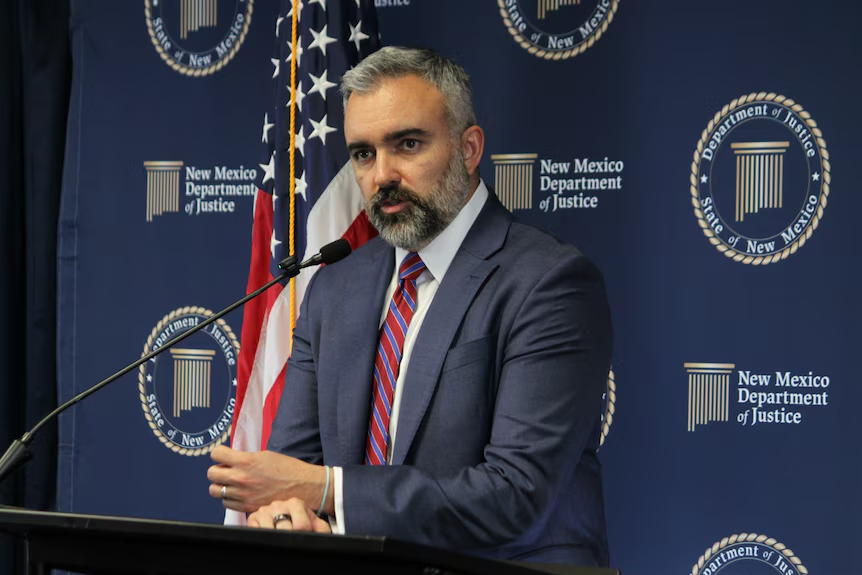
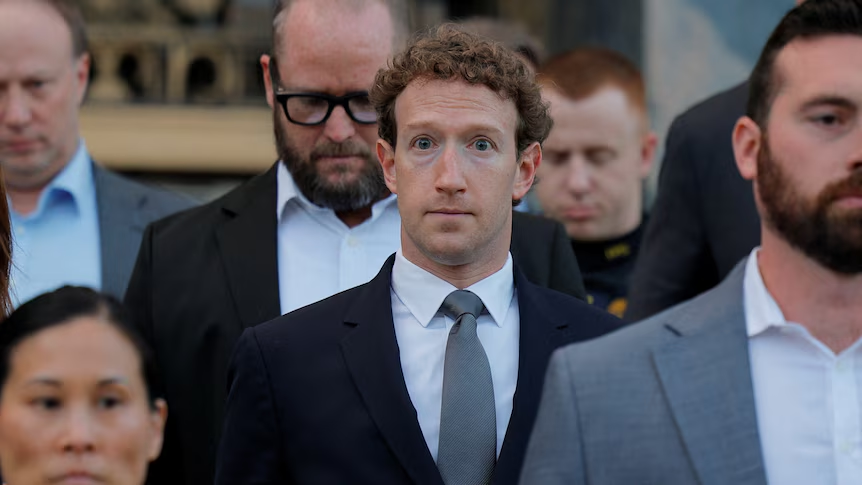
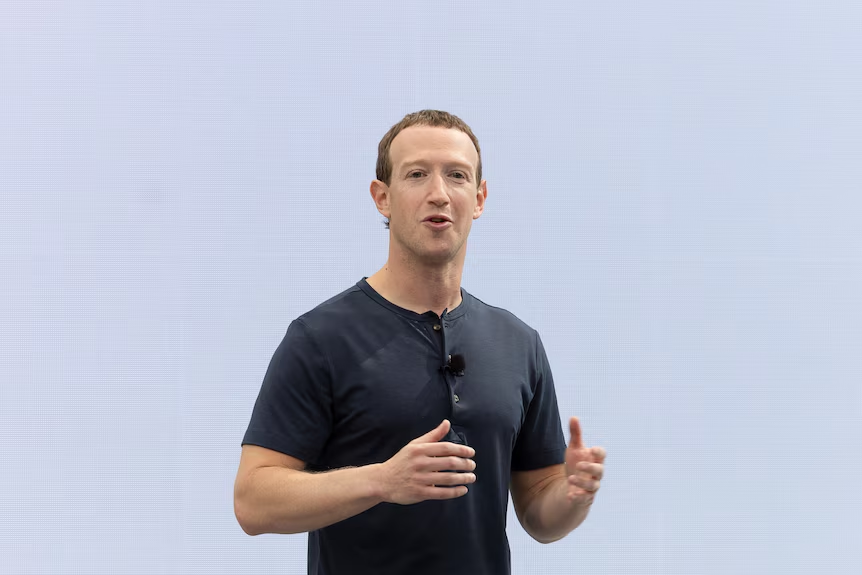
New Mexico state District Court Judge Francis J Mathew ruled on Wednesday local time that Meta must pay the state $US25 billion ($35.6 billion), the largest fine ever imposed on the company, after a jury found it liable for deceiving users about privacy on Facebook. He wrote that Facebook's deception was intentional and that executives consistently misled users about how the platform worked, stating, "Facebook promised users that they [the users] controlled their data. This was false." Jurors in September found Meta liable for more than 43 million violations of New Mexico consumer protection laws for making misleading public statements about how it handled users' personal data. The case followed the harvesting of Facebook data by political consulting firm Cambridge Analytica to generate targeted political ads during the 2016 election season. The state's case focused on accusations that Facebook deceived users about a breach stemming from a third-party personality quiz that harvested data from about 87 million profiles and sold it to Cambridge Analytica, whose now-defunct clients included Donald Trump's 2016 presidential campaign. New Mexico Attorney-General Raúl Torrez said at a news conference in Albuquerque that the award will serve as a warning to tech companies that New Mexico will hold them accountable. Meta said the ruling and Mr Torrez's office's approach to enforcement "makes it all but impossible to do business in the state of New Mexico." Chief legal officer CJ Mahoney said in a statement, "At its core, this lawsuit seeks to impose a tax on speech to enforce new rules for what people can say online. We are confident we will prevail on appeal." Meta also reported on Wednesday better-than-expected quarterly revenue of $US64.6 billion ($92 billion), ahead of Wall Street estimates of $US63.37 billion ($90.32 billion). In August, Meta reached a settlement with nearly all states and territories except New Mexico and Florida to pay $US18 billion ($25.6 billion) and add stronger child-safety measures to its Facebook and Instagram platforms. That settlement ended a trial over teenage social media addiction and resolved a pivotal case years in the making that sought to hold the tech giant accountable for the role its platforms played in undermining children's mental health. The effort targeted features designed to grab young people's attention. New Mexico did not join the multistate settlement, choosing to go after the company on its own, and Meta has agreed to a settlement for court claims alleging its platforms harmed children. During the trial, prosecutors cited a 2010 Washington Post op-ed from Facebook CEO Mark Zuckerberg, in which he wrote that the company did not sell user data. "You have control over how your information is shared," Mr Zuckerberg said. "We do not and never will sell any of your information to anyone." Attorneys for New Mexico had sought $US35 billion ($49.8 billion) to $US40 billion ($57 billion), arguing that the company would only change its ways with a sum that affected its stock price. They also argued that the state's entire population, not just Facebook users, was deceived by the company and that Facebook allowed misinformation or violent content to proliferate. Meta's lawyers argued that the state failed to prove the company made misleading statements about privacy and that content moderation harmed New Mexicans. They contended that the company should pay no more than $US3.4 billion ($4.8 billion), saying an award 10 times that or even more would violate due process, was unconstitutional and would not hold up on appeal. Meta attorneys vehemently denied the allegations, saying the company's content moderation policies were robust and that freedom of speech must be considered. They argued that the state failed to prove people were harmed by deceptive statements. In one of the tech giant's few wins, jurors found that the state did not prove Facebook made false claims about removing harmful content, including misinformation about the COVID-19 pandemic. During a video deposition, Mr Zuckerberg denied the state's claims that Facebook profited off harmful content. He said the company had to balance freedom of speech with content moderation. Attorneys for the company said it had changed its policies since the lawsuit was filed in 2021 and that it caught and removed an estimated 99 per cent of the content that violates its standards. Although interest would accrue on the penalty during the appeal process, Meta could succeed in reducing the number of violations for which it is found liable. The $US25 billion ($35.6 billion) award far exceeds the $US5 billion ($7.1 billion) fine that the Federal Trade Commission levied against Facebook in 2019. Villanova University associate law professor Peter Ormerod said he was surprised by the size of the New Mexico judgment because previous legal settlements over Cambridge Analytica were much lower. "It comes out to about $US12,000 [$17,000] per person in New Mexico, and that's just a very large number. It's quite unlike anything else we've seen," Mr Ormerod said. Under the New Mexico Constitution, fines for violations of consumer protection laws go toward state education spending. But it could take years before the state sees any of the money while the company appeals. AP supplied the report and credited Susan Montoya Bryan for a photo of New Mexico Attorney-General Raúl Torrez discussing the judgment at an Albuquerque news conference. Reuters credited Carlos Barria for a photo of Meta, led by Mark Zuckerberg, saying it planned to appeal.