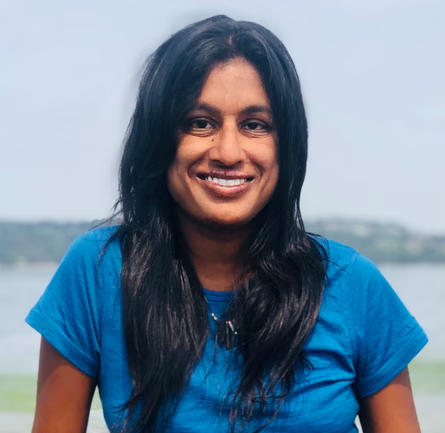
Ellah Wakatama
London-based editor, critic, and publishing director who serves as Chair of the Board of the Caine Prize for African Writing.
Also known as: Ellah Wakatama Allfrey
Ellah Wakatama (born 16 September 1966) is a London-based editor, literary critic, and publishing executive. She serves as the Chair of the Board of the Caine Prize for African Writing, a position she was appointed to in 2019, as well as the Editor-at-Large at Canongate Books and a senior Research Fellow at Manchester University. She was also the founding Publishing Director of the Indigo Press.
Career and Literary Work
Wakatama has held senior editorial roles across several major publishing institutions. She is a former deputy editor of Granta magazine, a former senior editor at Jonathan Cape (Random House), and a former assistant editor at Penguin. In addition to her editorial roles, she served as series editor for the Kwani? Manuscript Project and edited the anthologies Africa39 (2014) and Safe House: Explorations in Creative Nonfiction. Her journalism has appeared in outlets including The Guardian, The Observer, The Daily Telegraph, and The Spectator.
Wakatama has served on judging panels for major literary awards, including the 2015 Man Booker Prize and the 2017 International Dublin Literary Award. Her academic and international appointments include serving as a Visiting Professor and Global Intercultural Scholar at Goshen College in 2016 and as Guest Master for the Gabriel García Márquez Foundation's international journalism fellowship.
Caine Prize Chairmanship
As Chair of the Caine Prize for African Writing, Wakatama oversees the annual £10,000 literary award established in 2000 for the best short story by an African writer in English. In October 2026, following allegations in The Atlantic that 2026 prize winner Simbarashe Kundizeza used AI-detection software Pangram to generate his winning story, Wakatama advocated for a human-centred review process. Speaking on the BBC's Front Row, she questioned relying on AI-detection tools as a final arbiter, criticizing their unverified accuracy and cautioning against using writers—particularly Black writers—as testing grounds for unproven technology.
Related translated reports
Simbarashe Kundizeza rejects claim that AI wrote his Caine-winning story
The Zimbabwean author says The Blue Fighter is entirely his own work after Vauhini Vara reported that AI-detection software flagged the story as almost wholly AI-generated. The Caine prize says it is examining the allegation and its chair has questioned relying on detection tools.
Zimbabwean writer Simbarashe Kundizeza says he wrote The Blue Fighter himself and did not use generative AI, responding to an Atlantic article that said an AI detector had identified the Caine prize-winning story as almost entirely machine-generated. The story was named the winner of the Caine prize for African writers on 6 October. Five days later, The Atlantic published an article by author and journalist Vauhini Vara titled “Yet Another Literary prize winner Seems to Be AI.” Vara reported that she tested the story with Pangram, an AI-detection tool that also uses AI. The software assessed nearly all of the text as artificially generated, she said, with the exception of an epigraph attributed to an unpublished poem by South African writer Vangile Gantsho. Vara also described her reaction to the writing, saying she noticed “the proliferation of language that is common in AI-produced writing: the not x, but y sentence constructions; the glut of metaphors; the platitudinous aphorisms”. She added: “Taste is subjective, but trust me, this story is bad – maudlin and full of tired tropes.” In a statement on X, Kundizeza said: “For the avoidance of doubt, I wrote ‘The Blue Fighter’. I did not use generative AI to write it. It is entirely my own work.” He said he looked forward to continuing to work with the Caine prize team and celebrating the recognition with those who helped bring the story into the world, adding: “Most importantly, I will continue to write.” The Caine prize said it was reviewing the allegation. “When such claims are made, it is our responsibility to look into them. We aim to do this by taking a human-centred approach, ensuring that writers are supported and cared for during the process,” it said. Prize chair Ellah Wakatama questioned the use of AI-detection programs as decisive evidence. Speaking to the BBC’s Front Row radio show, she said: “As someone who chairs a prize, I’m obviously not against AI, but what I am against is it being used as a final arbiter in this case, regardless of what the Atlantic says, because they have already proclaimed our winner to be a cheater without investigating it properly.” She added: “I am not happy for the work of writers, and in this case especially black writers, to form the testing ground for something that is at best still rough and ready.” Vara told the BBC, as well as writing in The Atlantic, that she had read a 2021 story by Kundizeza and found its style and tone different from The Blue Fighter. Kundizeza said that comparison misunderstood how writing develops: “To suggest that a writer cannot write in different styles or genres, or improve his writing substantially after five or more years fundamentally misunderstands the craft of writing.” Vara cited Pangram’s research, which found false positives to be rare, including for people whose first language is not English but who write in English. She also pointed to a peer-reviewed journal article reporting “strong accuracy” when Pangram assessed mock academic papers written entirely with AI, partly with AI, or without AI. However, she acknowledged to the BBC that there is “relatively little third-party research” into the accuracy of AI detectors. Other literary awards have faced similar allegations. In July, Trinidadian writer Jamir Nazir won the Commonwealth Foundation’s short story prize for The Serpent in the Grove, although critics on social media said it had “obvious markers” of AI writing. Last month, Canadian-Haitian writer Thélyson Orélien’s novel C’était Ça Ou Mourir (It Was That or Die) was taken off the longlist for France’s Goncourt, the country’s most prestigious literary prize, after an anonymous online account alleged it was written “almost entirely” by AI.