IRIS²
A planned multi-orbit satellite internet constellation developed by the European Union as a defense-first alternative to Starlink.
Also known as: Infrastructure for Resilience, Interconnectivity and Security by Satellite
IRIS² (Infrastructure for Resilience, Interconnectivity and Security by Satellite) is a planned multi-orbit satellite internet constellation to be deployed by the European Union starting in 2029, with initial government services expected to begin in 2030.
Overview and Structure
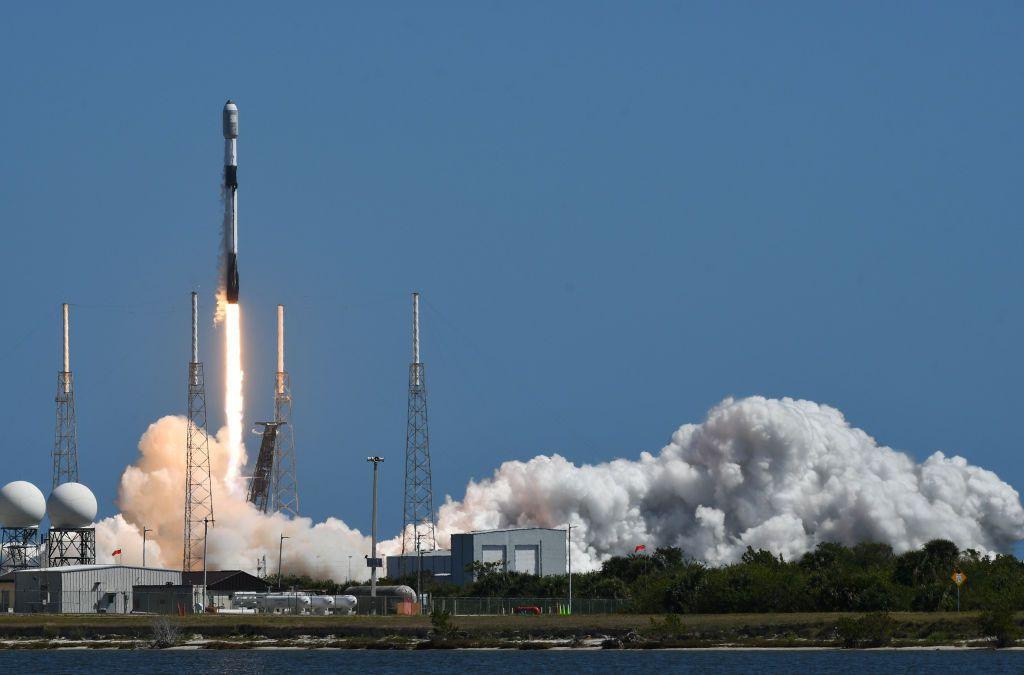
The network is designed as a defense-first infrastructure project to provide secure communications, location tracking, and security surveillance services to governmental agencies, while also aiming to supply broadband for private companies and citizens. The system will consist of 348 satellites across low and medium Earth orbit: 330 satellites in low Earth orbit (LEO) at an altitude of 1,200 km, and 18 satellites in medium Earth orbit (MEO) at 8,000 km.
Development and Strategic Role
The project is led by a consortium of European satellite companies known as SpaceRISE, which includes Eutelsat, SES, and Hispasat as part of the EU's space programme. IRIS² is intended to serve as a European counterpart to commercial US networks like Starlink and the military-grade Starshield project. Ukraine has been guaranteed access to the network from day one as part of broader European efforts to establish long-term satellite communications resilience and reduce dependence on non-European providers.
Related translated reports
Ukraine’s Starlink dependence exposes Europe’s satellite gap
Starlink remains difficult to replace for Ukraine’s military: European alternatives are smaller or still years from full operation, leaving Kyiv reliant on a service it does not control.
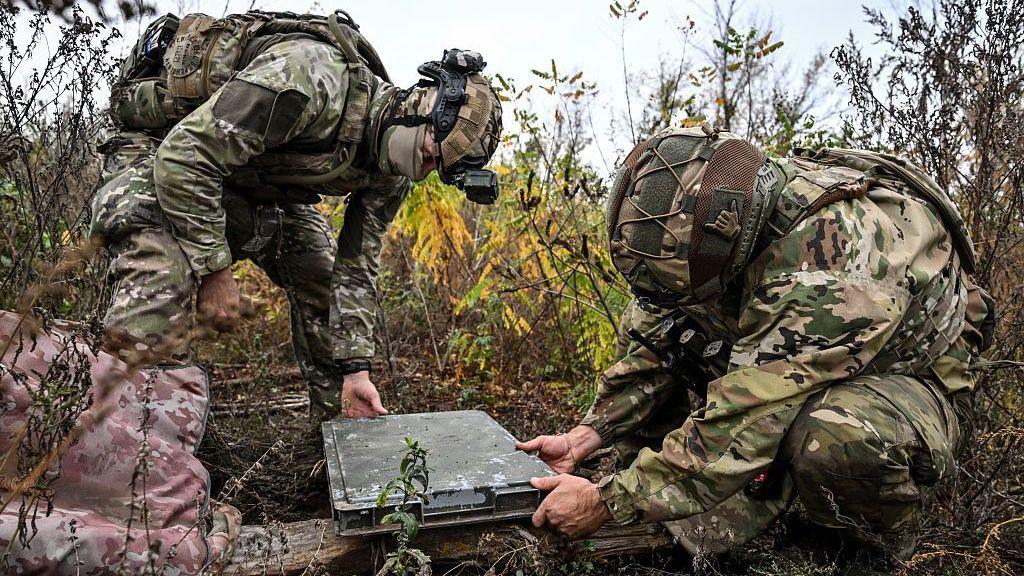
Ukraine’s recent Starlink disruption has underscored how much its forces depend on satellite internet—and how few comparable alternatives are available. The slowdown last week, which has only recently been reversed, affected Kyiv’s ability to defend against Russian attacks and sharpened calls in Europe for an independent, military-grade satellite network. The uncertainty was brought into focus on Saturday when Elon Musk accused Ukraine of using Starlink in breach of its terms of service, saying it was being used for “drone strikes to kill people”. Musk said the loophole had been closed the previous week and warned on X that violations of the terms would lead to service being ended. He also said that switching Starlink off would cause Ukraine’s front line to collapse immediately. It remains unclear who authorised the restrictions. The Pentagon, Donald Trump and Musk have been involved in a confusing exchange of blame over the decision. French MEP Christophe Grudler wrote on social media that Ukraine’s defence should not depend on the whims of Trump or Musk. Starlink and Starshield, its military-grade counterpart, belong to Musk’s SpaceX and have dominated the global satellite market for years. Ukraine uses Starlink for battlefield communications and Starshield, which is controlled by the US government, for military applications including drone warfare. Their fast, real-time connections help troops coordinate defence and intercept Russian attacks. “You can’t employ drone warfare without this kind of high-speed internet connection,” said Vincent Tourret, a researcher at the French Institute of International Relations. A Ukrainian soldier told the BBC that Starlink’s speed gives troops an advantage in relaying commands: even a second or two can matter when data and orders are transferred more quickly. Several Ukrainian troops who spoke to the BBC anonymously described dependable connectivity as a matter of life and death. One said a complete shutdown would be a catastrophe and that cost was immaterial when lives were at stake. The dependence carries risks, said Kari Bingen, director of the Aerospace Security Project at CSIS. Starlink has been one of Ukraine’s biggest assets in the war, she said, but the other side of that dependence is that it is a critical military capability Kyiv relies on without controlling. There are other satellite services, but experts and soldiers say they are not as fast. The equipment is also a consideration: Starlink terminals are comparatively compact and light, making them suitable for vehicles and drones. Eutelsat’s terminals are somewhat larger, former chief executive Eva Berneke told the BBC, and can be installed on cars or tanks but not necessarily on small drones. They cost about five times as much, she said. France-based Eutelsat, through its OneWeb service, is currently the main alternative. It has around 600 active satellites, against more than 10,000 in Starlink’s constellation. Eutelsat told the BBC it was the only European operator with a fully operational low-Earth-orbit constellation and said it was committed to providing resilient connectivity to the businesses, governments and communities it serves. The company did not comment on Govsatcom. European concerns have grown amid strained relations between Kyiv and Washington. Berneke said White House statements—including Trump’s sharp criticism of Nato and threats concerning Greenland—had set off “some pretty brutal alarm bells” in Europe. She was at Eutelsat for a month when Russia launched its full-scale invasion in 2022 and observed European authorities becoming markedly more urgent as they considered whether the company could help fill gaps if Starlink could not be relied upon. Musk’s comments have added to the pressure to find alternatives. Last year, after Poland’s foreign minister said he would seek other suppliers if SpaceX proved unreliable, Musk replied on X: “Be quiet, small man... there is no substitute for Starlink.” A European Commission spokesperson told the BBC that Europe now recognises its security depends on space and must urgently strengthen its satellite capabilities. The EU’s immediate option is Govsatcom, a satellite-sharing scheme established in January to pool existing systems among member states. Ukraine is not yet a full member, though it is seeking membership, and the Commission is discussing its participation with Kyiv. No date has been set for Ukraine to join. Even if access were granted tomorrow, Govsatcom could not be used for warfare tasks such as piloting drones—the kind of operation for which Ukraine uses Starshield. The Commission hopes that commercial providers, including OneWeb, will join the programme by the beginning of next year. That could meet some, but not all, of Ukraine’s military network requirements. Berneke said she was confident Eutelsat could support many of Ukraine’s key military needs. Meeting the country’s broader communications requirements would be more difficult, she added, because those needs are extensive and varied. For now, Govsatcom is viewed as a backup rather than a replacement. Tourret said another connection would be useful if Starlink were shut off, but would not at this stage be sufficient for strikes or interceptions. The EU’s longer-term project is Iris², intended as Europe’s answer to Starlink and Starshield. The European Commission describes it as a defence-first programme serving governments, the military and emergency services, and Ukraine has been promised access from its launch. The network is not expected to be operational until 2029. Iris²—pronounced “Iris squared”—is part of the EU space programme. Eutelsat, SES and Hispasat are leading its development in a consortium called SpaceRISE. The plan includes 348 satellites in low and medium Earth orbit, far fewer than Starlink’s current total. Bingen cautioned against treating the smaller number as a weakness. Satellites in different orbits can cover larger areas, she explained, so fewer may be needed; the design involves trade-offs. Tourret was less optimistic, describing Iris² as neither a game-changer nor a great saviour. The EU Space Policy website, in a highly produced video, says the system will mean Europe no longer depends on others for satellite connectivity. That does not mean Ukraine should abandon Starlink, Bingen said. Resilience depends on having other ways to stay connected if one system fails. Berneke compared the idea to mobile networks: a user may fall back from 5G to 4G or 3G. In warfare, however, a slower connection can have far more serious consequences than a phone taking longer to load images; for a drone operator, she said, it can be deadly. Other initiatives are also being explored. This week, Finnish firms Nokia and ICEYE announced they would examine developing satellite communications for Ukraine’s military defences. Project Bromo, a joint venture involving European satellite manufacturers Airbus, Leonardo and Thales, is another potential competitor to SpaceX, but remains at a very early stage. Building a satellite system takes years and substantial funding, Berneke said. The process includes designing the programme, manufacturing and launching satellites, then putting enough into orbit to provide full coverage. Even with €8bn available immediately, she said, she did not think she could have a system in orbit before 2032 or 2033. Military activity in space has existed since the space age began in the 1950s, but the war in Ukraine has demonstrated how central it is to modern combat. Ground-based communications, including 5G and fibre, can be attacked, Berneke said; taking down an entire satellite network is much harder and is not something any military can currently do. Most global communications still travel through undersea cables—about 99%—and those links can also be targeted. This week, the UK government set out new measures to protect its cables following an increase in suspicious activity by Russian vessels. Bingen said there are serious concerns that undersea cables could be cut during a crisis or conflict, making satellite connections an important backup. Additional reporting by Anastasiia Levchenko.