Jackdaw gas field
A major offshore natural gas development located in the central North Sea.
Overview
The Jackdaw gas field is a large offshore natural gas development situated in Blocks 30/02a, 30/02d, and 30/03a in the central North Sea, approximately 240 kilometres east of Aberdeen. The project is owned and operated by Adura, an independent joint venture equally owned by Shell and Equinor.
Development and Regulatory History
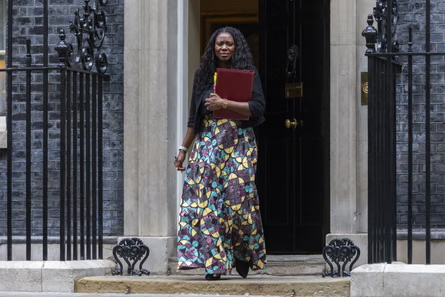
The field was initially approved by the UK government, but its environmental approval was subsequently rescinded following a legal ruling regarding the requirement to account for downstream carbon emissions generated by burning the extracted gas. Following resubmitted applications and review, the UK government re-approved the project in October 2026 under Energy Secretary Miatta Fahnbulleh. The development features a remotely operated, not permanently attended platform in a water depth of 78 metres, with extracted fluids exported to the nearby Shearwater installation.
Political and Environmental Debate
The re-approval of the Jackdaw project has generated significant political discussion. Proponents, including government officials, have argued that maximizing existing domestic energy reserves helps secure the country's energy supply and maintain heating for homes. Conversely, environmental campaigners and various political figures have criticized the approval, contending that new fossil fuel developments conflict with long-term net-zero targets and fail to significantly lower consumer energy bills.
Related translated reports
North Sea Jackdaw gasfield cleared as UK ministers defend ‘pragmatic’ energy path
Gas from the long-contested field will reach British homes and businesses from the end of the month. The verdict, widely anticipated after lobbying by Shell, will nonetheless land badly with environmental campaigners and a number of Labour MPs.
Jackdaw, the controversial gasfield in the North Sea, has received the UK government's blessing and will start feeding gas to homes and businesses from the end of this month, ministers confirmed — a decision that had been widely expected, though one set to anger green campaigners and a number of MPs on Labour's own benches. The go-ahead rests on licences the developers already hold rather than any new ones. Labour fought the 2024 election on a manifesto pledge to stop issuing fresh North Sea drilling licences, but the companies behind Jackdaw and the Rosebank oilfield — whose fate is still being decided separately — needed only environmental sign-off for their existing permits, and resubmitted those applications earlier this year. That sign-off had previously been withdrawn after a judge ruled the companies must account for the carbon emissions created by burning the oil and gas they produce. Jackdaw is owned and operated by Adura, an independent joint venture split 50-50 between Equinor and Shell, both of which hold licences to operate. Ministers had been due to rule on Jackdaw last month, but the call was held back — apparently so that it would arrive only after the Holborn and St Pancras byelection on 8 October, a seat Labour was defending against a Green party challenge and ultimately won. The prime minister, Andy Burnham, said drilling at the field would "protect hundreds of jobs and help keep millions of homes warm this winter". "At a time when people are really struggling, it's right that we look in a responsible way at maximising the existing energy reserves we have in Britain that could help," he said. "We're committed to moving towards renewable energy and reaching net zero by 2050. But even on our ambitious climate path, we'll still require oil and gas as part of our energy needs for decades to come. That's why we're taking a pragmatic approach to the North Sea." The energy secretary, Miatta Fahnbulleh, who announced the consent, said: "Following careful consideration of all relevant factors I have agreed that the regulator can grant consent for gas to be produced at Jackdaw, which will begin to supply the UK with gas from this winter thanks to the highly skilled and vital North Sea workers." "This decision will support the country's energy security with homegrown gas this winter and help minimise the UK's use of imported higher emission fuels as we continue our transition to renewables and nuclear," she continued. "The decision is compatible with our legally binding climate commitments, and we remain resolute in ending new licences for oil and gas and achieving net zero by 2050." Alongside the consent, Fahnbulleh unveiled a new energy wealth fund, seeded with a £2bn downpayment, that will plough oil and gas revenues back into the climate transition — an initiative the government hopes will demonstrate that backing new gasfields does not clash with Britain's climate commitments. Environmental groups had pressed for both Jackdaw and Rosebank to be shelved; Donald Trump, by contrast, had urged Burnham to open them. Tessa Khan, executive director of the anti-oil campaign group Uplift, said: "Jackdaw will provide around just 2% of our gas demand for roughly 10 years. It has been oversold and won't stop the overall decline in North Sea jobs, as it will be largely unmanned and operated remotely." She went further: "Labour's climate credibility is on the line. No new oil and gasfields are compatible with safe climate limits." The industry's position is that the two fields would together supply 10% of UK output at their peak; campaigners counter that the environmental damage they cause would wipe out any economic upside. The sector had fought hard for approval. A report commissioned by Adura and released this week argued that rejecting the two projects would leave the UK economy nearly £10.8bn worse off over the next decade. Politically, the announcement could strengthen Labour's standing in north-east Scotland, where much of the sector is concentrated and where unions had campaigned heavily for the permits to be granted. It is likelier, though, to cause unease among some Labour MPs, particularly those facing Green party challenges in their seats. A Savanta poll conducted for the climate group E3G, and seen by the Guardian, found nearly a third of voters saying they would be less likely to back Labour if it waves through more North Sea oil drilling. That group includes almost exactly a third of everyone who voted Labour at the last election, and about half of 18- to 24-year-olds. "After a summer of deadly heatwaves, the public has made up its mind: more drilling is the wrong answer," said Ellie Mae O'Hagan, the UK energy programme lead at E3G. "If the prime minister wants a decade in power to change the country, he should invest in heat pumps and solar, not tax breaks for the oil and gas companies driving up our bills and polluting the planet." The Green party leader, Zack Polanski, branded the decision "climate vandalism", declaring: "Today's decision by Labour is a betrayal of all of our futures, Labour has abandoned all credibility in the fight against climate change." He went on: "The energy secretary has herself said it will make no difference to energy bills, the health secretary has admitted the summer heatwave added to pressure on the NHS and the industry's own assessment is that will create only 27 jobs. This is a victory for Shell over the people." Ami McCarthy, the head of politics for Greenpeace UK, said: "Approving Jackdaw shows the toxic grip fossil fuel lobbyists still hold over our energy policy. Andy Burnham promised pragmatism, but there is nothing pragmatic about rubber-stamping a project that won't lower energy bills, won't boost energy security and will create just 27 full-time jobs." "What Jackdaw is guaranteed to do is generate record profits for Shell and Equinor while supercharging the climate chaos hitting families here and abroad," she continued. "Going on to approve Rosebank would detonate an even bigger carbon bomb, releasing as much carbon as 56 coal plants operating for a year." True pragmatism, she argued, "means severing our reliance on expensive oil and gas that leaves British households broke, supercharges extreme weather, and leaves our energy security at the mercy of petrostates".