Marchesi Antinori
Historic Italian wine producer based in Tuscany, known for its role in creating Super-Tuscan wines.
Also known as: Marchesi Antinori Srl · Antinori
Marchesi Antinori Srl is a major Italian wine producer headquartered in Florence, Tuscany. Tracing its history back to 1385, it ranks among the largest wine companies in Italy and is recognized as one of the oldest family-owned enterprises in the world. The company is a member of the international winery association Primum Familiae Vini.
The producer played a central role in the Super-Tuscan winemaking movement during the 1970s. Its portfolio includes celebrated Tuscan wines such as Tignanello—pioneered in the 1970s as one of the region's first reds made without white grapes and incorporating Cabernet Sauvignon and Cabernet Franc—as well as Solaia and Guado al Tasso.
In October 2026, Marchesi Antinori became the target of a major high-value heist when thieves broke into its facility near Cortona, disabling alarm systems and surveillance cameras. The perpetrators used the winery's forklifts to steal approximately 30,000 bottles of 2023 vintage wines valued at an estimated €5 million.
Related translated reports
Seven thieves, two trucks, 30,000 bottles: how a Tuscan heist became Italy’s biggest recorded wine theft — and why fine wine keeps drawing thieves
Thieves spirited away roughly 30,000 bottles of prized 2023 vintages — Solaia, Tignanello and Guado al Tasso among them — valued at an estimated five million euros (just under $8 million Cdn) from Marchesi Antinori's facility near Cortona, Tuscany, in what the producer calls Italy's largest wine theft on record. Experts point to fine wine's black-market appeal, concentrated value and long shelf life to explain why such heists are on the rise.
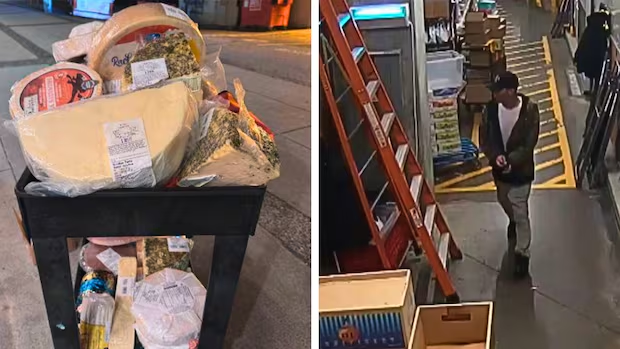
Seven thieves knocked out the alarm system and surveillance cameras at Marchesi Antinori's facility near Cortona, in the Tuscan province of Arezzo, then used the estate's own forklifts to load two trucks with wine before vanishing into the night, according to chief executive Renzo Cotarella's account to The Associated Press. The haul — roughly 30,000 bottles spanning the estate's prized 2023 releases of Solaia, Tignanello and Guado al Tasso — is valued at an estimated five million euros (just under $8 million Cdn), in what the company calls the largest wine theft ever recorded in Italy. Cotarella, chief executive officer of Marchesi Antinori — Italy's largest family-run winemaker — said the raid bore the marks of careful organization. "This is a theft of unprecedented scale for the wine industry in Italy, carried out by a group that was clearly highly organized and well prepared," he told CBC News in a statement. Every bottle taken came from the 2023 vintage, which typically retails for between 150 and 500 euros a bottle ($240 to $800 Cdn). About 10,000 of them were Solaia, one of the estate's flagship labels. Wine expert Natalie MacLean noted that Antinori turns out just 60,000 to 70,000 bottles of Solaia a year, so the stolen stock represented about a sixth of a full vintage, gone in a single night. "The Solaia loss is staggering," she said. The crime came to light on Oct. 5, though the company held back from announcing it until Oct. 9 so the investigation wouldn't be disrupted. "People at the winery were crying," Cotarella told the Financial Review. "It's not just the value of the wine — it's something more. We can survive without this wine, but what makes me so sad is the fact that this could happen to us." The Associated Press reported that police and Carabinieri officers are combing through surveillance footage and other evidence. CBC News has asked the local police department and the Carabinieri for more information but has not yet heard back. "We are co-operating closely with the authorities and informing our partners and customers around the world, asking them to pay particular attention to any offers outside official distribution channels," Cotarella told CBC News. The logistics alone hint at how much preparation the job demanded. Depending on how the bottles were packaged, the thieves had roughly 2,500 cases to lift and load, noted Rod Phillips, a history professor at Carleton University in Ottawa who specializes in the history of alcohol. "You don't move that very quickly ... and it's obviously got to be very well planned," he said. Italian news site Rai News reported that the operation seemed to have been mapped out in minute detail. However unusual in scale, the Tuscan raid is only the latest chapter in a broader Italian pattern. French news site Le Monde reported that 3,000 bottles of Barolo were stolen last month in the northern Piedmont region, while an Italian news site noted that burglars targeted the celebrated Banfi winery in Montalcino in late June and made away with 3,000 bottles of sparkling wine. Nor is the problem confined to Italy. About 800 bottles vanished from a California wine shop in 2023. In 2021, a couple stole about $1.7 million US worth of rare wine from a Michelin-starred restaurant in Spain. And in 2020 at Quebec's Vignoble et Cidrerie Coteau Rougemont, where Benoit Giroussens serves as vineyard manager, criminals ripped 500 kilograms of white wine grapes — enough for about 350 bottles — off the vines and crammed them into garbage bags. Phillips said heists and large-scale thefts of this kind are on the rise, fed by a thriving black market where plenty of buyers are happy to pay below retail for expensive bottles. "There are various channels to selling fine wine and I think they're all very receptive these days, now that everybody is under financial pressure," he told CBC News. MacLean added that wine concentrates enormous value into a compact package — a single case can sometimes fetch thousands of euros — and it doesn't spoil, so stolen cases can be stored for years before they change hands. Unlike a painting, moreover, a case of wine isn't one of a kind. "I do think it's a trend," MacLean told CBC News. "People are looking to cash in and wine is a great target." Until recently, Phillips noted, wine crime tended to involve fraud more than outright theft — counterfeit Canadian ice wines produced and sold in China, for example, hurt sales in Ontario some two decades ago. "These heists are more of a recent phenomenon," he said. Wine is hardly the only prize. In August, thieves in Southern California made off with 40,000 pounds of Pabst Blue Ribbon and non-alcoholic Old Milwaukee beer that police valued at almost $100,000 Cdn — part of a broader run of major food heists that some analysts have connected to climbing food prices. Last year, Montreal police said more than $1 million worth of olive oil vanished after a delivery involving two transport companies in the city never reached its Ontario destination. Police in Ontario that year also charged six people over a series of butter and ghee thefts with losses topping $60,000. In 2025, New England saw 40,000 oysters, lobster valued at $568,000 Cdn and a stockpile of crab meat stolen in unrelated episodes crowded into a few weeks, while in Pennsylvania someone took 100,000 organic eggs valued at about $57,000 Cdn from the back of a distribution trailer. The dairy world, for its part, is still absorbing a 2024 U.K. swindle that saw con artists walk away with more than £300,000 (over $540,000 Cdn) of award-winning, cloth-bound cheddar. That same year, B.C. RCMP revealed they had recently foiled an attempted cheese heist at a Whole Foods in North Vancouver: during a patrol on Sept. 29, 2024, officers came across a cart full of cheese outside the grocery store, and the suspect fled on foot, abandoning $12,800 worth of cheese. Canada's most infamous food robbery, though, remains the 2012 maple syrup heist, in which thieves in Quebec stole more than $18 million worth of maple syrup.