National Rally
French far-right political party formerly known as the National Front, associated with nationalist and anti-immigration politics.
Also known as: Rassemblement National · RN · National Front · Front National · FN
The National Rally (French: Rassemblement National, RN) is a far-right political party in France. It was known as the National Front (Front National, FN) from its founding in 1972 until it adopted its current name in 2018.
The party was founded by figures from several strands of the French far right, including Jean-Marie Le Pen, who led it until 2011. Its electoral influence was limited for much of its early history but grew substantially from the 1980s onward.
The National Rally is commonly described as nationalist and right-wing populist. Its policies include reducing legal immigration, tightening controls on illegal immigration and emphasizing the protection of French national identity.
Since 2022, the party has held a major position in the French National Assembly and has formed one of the largest opposition blocs. Marine Le Pen has been a leading figure in the party and has also chaired its parliamentary group.
In the supplied news context, the National Rally is presented as one of the principal forces in France's increasingly polarized political landscape, with Marine Le Pen identified as its presidential candidate and the party also facing organized opposition demonstrations.
Related translated reports
More than 1,300 arrests follow large Saturday protests and scattered clashes across France
France saw another day of mass protests over living costs and school conditions, with about 70,000 police deployed, more than 1,300 arrests made and tear gas and water cannon used after some marches turned violent; officials said last weekend's widespread looting had so far been avoided, while similar demonstrations also took place in other European countries.
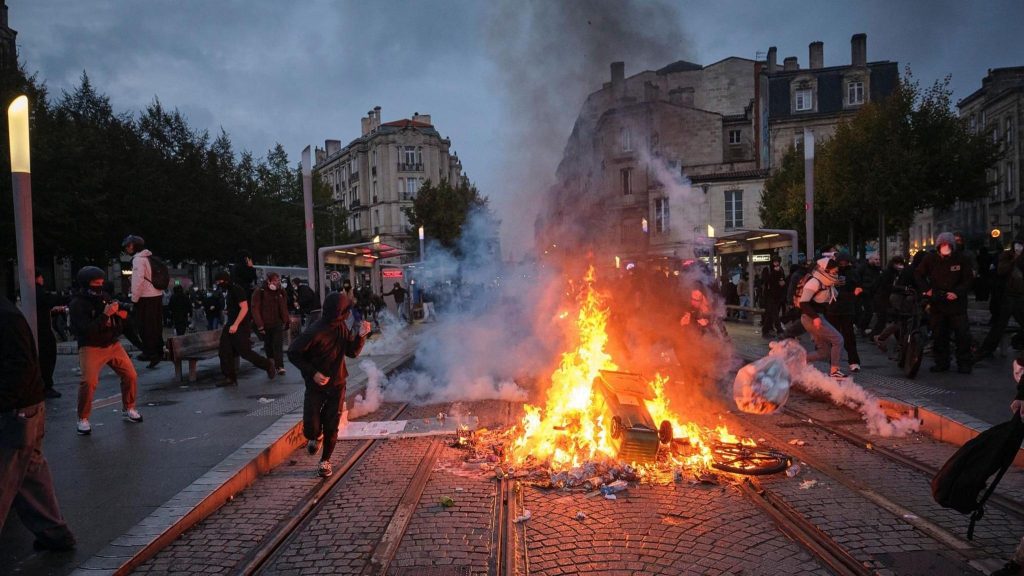
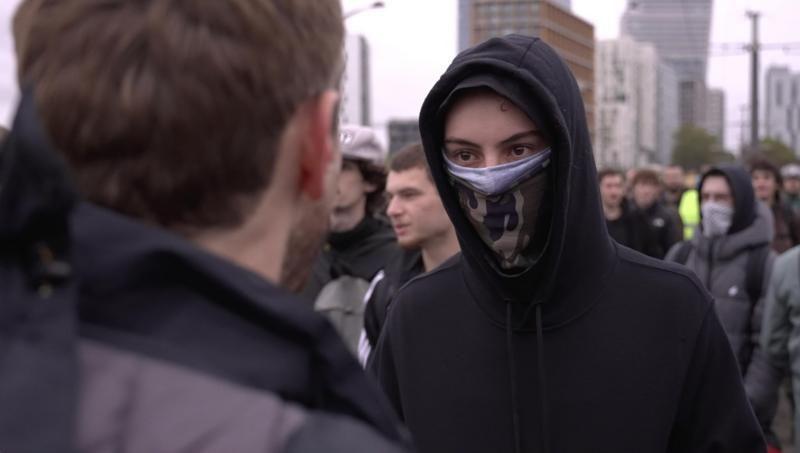
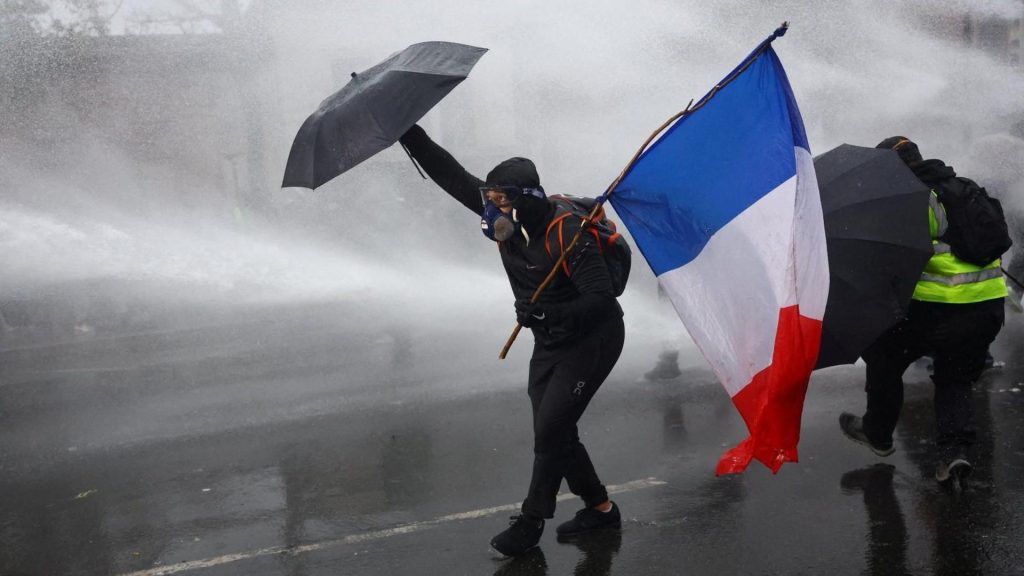
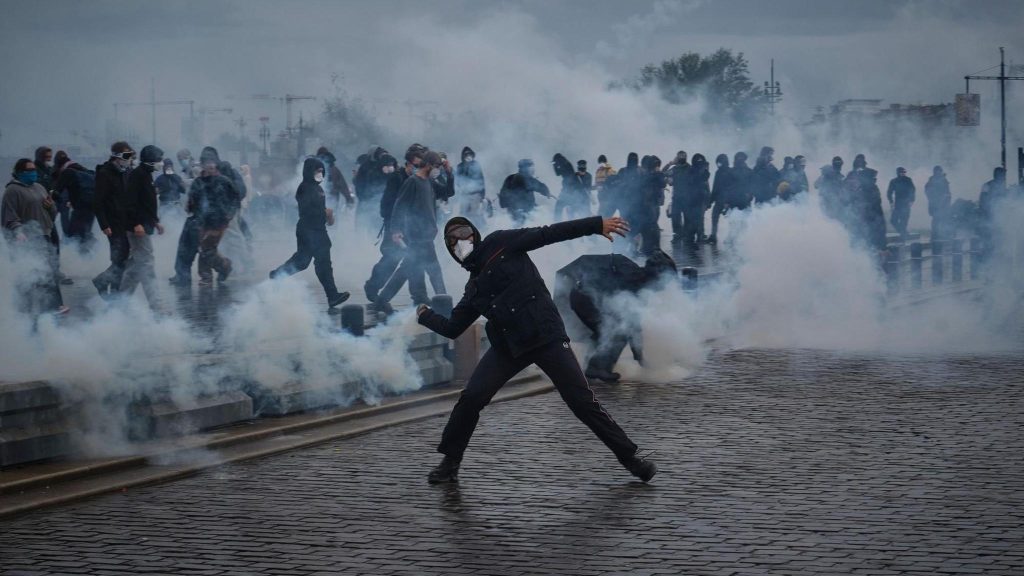
Saturday's protests across France, driven by anger over the cost of living and poor school conditions, drew an official estimate of 410,000 participants, while unions said about 800,000 took part, according to the interior ministry. More than 1,300 arrests were made after largely peaceful marches were followed by clashes later in the day, officials said. Police fired tear gas and water cannon to disperse protesters in several cities, including Paris, while barricades were set alight in Marseille and people ripped boards from a shop in Bordeaux. Authorities deployed about 70,000 police officers and imposed restrictions in several cities, saying they had so far avoided rioting and looting on the scale seen last weekend, which produced some of the worst disorder in France's modern history and included officers being outnumbered, hundreds of businesses looted and buildings torched. The interior ministry said 53 officers were injured in Saturday's clashes. French President Emmanuel Macron had decreed earlier this week that only demonstrations organised by recognised trade unions would be permitted, and hundreds of people have been jailed for vandalism, arson and looting after fast-track court hearings. In Paris, clashes between protesters and riot police erupted at the end of a peaceful march from Porte d'Italie to Porte de Vincennes. The police operation included an elite unit that usually handles organised crime and counter-terrorism. Protesters were seen erecting makeshift barricades and throwing projectiles, while police baton-charged masked youths smashing windows of a car dealership. Interior Minister Laurent Nuñez told AFP that 'several thousand radical activists gathered at the rear of the march, including around 500 individuals identified as rioters'. The interior ministry said 142 people were arrested in the capital, less than half of those detained there on the same day last week. In the southern port of Marseille, rubbish bins were set on fire and metal sheets were used to block streets; a law enforcement vehicle was seen driving through a burning barricade in France's second-largest city. In the southern city of Bordeaux, people ripped boards from a shop, and some protesters in dark clothing and face coverings were seen taking boards off a building to build a street barricade. In Lyon, police used tear-gas grenades to disperse a crowd reportedly gathered in an area the local prefecture had declared off-limits. A protester in Lyon, France's third-largest city, said: 'There were around 150 of us, mostly secondary school and university students. Then the tear gas came almost immediately. You could barely see anything in the street.' Nuñez said two people had been seriously injured: one in the south-western city of Toulouse and another in Clermont-Ferrand, central France. He said the number of arrests across the country would likely rise. Franceinfo, citing the medic who treated him, reported that the 20-year-old protester in Toulouse had several fingers torn off one hand when a nearby explosive went off. As the unrest continued into the early hours of Sunday morning, authorities in Bouches-du-Rhône, the region in which Marseilles sits, said seven businesses had been 'looted or damaged'. Earlier, a peaceful protester in Paris who gave her name as Zelie told the BBC that people had taken to the streets because they were 'really frustrated' and had been 'suffering a lot' since Macron came to office. The 26-year-old said: 'They keep us quiet. They take our money, they tax us a lot and we can't say anything. Today we are in the streets because it's been too long, it's been too much.' Two masked teenage protesters, who did not want to give their names, said their generation was in despair and felt abandoned by the government. One said of last Saturday's disorder: 'I think looting is really not good. But it's because of poverty and the violence of the police.' He added that the protests would end 'when we have a response to our demands. We really want a change in France'. About 13,000 people also joined a peaceful rally in the north-central city of Orléans against the hard-right National Rally (RN) party. The recent unrest has played out against a backdrop of a polarised political landscape, with France preparing for what could be the most divisive election period in a generation. Macron will leave office next spring, and polls suggest French voters will ultimately face a choice between RN candidate Marine Le Pen and the candidate of radical-left La France Insoumise (France Unbowed). Leading figures from both parties have levelled the blame for the disorder at Macron, though right-wing figures have also heaped criticism on rioters while left-wing leaders support the union-led protests. LFI candidate Jean-Luc Mélenchon said French media had not covered the peaceful protests while police had created 'a setup deliberately designed to provoke chaos' that had 'mutilated two people'. Mass protests triggered by similar issues as in France also rocked several other European cities on Saturday. In Barcelona, more than 120 people were arrested after a student protest descended into what local authorities described as 'gratuitous violence'. In Albania's capital Tirana, riot police fired tear gas to disperse thousands of anti-government demonstrators, while clashes were also reported in Belgium's capital Brussels. In Milan, northern Italy, a major security operation including hundreds of soldiers alongside police prevented protesters gathering in the city. Many had feared a repeat of violent scenes last week when some started fires, smashed windows and looted shops. Around 550,000 people took part in last weekend's demonstrations against rising fuel prices and the cost of living, with frustrations escalating after weeks of student protests. The marches were initially largely peaceful but became marred by scenes of violence, looting and destruction, resulting in more than 2,500 arrests. More than 2,000 shops and other businesses across France were said to have been directly impacted, and France's Chambers of Commerce and Industry (CCI) estimated the damage 'at hundreds of millions euros'. AFP reported that one demonstrator's hand was blown off by a police crowd-control grenade, while about 1,000 police officers were injured. French authorities later said they were forced to impose overnight curfews in Paris and other cities. The continuing protests come ahead of France's presidential elections in six months' time, and leading contenders have levelled the blame at Macron and his ministers.