NATO
NATO is an intergovernmental military alliance of 32 member states founded in 1949, built on collective defence under Article 5 of the North Atlantic Treaty.
Also known as: North Atlantic Treaty Organization
The North Atlantic Treaty Organization (NATO) is an intergovernmental military alliance between 32 member states: 30 in Europe and 2 in North America. It was established with the signing of the North Atlantic Treaty in 1949 and serves as a system of collective security and deterrence.
Collective defence
Article 5 of the treaty states that an armed attack against the territory of one member shall be considered an attack against them all. The alliance's independent members agree to defend each other from attack by any outside party.
History and operations
During the Cold War, NATO's primary purpose was to deter and counter the threat posed by the Soviet Union and its satellite states. After the dissolution of the Soviet Union in 1991, the alliance adapted and undertook military operations, including interventions in the Bosnian War and the Kosovo War. In 1999, NATO carried out an aerial bombing campaign against the Federal Republic of Yugoslavia during the Kosovo War.
Membership and enlargement
NATO was formed in 1949 with 12 founding members. Enlargement is governed by Article 10 of the North Atlantic Treaty, which allows for the invitation of other European states. Countries seeking membership must meet certain requirements and complete a process involving political dialogue and military integration, overseen by the North Atlantic Council.
Since the end of the Cold War, NATO has added 16 members from 1999 to 2024. Of the current members, three are nuclear weapons states: France, the United Kingdom, and the United States. All members have militaries except Iceland, which has a coast guard and a small unit of civilian specialists for NATO operations.
Contemporary relevance
In the supplied news context, NATO is discussed because senior commanders have warned that the alliance must adapt faster to modern battlefield innovation and deterrence challenges.
Related translated reports
NATO’s race against time: Senior commander warns alliance must adapt faster to deter Russia
NATO's supreme commander of transformation says the West's greatest vulnerability may not be a shortage of weapons, but the time it takes to build them — and the speed at which its adversaries are learning to fight.
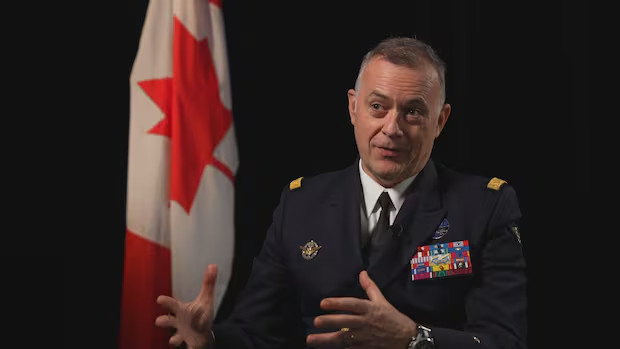
There's a nightmare that keeps one of NATO's most senior military commanders up at night and it's not what you might think. It isn't the idea of Russian tanks rolling into the Baltic states or Poland. Nor is it a sudden military confrontation in the Arctic. The scenario that keeps NATO Supreme Allied Commander Transformation Pierre Vandier up at night is the notion of the Western military alliance being caught unprepared and unable to keep up with the pace of technological innovation that's happening on the modern battlefield. "Being late is really my nightmare," Vandier, a French admiral, told CBC News in an exclusive interview. In Canada's drone-killing 'Sandbox,' companies compete for a $1M prize "When I see people chatting, delaying some important decisions, not committing the money, using some … old-fashioned process, then it keeps me [up] at night." Vandier met Chief of the Defence Staff Gen. Jennie Carignan and other high-ranking defence leaders for an up-close look at some of Canada's defence innovation plans during his recent low-key trip to Ottawa. His warning about keeping pace comes at a particularly uncomfortable moment for the 32-member alliance. 'Being late is really my nightmare,' says NATO commander Russia's war against Ukraine is approaching its fifth anniversary. Moscow has been accused of escalating a campaign of sabotage, cyberattacks and drone incursions in Europe along NATO's eastern flank. And Western governments are scrambling to rebuild military capabilities and defence industrial production lines that were allowed to shrink following the end of the Cold War more than three decades ago. The danger, according to Vandier, is that the alliance is trying to prepare for tomorrow's war using institutions, procurement systems and assumptions inherited from yesterday. "We thought that time was our friend," he said. "Now time is not our friend. It's the enemy's friend. The agenda is built on the other side." During four years of grinding combat in Ukraine, Russia has suffered an enormous number of casualties. According to the British Ministry of Defence, as of mid-September, the Russian military has suffered 1.3 million casualties in the Ukraine war, including over 500,000 dead. And there is a paradox at the heart of NATO's current security dilemma. While there have been devastating casualties and an enormous amount of equipment lost, the Russian Army that stumbled into Ukraine four years ago is not the same one on the battlefield today. Vandier argued that Moscow has become more innovative, more adaptable and, in certain areas, more dangerous. "The enemy is not the same as the one we had in 2022," he said. "They learn, they adapt." How NATO is flexing in the face of Russian aggression He pointed specifically to Russia's evolving drone technology, including faster jet-powered attack drones that have complicated Ukraine's ability to defend its cities and critical infrastructure. According to Vandier, the introduction of more advanced propulsion systems has significantly reduced the effectiveness of some Ukrainian drone-interception methods. He estimated that interception success rates against certain Russian drones have fallen from approximately 90 per cent earlier this year to roughly 50 per cent as the technology has evolved. Ukrainian President Volodymyr Zelenskyy, at the end of September, pegged the interception rate at about 55 per cent. There's been a significant body of research published over the past year which challenges the assumption that Russia's enormous losses in Ukraine have left its military weaker, less capable or unable to threaten NATO. Western military analysts increasingly describe a Russian military that has learned to adapt under fire, regenerate formations while fighting, absorb technological innovation and sustain operations despite staggering casualties. How NATO is prepping in the Baltic skies for a possible confrontation with Russia Putin appears to be eyeing NATO. The question is, will he actually attack? "Russian military institutions reward loyalty over competence," said a study written last July by the Washington-based Center for Strategic and International Studies, which argued Russia has become increasingly dependent on Chinese, Iranian and North Korean military assistance. The authors argue that Russia's military can absorb new technology without developing the capacity to exploit it fully and effectively. An assessment written last year by the International Institute for Strategic Studies (IISS), based in the United Kingdom, was even more stark. It pointed to how Moscow is rebuilding equipment inventories, expanding units and reorganizing forces near NATO territory. The think-tank's report said that Russia may restore important elements of its prewar ground-force equipment strength sooner than expected, although newly formed units could remain undermanned. The IISS report also suggested that equipment shortages throughout the Russian military could potentially be resolved by late 2026 or early 2027. However, the full equipping and expansion of Russian ground forces could take until 2030 or 2035. "It's a very fast-evolving environment," Vandier said. Why 'grey zone' drone attacks are a problem for NATO Russia has the ability to produce enormous quantities of relatively inexpensive drones and missiles. And that has exposed the limitations of Western defence industries designed to manufacture smaller numbers of highly sophisticated weapons. Vandier believes the alliance has underestimated the scale of the challenge. "The idea that the war is just a crisis of a few weeks is something that nobody can bet on anymore," he said. He pointed to the enormous numbers of drones and missiles being employed in Ukraine as evidence that NATO must rethink not only what it buys, but how quickly it can replenish its arsenals. The problem, Vandier said, is not simply a shortage of weapons. It is a shortage of industrial capacity. Western economies have spent decades moving manufacturing and critical supply chains overseas, leaving defence industries dependent on materials and components that may not be readily available during a prolonged conflict. Why Russia has Europe on edge Norway PM 'prepared, but not afraid' of Russian incursion Vandier challenged the suggestion that NATO's combined economic strength automatically translates into an overwhelming industrial advantage over Russia. "I disagree with the point where we have a good industrial depth," he said. "The challenge now is to produce what we can produce in mass and rapidly, and not only what we have on a very exquisite and limited quantities." The implication of that is significant. In a prolonged conflict with Russia, the West would quickly run out of equipment and ammunition. The U.S-Israeli war with Iran has seen a number of published reports about the scarcity of high-end weapons systems. For Canada, Vandier's assessment comes as the federal government embarks on an unprecedented expansion of defence spending. After decades of relatively limited investment, Ottawa has committed billions of additional dollars to modernizing the Canadian Armed Forces and rebuilding the country's defence industrial base. Vandier said he has been struck by the scale of the change. "It's very impressive to see how this country, which has spent a limited amount of money focused on NORAD, now is opening eyes on all the NATO [area of responsibility]," Vandier said. Senior reporter, defence and security Murray Brewster is the senior defence writer for CBC News, based in Ottawa. He has covered the Canadian military and foreign policy from Parliament Hill for over a decade. Among other assignments, he spent a total of 15 months on the ground covering the Afghan war for The Canadian Press. Prior to that, he covered defence issues and politics for CP in Nova Scotia for 11 years and was bureau chief for Standard Broadcast News in Ottawa.