Queen Victoria
British monarch whose reign defined the Victorian era and whose relationship with Sarah Forbes Bonetta frames discussions of empire, race, and royal patronage.
Also known as: Victoria · Alexandrina Victoria · Empress of India · grandmother of Europe
Queen Victoria (Alexandrina Victoria; 24 May 1819 – 22 January 1901) was Queen of the United Kingdom of Great Britain and Ireland from 20 June 1837 until her death in 1901. Her reign of 63 years and 216 days, longer than that of any predecessor, constituted the Victorian era, a period of industrial, political, scientific, and military change within the United Kingdom marked by a great expansion of the British Empire. In 1876, the British Parliament voted to grant her the additional title of Empress of India.
Victoria was the daughter of Prince Edward, Duke of Kent and Strathearn, and was raised under close supervision by her mother, Princess Victoria of Saxe-Coburg-Saalfeld, and her comptroller, John Conroy. She inherited the throne aged 18 after her father's three elder brothers died without surviving legitimate issue. She married Prince Albert of Saxe-Coburg and Gotha in 1840, and their descendants married into royal families across Europe, earning her the nickname grandmother of Europe.
In the news context, Victoria is significant because of her relationship with Sarah Forbes Bonetta, a Yoruba woman presented to the queen at Windsor Castle as a diplomatic gift from an African king. Victoria became Bonetta's royal patron, paid for her education, approved her marriage, and became godmother to her eldest daughter. The article also notes that Bonetta was petitioned to be the property of the crown and was effectively indentured to Victoria until age 19, while her image was used to project the idea of the queen's benevolence within the British Empire.
Related translated reports
An extraordinary life: descendant welcomes biography of woman ‘gifted’ to Queen Victoria
A girl called Àìná was captured by an African king and later taken to England to become Sarah Forbes Bonetta, protege of the imperial monarch When she was seven years old, Bayo Randle’s great-great-grandmother Sarah Forbes Bonetta was presented to Queen Victoria at Windsor Castle as a “diplomatic gift” from an African king. Victoria would go on to pay for Bonetta’s education, approve her marriage to one of west Africa’s wealthiest men, and become godmother to her eldest daughter. Continue reading...
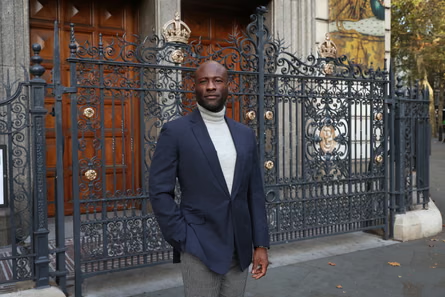
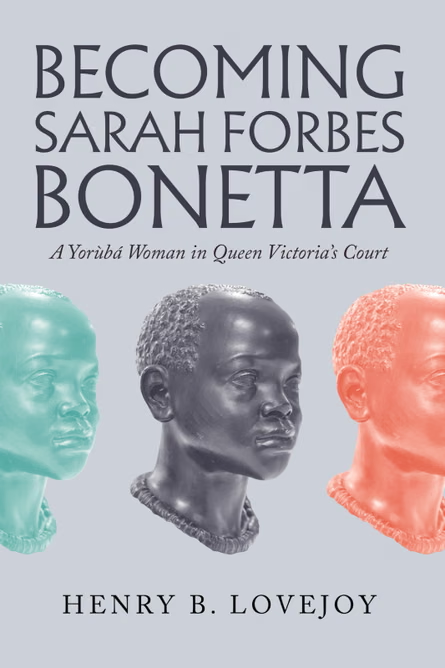
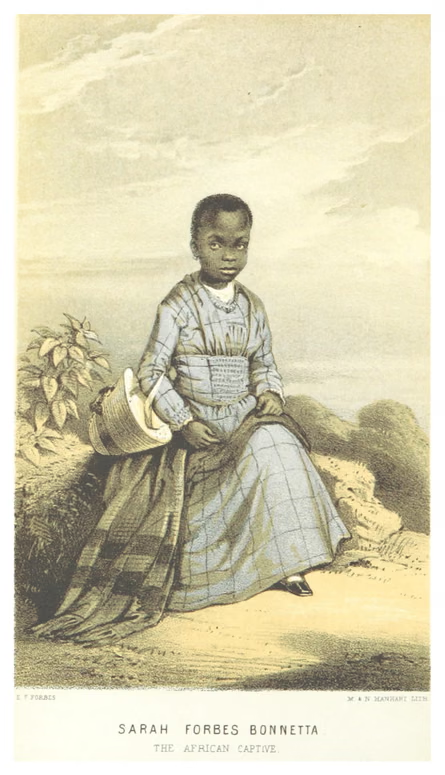
When she was seven years old, Bayo Randle’s great-great-grandmother Sarah Forbes Bonetta was presented to Queen Victoria at Windsor Castle as a “diplomatic gift” from an African king. Victoria would go on to pay for Bonetta’s education, approve her marriage to one of west Africa’s wealthiest men, and become godmother to her eldest daughter. But while Victoria took a genuine interest in Bonetta’s welfare, making the orphan a royal protege and meeting with her over the years, their relationship was part of a bigger agenda. Now, as a biography is published – Becoming Sarah Forbes Bonetta: A Yorùbá Woman in Queen Victoria’s Court – Randle has spoken of his family history. “I don’t think a human being, who has agency, could be ‘gifted’ from one to another, but had she not been gifted to Queen Victoria, would I be here today?” said Randle, a British-Nigerian barrister from London. The new book, by a Canadian academic, Prof Henry Lovejoy, charts how Bonetta was brought to England by Frederick Forbes, of the Royal Navy’s West Africa Squadron, which was set up to enforce the abolition of the transatlantic trade. Born in 1843 in Òkè-Òdàn, south-west Nigeria, Bonetta was originally called Àìná. Her family was killed in 1848 when her town was attacked by King Ghezo of Dahomey’s forces. Bonetta, then five, is believed to have been captured by the agodjié – the all-female regiment depicted in the Hollywood movie The Woman King – and held at King Ghezo’s court. In 1850, Forbes went to Dahomey – which is now Benin – to petition Ghezo to sign an anti-slavery treaty. The mission failed but Forbes asked Ghezo if he could take Bonetta to England. Bonetta would go on to live a life of renown, becoming one of the most artistically represented and widely reported African women of her time. But she was never truly free. Lovejoy’s book describes how, before Forbes arrived in England with her – giving her his own name and that of his ship, the Bonetta – he petitioned for her to be “the property of the crown”. This meant Bonetta was “effectively indentured to Queen Victoria until age 19” under the post-abolition legal structures, Lovejoy said. Bonetta was then married off to James Pinson Labulo Davies, a merchant and philanthropist, of whom she would write: “I don’t feel a particle of love for him.” Lovejoy’s research for the website liberatedafricans.org , developed with Kartikay Chadha, documents how, after abolition, more than 700,000 Africans “liberated” from enslavers were forced into indentures of up to 14 years “to pay for the cost of their own freedom” by governments including Britain’s. Lovejoy claims Bonetta was at the elite end of this bonded labour system, “educated to be a missionary who would Christianise Africa”. In her lifetime her image was exploited as imperial iconography, promoting the idea that British colonialism of Africa was a “civilising mission”. Lovejoy, of the University of Colorado Boulder, said: “Sarah’s imagery was used to project the idea of the queen’s benevolence – at a time when ‘liberated’ Africans are being forced into indentures.” Nonetheless, when Bonetta attended the 1858 wedding of Queen Victoria’s daughter, the Princess Royal, American abolitionists saw it as proof that Victoria, then the most powerful woman on Earth, believed in equality. For Randle, a plaster bust of Bonetta sculpted in 1851 by Benedetto Pistrucci, the Royal Mint’s chief engraver, symbolises the story’s “duality”. Randle saw it last year after Lovejoy had tracked it down to a private family collection in his research. “Who gets to see what their great ancestor looked like as a child, the cultural markings on her face? That is amazing. But at the same time it was a bust prepared for phrenological purposes, within a racist framework, where [Bonetta] was shown as an ‘excellent specimen’,” Randle said. Randle first learned his family history from his father, Adekunle Randle, a retired lawyer. The family still has the engraved goblet and plate that Queen Victoria gave to Bonetta’s daughter, Victoria, who, with the queen’s help, was educated at Cheltenham ladies’ college. Lovejoy’s book challenges the myths that Bonetta was a Yoruba princess, that she herself was Queen Victoria’s goddaughter, and that she spent most of her life in England. Randle, 37, who maintains his family’s ancestral ties with Òkè-Òdàn, welcomes research into Bonetta, who was a gifted linguist, musician, travel writer, educator and leading woman in 19th-century Lagos, until her death from tuberculosis in Madeira in 1880, aged 37. “Whether [Lovejoy’s] book is comfortable for me is beside the point,” Randle said. “It’s for the advancement of knowledge and how we learn from the past. Where the real discomfort lies is in what [Bonetta] was the symbol of, what she was used for. “But it would be a mistake to paint her story as entirely tragic,” he added. “My great-great-grandmother was very capable, courageous and dignified through adversity – through the trauma of losing her family, being displaced, and changing like a chameleon to fit into a culture so alien from what she’d known, she thrived. She is an early example of Black Britain.”