Rosebank oil field
A large undeveloped offshore oil and gas field west of Shetland, Scotland, that has become a focus of UK energy, legal and climate policy debates.
Also known as: Rosebank oil and gas field · Rosebank
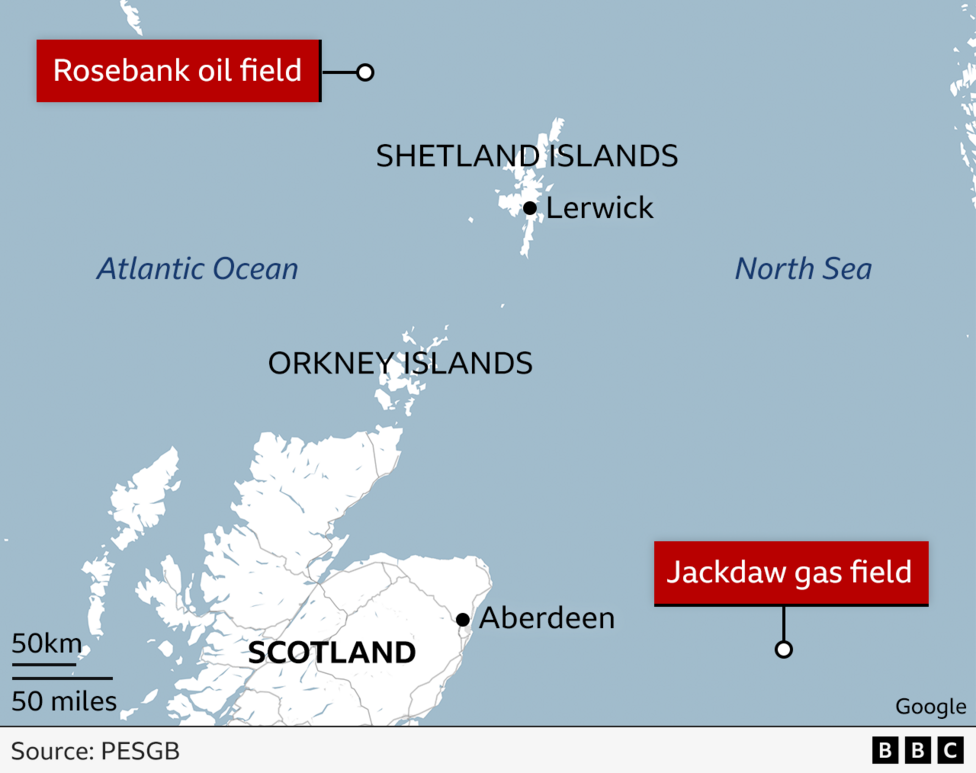
The Rosebank oil field is an offshore oil and gas field west of the Shetland Islands, Scotland. In current UK energy debates it is described as Britain's largest untapped oil field and is expected to produce both oil and some natural gas if developed.
The field lies in deep water of about 1,100 metres (3,600 feet). Its discovery well was drilled in 2004 to a depth of 2,743 metres (8,999 feet) and produced about 6,000 barrels of oil per day during testing.
Development of Rosebank has been politically and legally contested because of its projected greenhouse-gas emissions and the wider debate over continued North Sea oil and gas production. Environmental groups, including the campaign organisation Uplift through its Stop Rosebank campaign, have opposed the project and argued for a transition away from new oil and gas development.
UK approvals for Rosebank have also faced legal scrutiny. According to the supplied news context, a Scottish court ruled that earlier approval had not adequately considered the climate effects of burning the oil and gas that would be produced, requiring updated environmental assessment before a new government decision.
Related translated reports
Green light for Jackdaw, limbo for Rosebank: Britain’s North Sea drilling dilemma
The UK government has allowed production to begin at the Jackdaw gas field but has yet to rule on the Rosebank oil field, keeping a fierce dispute over jobs, energy security and carbon emissions alive.
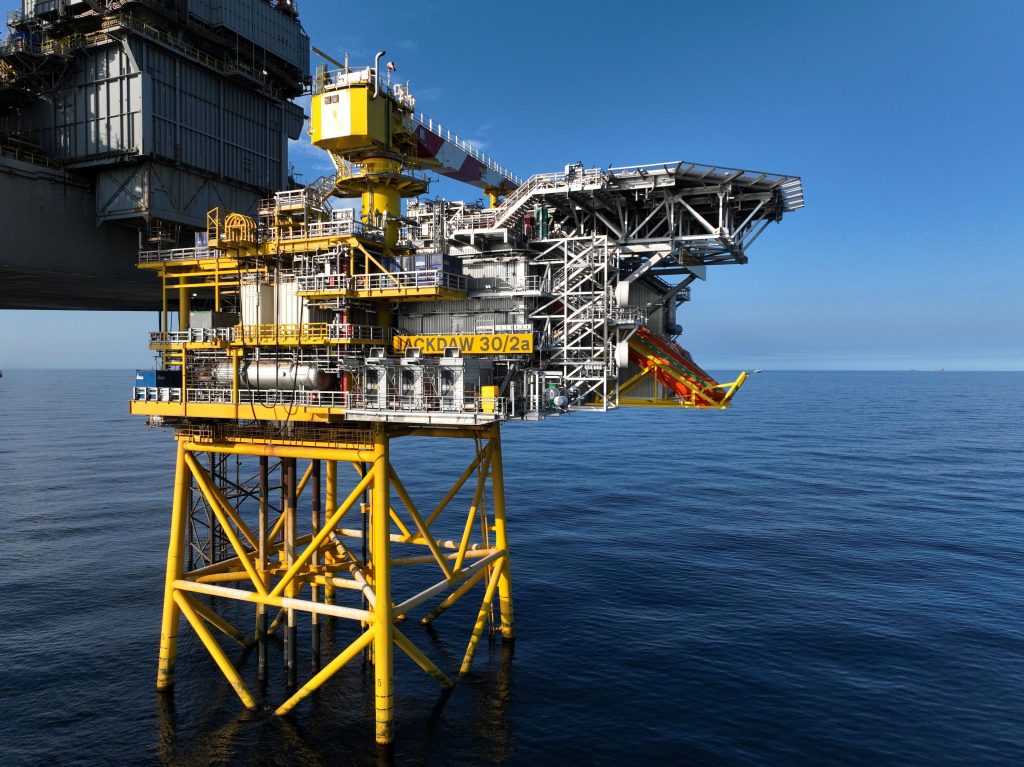
After years of argument and legal sparring, the Jackdaw gas field in the North Sea has been cleared to start producing — yet Rosebank, Britain's largest untapped oil field off Shetland, still has no verdict. The two projects have become a proxy battle over the country's energy direction. Industry bodies contend the sites could create work and strengthen the UK's energy security at a moment when conflicts abroad are unsettling global supplies. Environmentalists reply that drilling for more oil and gas is unconscionable while deadly heatwaves and violent weather affect billions of people, and that it would blunt efforts to rein in the carbon emissions warming the planet. New production, they add, would do little to protect energy security either — shifting sooner to greener technologies is the better way to sustain jobs. The two fields Jackdaw sits about 150 miles (241km) east of Aberdeen. The government, having now authorised production, says gas can begin flowing from the end of this month. Because hooking the field up to the UK energy system is a relatively simple job, supplies could reach the mainland quickly. Rosebank lies roughly 80 miles (128km) north-west of Shetland and is the country's largest untapped oil field, which would also produce some gas. It would need longer than Jackdaw to get running, but is scheduled to be operational by 2027, provided it wins approval. Across a 25-year lifetime it is expected to yield up to 500 million barrels of oil. How the courts reshaped the process Both developments were licensed by the then Conservative UK government in 2022 and 2023, prompting environmental groups to take legal action. Last year the Court of Session in Edinburgh found that Rosebank and Jackdaw had been approved unlawfully, because ministers had failed to account for the climate impact of burning the oil and gas the sites would produce. A judge required more detailed climate assessments to be published, and the updated estimates went out to consultation. That left the UK government, drawing on input from industry regulators, to decide whether the fields should be approved a second time. Jackdaw has now been allowed to go into production; Rosebank is still pending. Prime Minister Andy Burnham had earlier said he would stand by Labour's pledge not to issue new oil and gas licences while honouring the ones already granted. What supporters say Britain stands to gain When Jackdaw's plans were unveiled in 2022, developers said the field would produce enough gas to power 1.4 million homes. Announcing that the project would go ahead, the government said it was expected to lift domestic gas production by around 6% at its peak, and that over an 11-year lifespan Jackdaw would protect hundreds of jobs and add an estimated £2.9bn to the UK economy. Industry body Offshore Energies UK (OEUK) adds that Rosebank and Jackdaw would support a construction-phase peak of more than 3,500 jobs, sustain 880 roles across their lifetimes at an average salary of £85,850, and deliver £1.4bn in tax revenues by 2029, rising to £3.8bn by 2034. Those projections matter greatly in north-east Scotland, which is grappling with the decline of the industry that has long sustained the region's economy. Research for the UK Parliament suggests about four-fifths of the oil and gas in British-controlled parts of the North Sea had already been extracted by 2024. Would bills come down? Backers present the fields as a shield for the UK's energy security. Fatih Birol, a leading energy economist at the International Energy Agency, told The Guardian earlier this year, however, that new drilling in the North Sea "would not change much for the UK's energy security" and would not bring bills down: the country would stay reliant on oil and gas imports priced on international markets. Those markets remain exposed to shocks such as the conflicts in Ukraine and Iran — and extra domestic supply would not automatically translate into cheaper energy for households. Rosebank's oil, in any case, would mostly be shipped to the Netherlands, because the UK's remaining refineries are not equipped to process the heavier crude drawn from the North Sea. Any refined products from it — diesel or jet fuel, for example — used in the UK would then have to be reimported. The carbon row Both fields are operated by Adura, a joint venture between Norway's Equinor and Shell, with Aberdeen-based Ithaca also owning 20% of Rosebank. Jackdaw's lifetime carbon output is contested: one estimate puts it at 35.8 million tonnes, equivalent to 90% of Scotland's emissions in 2023, while Adura says about 23.6 million tonnes — roughly 60% of that year's figure — is more likely. Rosebank's projections dwarf both, at almost 250 million tonnes of climate-warming emissions. In the updated environmental impact assessment ordered by the Court of Session, Adura argues that Jackdaw's emissions would "not materially influence" global warming. The company says displacing liquefied natural gas imported from the United States with Jackdaw's gas would save the equivalent of four million tonnes of CO2, and that the climate effects would be "minor" because the UK has a "well-regulated industry" aligned with the Paris Agreement, the legally binding commitment to limit global warming to between 1.5 and 2C. Campaign groups reject that logic: the American gas would simply be sold and burned elsewhere, so worldwide emissions would not fall. Doug Parr, chief scientist at Greenpeace UK, said opening a new field was "wholly incompatible" with the Paris Agreement. Uplift, another campaign group, argues that using Rosebank and Jackdaw to prop up a shrinking industry would only postpone the transition to greener energy production, which it says is needed to protect the environment and support jobs. "The only way to protect workers, supply chain firms, and communities that are currently dependent on the oil and gas industry from this decline is to invest in renewables and other industries that have a long-term future," it says. The fields, Uplift adds, would mean big profits for energy firms and little benefit for taxpayers. Ami McCarthy, head of politics at Greenpeace UK, was blunter still: "Trying to squeeze the last few drops of expensive oil and gas out of the North Sea while the world is reeling from climate impacts is beyond ridiculous."