Student List–Students Win
A Serbian electoral movement and political list formed by student protesters following the November 2024 Novi Sad railway station canopy collapse.
Also known as: Student List · Studentska lista · Student List – Students Are Winning
Overview
Student List–Students Win (Serbian: Студентска листа – Студенти побеђују) is a leaderless Serbian political movement and electoral list. It grew out of anti-corruption protests and student blockades that emerged following the 1 November 2024 Novi Sad railway station canopy collapse, which killed 16 people. The tragedy sparked a nationwide campaign of marches and demonstrations that eventually brought together farmers, actors, judges, and other segments of Serbian society.
Electoral Participation and Success
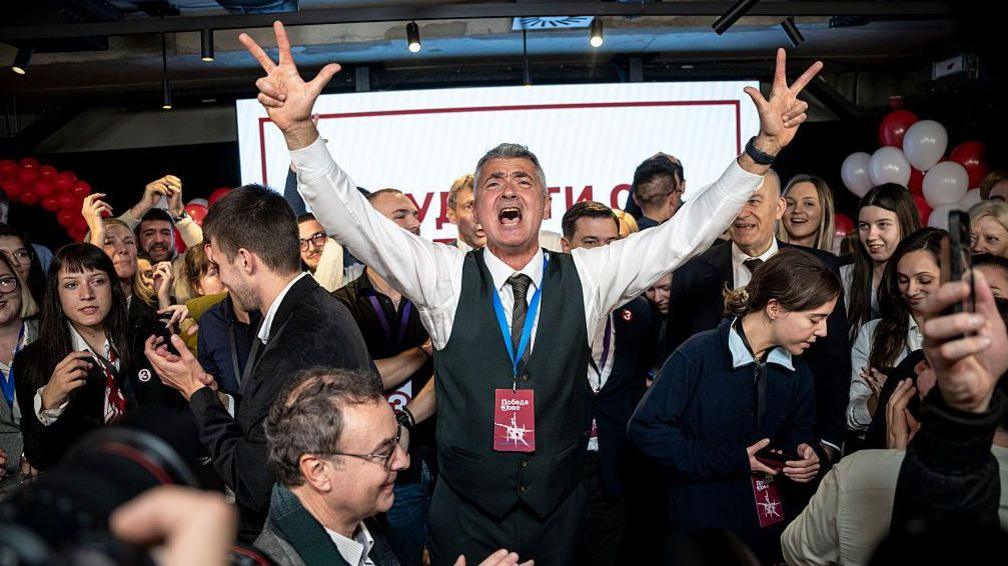
Although the movement was student-led, no students stood as candidates. Instead, student assemblies or plenums selected a slate of 250 academics, professionals, and public figures to contest all 250 seats in the snap parliamentary election. The list was headed by cardiologist Ilija Srdanović and included prominent figures such as former National Bank of Serbia governor Dejan Šoškić, actor Tihomir Stanić, and former basketball player Dejan Bodiroga.
According to final projections by independent polling groups CeSID and Ipsos, the list won 141 seats, securing an absolute majority in parliament and ending 14 years of political dominance by Aleksandar Vučić and the Serbian Progressive Party (SNS), who conceded defeat.
The 11-Point Programme
The elected members of parliament are tasked with fulfilling an 11-point reform manifesto established by the student movement. The key objectives include:
- Eradicating corruption by forming a specialized police unit to arrest those responsible.
- Purging internal affairs ministry officials linked to organized crime or who broke rules during the crackdown on protesters.
- Reforming Serbia's media landscape and freeing the public broadcaster from political control.
- Halting the practice of recruiting party loyalists to head public enterprises.
Related translated reports
Serbia’s student-led revolt challenges Vučić’s long rule
A movement sparked by a deadly station collapse grew into a nationwide anti-corruption campaign and, in less than two years, weakened Aleksandar Vučić’s 14-year political dominance. A final projection gave its electoral list 141 parliamentary seats.
A deadly collapse in Novi Sad set off a protest movement that expanded from university campuses into a nationwide campaign against corruption and government negligence. Less than two years later, the movement had become a major challenge to Aleksandar Vučić’s 14 years of political dominance, with support for his Serbian Progressive Party (SNS) fading in an election framed as a choice about Serbia’s future. The trigger came on 1 November 2024, when a concrete canopy outside the train station in Serbia’s second-largest city collapsed, killing 16 people. Critics saw the disaster as a symbol of widespread corruption and connected the station’s flawed renovation to Vučić, who had closely identified himself with the project. “When the canopy collapsed that served as the last straw,” said Helena Ivanov of the Henry Jackson Society think tank. She said the emotional shock ignited a national campaign of marches and events that reached Serbians in a way opposition parties had not managed. Weekly student demonstrations calling for justice grew into protests involving many parts of society, including farmers, actors and judges. The leaderless movement organised through student assemblies, or plenums. By January 2025, Vučić’s government had been shaken enough that the prime minister resigned, saying it was “to defuse tensions”. In March, Belgrade saw what the report describes as Serbia’s largest-ever anti-government protest. When Vučić announced snap elections last month, the students were prepared to turn their momentum into an electoral operation. “They have been able to take that emotional momentum into a proper organisation and have people learn how to protect fairness at polling stations,” Ivanov said. The movement, called “Student List-Students Win”, put forward candidates for all 250 parliamentary seats, but none were students. Its lead candidate, Novi Sad cardiology professor Ilija Srdanović, joined a student march towards Belgrade last week and said: “The energy is unstoppable.” He told the BBC: “We offer our citizens the core values of civilised society, which this previous regime has taken away from our citizens for the last time.” The list drew support from anti-government voters across Serbian society, though few of its candidates are seen as possible leaders. A final projection by independent polling groups CeSID and Ipsos gave it 141 seats. Those projected to enter parliament include former basketball star Dejan Bodiroga, listed 24th; actor Tihomir Stanić, 8th; opera singer Nikola Mikić, 46th; former National Bank of Serbia governor Dejan Šoškić, 27th; and numerous professors. Šoškić has been discussed as a possible candidate for the top post, has outlined economic reforms and has faced broad criticism in pro-government media. Srdanović, despite leading the list, is not widely viewed as a likely prime minister. Gordana Delić, who heads the Balkans programme at the German Marshall Fund of the US, said the election was effectively a referendum. “The message was clear: the rule of law and not ruled by the law,” she said. Vučić initially described the demonstrators as “well-intentioned”, but before the election accused them of seeking to “bring down” Serbia. After conceding victory on Sunday night, he alleged—without evidence—that they had backing from unnamed “European countries and the American deep state”. In a speech to party supporters that evening, he said the students had destroyed two years of life in Serbia and would be defeated “faster than they think”. The students themselves did not stand for election, a deliberate choice: the report says voters might not have supported a slate with little life experience. Instead, the movement selected citizens to represent it in parliament. The students said those elected had been entrusted with “transferring part of the struggle we have been waging on the streets for the past year into the institutions”. Their 11-point programme includes proposals to fight corruption by creating a police unit to arrest those responsible; remove from the Interior Ministry officials who broke rules while suppressing protests or were linked to organised crime; reform Serbia’s media landscape and free the public broadcaster from political control; and stop appointing party loyalists to lead public enterprises. Though the students will not take seats themselves, they made the promises to the public, and their representatives will face pressure to deliver. Celebrations followed the vote in Belgrade, Novi Sad and Niš, where supporters gathered in city centres and outside Student List headquarters. The students posted on social media: “Serbia is free.” In central Belgrade, metal barriers around Ćaciland—a pro-Vučić tent camp established 18 months earlier in Pioneers Park, opposite parliament—were pulled down as people shouted: “Vučić is leaving.”