World Food Programme
United Nations agency that provides food assistance worldwide and scaled back Gaza programmes after major funding cuts.
Also known as: WFP · United Nations World Food Programme · UN World Food Programme · UN WFP
Overview
The World Food Programme (WFP) is an international organization within the United Nations that provides food assistance worldwide. Founded in 1961, it is headquartered in Rome and has offices in 87 countries. In 2023, WFP supported over 152 million people and was present in more than 120 countries and territories. It is the world's largest humanitarian organization and a leading provider of school meals.
WFP provides emergency food relief, technical and development assistance, supply chain and logistics support, social safety programmes, and direct cash assistance. It also helps build resilience against climate change and manages the United Nations Humanitarian Air Service (UNHAS), which provides passenger services for humanitarian workers. The agency is an executive member of the United Nations Sustainable Development Group and prioritizes Sustainable Development Goal 2, 'zero hunger', by 2030. In 2020, WFP received the Nobel Peace Prize for efforts to combat hunger, contribute to peace in conflict areas, and help prevent the use of hunger as a weapon of war.
Gaza assistance and funding cuts
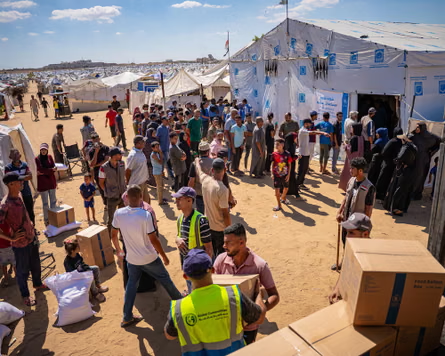
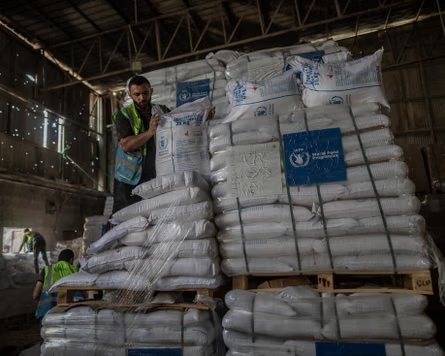
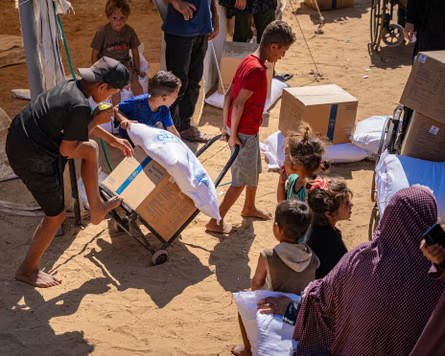
In Gaza, WFP's humanitarian operations were sharply reduced after sweeping aid cuts. During the summer, WFP programmes helped feed about 1.6 million people, or roughly three-quarters of Gaza's population. Funding then fell by more than half from 2025 levels, and from October monthly assistance was scaled back to about 1.1 million people, ending support for more than half a million people each month.
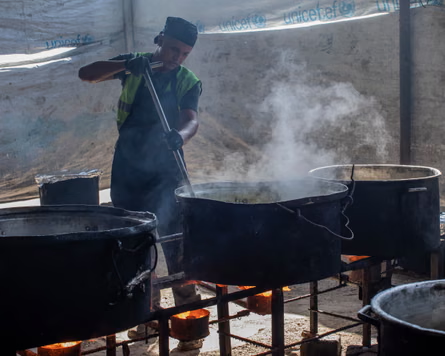
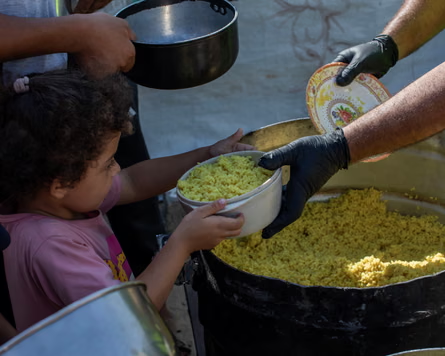
The cuts affected ration boxes, cash stipends used to buy food in markets, and hot meals at community kitchens. WFP said it needed more than £300 million over the next six months to restore and maintain critical programmes in Palestine. The agency warned that gains from earlier large aid shipments, which helped end a declared famine and reduce the most severe hunger, were fragile and could be reversed. Two-thirds of Gaza's population faced crisis levels of food insecurity under the Integrated Food Security Phase Classification (IPC), while about 200,000 people were at emergency levels, one step below famine conditions.
WFP's Gaza work also faced cost pressures from restrictions on shipments, limits on fuel, engine oil and spare parts, complex shipping rules, and limited warehouse space after widespread destruction. Sourcing and shipping ingredients for ration boxes can take about three months, meaning additional funding may not immediately reverse programme reductions. The cuts occurred amid wider funding pressures on humanitarian organizations after the Trump administration cut USAID and other donor nations reduced aid spending.
Related translated reports
Cuts force World Food Programme to end support for half a million Palestinians in Gaza
Two-thirds of population face crisis levels of food insecurity and 200,000 people are in danger of famine This winter is likely to deepen hunger for Palestinians in Gaza, after sweeping aid cuts forced the UN’s World Food Programme (WFP) to end support for more than half a million people each month, the agency’s director for Palestine said. More than a year after a Trump-brokered ceasefire came into force, promised reconstruction has not begun, there are few jobs and the vast majority in Gaza still rely on aid to eat. Continue reading...
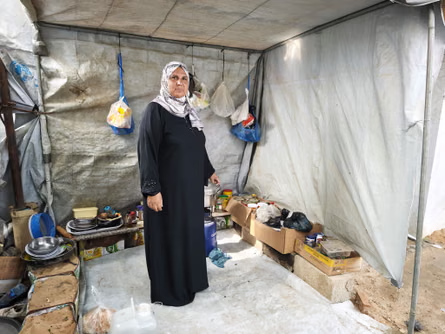
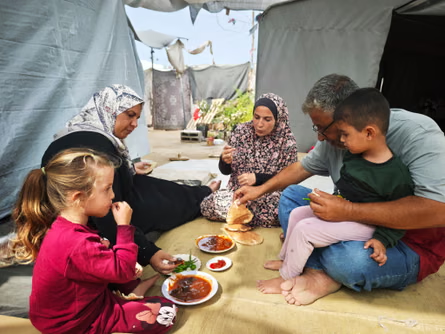
This winter is likely to deepen hunger for Palestinians in Gaza, after sweeping aid cuts forced the UN’s World Food Programme (WFP) to end support for more than half a million people each month, the agency’s director for Palestine said. More than a year after a Trump-brokered ceasefire came into force, promised reconstruction has not begun, there are few jobs and the vast majority in Gaza still rely on aid to eat. This summer, WFP programmes helped feed three-quarters of Gaza’s population, about 1.6 million people, but funding has fallen by more than half from 2025 levels. As a result, from October, aid has been scaled back to 1.1 million people each month. Cuts to deliveries of ration boxes, cash stipends to buy food in markets, and hot meals at community kitchens have already been rolled out. The WFP needs more than £300m over the next six months to restore and maintain critical programmes in Palestine. A year of large aid shipments ended a famine declared in summer 2025 and reduced the most severe hunger, but without steps to rebuild Gaza’s economy, most families still rely on food handouts. “These are very fragile gains, easily reversed, and the situation is still brutal,” said Shaun Hughes, the WFP’s representative and country director for Palestine. Two-thirds of the population in Gaza face crisis levels of food insecurity, phase three under the Integrated Food Security Phase Classification (IPC), which is used to assess if a population is approaching famine. Food insecurity is at emergency levels for 200,000 Palestinians, which means immediate humanitarian supplies are needed to prevent deaths from hunger, Hughes said. This is IPC phase four, one step away from famine conditions. Young children and their mothers are particularly vulnerable. After enduring years of food shortages, one in eight children in Gaza are chronically malnourished or stunted, a recent Unicef survey found, and may have suffered permanent damage. Most humanitarian organisations are struggling with funding after the Trump administration decimated USAID and other donor nations cut aid spending as they grapple with cost of living crises. The famine and war brought global attention to Gaza last year, ensuring funding. With a nominal ceasefire in place and the most extreme malnutrition curbed, the crisis there has slipped out of headlines and fatigue has set in among many donors. However aid will be needed at scale until Israel and the international community launch the large-scale reconstruction promised last year. There is no way for most people to feed their own families at present, because about 80% of Gaza’s population is unemployed, according to UN data. “We need to invest in recovery. This humanitarian operation isn’t affordable or sustainable in the long term,” Hughes said. “Ultimately that’s also what everyone in Gaza is telling us. They really don’t want to be reliant on these handouts, don’t want to stand in the hot meals queue every day. They want to have some chance of stability and recovery.” Gaza was self-sufficient in fruit and vegetables before the war, but the vast majority of farmland has been occupied by Israel’s military. The sophisticated greenhouse and irrigation systems that supported agricultural production have been destroyed. Fish has historically been a key source of protein in the territory, but the Israeli navy bars fishing boats from waters off the coast. Alaa Sarhan, 40, lives with his wife and five children aged between four and 16 in a tent near the “yellow line” the marker of Israeli control. They have already noticed the impact of the WFP cuts. “In recent days, we have had to plan our meals around what is available rather than what we want to eat,” he said. A former paramedic, he was injured by Israeli attacks nearly two decades ago, and his disability benefits buy very little. “Often, I give up my share of food so my children can eat. I got accustomed to doing this because the most important thing is that they have something to eat.” For three years, Israeli restrictions on aid shipments have been the main driver of hunger and malnutrition in Gaza. For months at a time, entry of food was restricted or entirely barred as Palestinians went hungry inside the territory. Now, for the first time since October 2023, lack of funds may also become an obstacle to feeding hungry Palestinians. Israel’s controls on shipments into Gaza exacerbate funding shortfalls, because they make humanitarian work particularly expensive compared with other parts of the world. Limits on fuel, engine oil and spare parts, and complex, opaque shipping restrictions push up transport time and costs. Mass destruction of buildings by airstrikes means warehouse space is limited and costly. Even an influx of cash might not allow the WFP to immediately reverse the cuts. Sourcing and shipping the ingredients for ration boxes can take about three months, and the reduction of cash transfers may already be affecting supply chains. The injection of more than £30m a month has “underpinned purchasing power for the private sector in Gaza”, Hughes said, allowing trucks to come in with relatively expensive shipments of both healthy and unhealthy food. For now, the WFP has tried to reduce the impact of funding cuts by scaling back these programmes rather than cutting them entirely. Families who get ration boxes will receive one, rather than two. But even limited reductions may push families with no other food source or income back into dangerous levels of malnutrition. For the poorest of the poor, reduced rations don’t work, Hughes said. “There’s only so far you can cut [support] until you don’t have the food security impact at the household level.” The WFP is trying to monitor hunger levels so they reach the most vulnerable, monitoring “negative coping strategies”. These include whether people have skipped meals, or are seeking exploitative and dangerous work. Nesreen Muqayed, 50, lives with her husband, four children and two grandchildren. She needs a regular diet to manage kidney problems, and a grandson who is on the autism spectrum cannot tolerate many foods. Despite these urgent medical needs, they often go hungry. “Sometimes we try to save part of a meal for breakfast because we do not know whether we will have anything to eat the following day,” Muqayed said. “The situation has become more difficult over the past two weeks.” The hot meals from community kitchens that make up a large part of their diet have only been delivered every other day in October, and their meagre backup supplies are already running out. “I used the last of our flour yesterday,” she said. Beyond grappling with daily hunger, she also finds it painful denying her children healthy food they want and need for their development, because they cannot even afford bananas. “Sometimes I pass a fruit seller and look at what he has on display, but I do not have the money to buy,” she said. “Fruit and vegetables have become luxuries that we cannot afford regularly, even though they are basic necessities that every family should be able to access.”