Persistent Drought in England Raises Concerns Over Non-Essential Business Water Bans and Yorkshire Drought Declaration
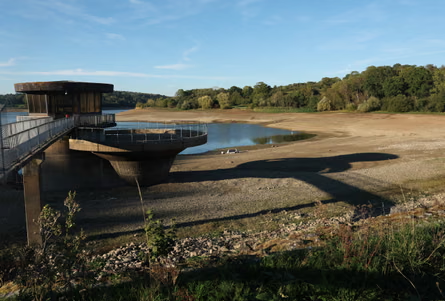
Many parts of England continue to face severe drought, with Yorkshire formally declared in drought on October 9. With reservoir levels far below seasonal expectations, three water companies are seeking bans on non-essential water use by certain businesses and permission to abstract water from ecologically sensitive rivers, pending government approval. Although there has been recent rainfall, it has not been enough to offset the spring and summer water deficit, prompting calls to reduce water use and strengthen long-term climate resilience.
Background
- England and Wales have experienced prolonged dry weather, with insufficient rainfall during the spring and summer causing reservoir and river levels to remain persistently low. Although there was rainfall in September, it remained below the historical average and was insufficient to effectively replenish water resources.BBC GUARDIAN
- Implementing bans on non-essential water use for businesses or changing river abstraction restrictions, such as allowing abstraction below ecologically safe levels, requires approval from the Department for Environment, Food and Rural Affairs (Defra).GUARDIAN
Key actors
- The UK government/Water Minister (Emma Hardy): monitoring the drought situation and emphasizing the priority of strengthening long-term resilience to climate change.BBC
- Environmental and industry organization (Angling Trust): focused on river ecology and calling for reduced leakage and restrictions on unsustainable river abstraction.GUARDIAN
Confirmed facts
- Three water companies (South East, Southern, South West Water) are seeking bans on non-essential water use by businesses such as golf clubs, private schools and commercial car washes.GUARDIAN
- Southern Water is seeking a drought order allowing it to abstract water from the internationally renowned chalk stream River Test even when water levels fall below ecologically safe levels, in order to address threats to water supplies in Hampshire and the Isle of Wight.GUARDIAN
- Yorkshire Water currently has no plans to impose water-use restrictions on customers, and the Environment Agency has also said that restrictions are not currently necessary.BBC
How sources covered it
- Focuses on Yorkshire's drought declaration, the current low reservoir levels, and the position of officials (the Environment Agency and the Water Minister) that immediate restrictions on household water use are not currently necessary but vigilance is required.BBC
- Focuses on the broader drought impacts across England, particularly water companies' applications for bans on non-essential business water use, requests to abstract water from ecologically sensitive rivers, and concerns raised by environmental organizations.GUARDIAN
Reactions
- Andy Shaw (Environment Agency) said Yorkshire's drought declaration reflects the region's dry conditions, but water-use restrictions are not currently necessary.BBC
- Vicki Townend encouraged the public to recognize the impact of the drought and reduce water use to help accelerate recovery from drought conditions.BBC
- Water Minister Emma Hardy emphasized that Yorkshire's drought declaration shows the situation remains serious and that long-term resilience to climate change is a government priority.BBC
- Mark Owen (Angling Trust) supported further restrictions on non-essential water use and called for urgent action to reduce water-company leakage and unsustainable river abstraction.GUARDIAN
- Sam Bottomley (South West Water) said the region is entering a critical stage of a prolonged drought and stressed that the immediate challenge is to reduce demand and protect stored water supplies.GUARDIAN
Impact analysis
- Impacts already occurring: Reservoir levels in many parts of England and Wales are abnormally low, and rainfall has been severely deficient in some areas, such as East Yorkshire, leading places including Yorkshire and all of Wales to be formally declared in drought, while the public has already faced hosepipe restrictions.BBC GUARDIAN
- Expected/potential impacts: If approved by Defra, businesses such as golf clubs and private schools will face bans on non-essential water use; Southern Water's abstraction from the River Test could damage the area's fragile chalk-stream ecosystem, raising environmental concerns.GUARDIAN
Open questions
Timeline
- A lack of spring and summer rainfall led to prolonged dry conditions.BBC
- All of Wales was declared to be in drought.GUARDIAN
- Five reservoirs or reservoir groups in England and Wales recorded exceptionally low water levels.GUARDIAN
- Yorkshire experienced its fifth-driest period on record.BBC
- Hosepipe restrictions were imposed on the public in drought-affected areas.GUARDIAN
Related news
Water firms seek permission to cut supplies to golf courses, schools and car washes as drought grips England Click to expand the full report Collapse full report
South East, Southern and South West Water have asked Defra to approve non-essential use bans that could stop golf clubs and private schools irrigating courses and playing fields and shut commercial car washes, with 11 areas of England still in drought, reservoirs at 54% of capacity and river flows exceptionally low in seven areas. Ministers have yet to respond to the requests.
Water companies in the south of England have asked the government for permission to curtail commercial customers' access to mains water, as drought conditions persist across most of England and continue to squeeze rivers and wildlife. South East Water, Southern Water and South West Water have lodged applications for "non-essential use bans". If approved, the measures could stop golf clubs and private schools from irrigating courses and playing fields with mains water and force commercial car washes to cease operating — no small matter when a power hose at a wash can draw up to 25 litres of water a minute. Households have lived under hosepipe restrictions for the past three months, but businesses in drought-affected areas have so far been exempt. The companies' requests now sit with the Department for Environment, Food and Rural Affairs (Defra), which has not yet responded. The environmental picture behind the applications is stark. Eleven areas of England remain in drought, with Yorkshire the latest to be granted that status on 9 October. Groundwater levels are declining, reservoirs stand at 54% of capacity — 21 percentage points below what would normally be expected in autumn — and Defra's latest figures show river flows are exceptionally low in seven areas of England, taking a toll on habitats, fish and wildlife. Affected waterways include the River Derwent in the north-east, the rivers Yare and Ely Ouse in the east of England, and the River Tone and Hampshire Avon catchments in the south-west. Once flows sink to such levels, recovery can take years, with potentially severe effects on fish spawning and river health. Wales, by contrast, is showing the first hints of recovery after the whole country was declared in drought in July. Storage is strained across the board. Nineteen reservoirs or reservoir groups in England and Wales are less than half full, and eight are exceptionally low — up from five in August. The Met Office estimates that bringing every area out of drought will take above-average rainfall sustained over a seven-month period. September delivered nothing of the kind: England collected roughly 65% of its typical rain for the month, with the east and south bearing the greatest shortfall. Mark Owen, the Angling Trust's head of fisheries, said the organisation backed the proposed curbs. "When rivers and fish are suffering from the ongoing effects of a severe drought, the Angling Trust supports further restrictions on non-essential water use, alongside urgent action to reduce huge leakage from water companies and unsustainable abstraction from rivers," he said. "We must continue to reduce unnecessary demand for water. It makes little sense to ban people from washing cars at home while commercial car washes can continue operating." Southern Water's application is the most delicate. In Hampshire, where the chalk aquifer is exceptionally low, the company is seeking a drought order that would let it take water from the River Test, an internationally prized chalk stream and rare salmon habitat, even at volumes below what is judged ecologically safe. Southern said it was applying for the permit because of "a clear threat to supplies" in Hampshire and on the Isle of Wight. In parallel, it wants a non-essential use ban covering commercial premises and businesses to dampen demand as it moves to draw more from the Test. South East Water and South West Water, for their part, have been allowed to alter how much they abstract from rivers in an effort to preserve the water stored in their reservoirs. The individual reservoir figures show how far storage has fallen. Ardingly, near Haywards Heath in West Sussex, supplies 280,000 people and is exceptionally low, holding 1.05bn litres against a total capacity of 5.2bn litres. Colliford, on Bodmin Moor, serves 255,000 households in Cornwall and stands 37% full, with 10.68bn litres of its 28.5bn-litre capacity. Wimbleball, in Somerset, provides water for 390,000 people and is at just 18%, holding 3.8bn litres against a total capacity of 21.3bn litres. Sam Bottomley, South West Water's director for drinking water services, said the region was entering a critical phase of an exceptionally prolonged drought. "Every day we continue to draw on our reservoirs to keep water flowing to homes, businesses and communities while river flows remain below the levels needed to support public water supply," he said. "Many people understandably think a drought is over once it starts raining. In reality, recovery takes much longer." He went on: "Some rivers still remain at their lowest levels and with no significant rain forecast for the coming weeks, the immediate challenge is reducing demand and preserving enough stored water to maintain supplies until river flows and reservoir levels recover."