UK hit by back-to-back Storm Austin and Storm Borealis: two people killed, tens of thousands remain without power and transport disruption
The UK was hit by Storm Austin and Storm Borealis over the weekend, leaving two men dead after being struck by falling trees. As of Monday, about 90,000 properties remained without power, with persistent strong winds in parts of Scotland and northern England hindering repair work. Severe transport disruption, flight cancellations, school closures and forced cancellation of outdoor events occurred across much of the UK. The Met Office continued to issue yellow wind warnings into Tuesday, while local council flood emergency responses, such as sandbag distribution, sparked controversy and prompted discussion about infrastructure investment for climate change.
Background
- The UK Met Office has named major storms since 2015 to raise public awareness of severe weather and maintain transparency.ABCNEWS
- This was the second named storm to hit the UK within two days: Storm Austin struck the south on Friday, followed by Storm Borealis hitting northern areas over the weekend.GUARDIAN
- As storms become more frequent, broader discussions have emerged about how much additional investment is needed to mitigate further storm impacts caused by climate change.BBC
Key actors
- Network Rail: responsible for clearing obstacles from railway lines, such as trampolines and sheds blown off by wind, and reminding the public to secure garden items to protect railway safety.GUARDIAN
- Environment Agency: responsible for monitoring and issuing flood alerts and flood warnings.GUARDIAN
- Cumbria police: responsible for clearing road obstacles caused by localized flooding and fallen trees, and urging drivers to drive carefully.GUARDIAN
- North Ayrshire Council: responsible for distributing sandbags in Largs and Saltcoats to respond to flooding, and pledged to review flood reports to learn lessons.BBC
- Local business owners and residents, such as Marcus Reed and Wendy McKinney: reported the damaging impact of the storms on businesses and criticized local council emergency responses.BBC
Confirmed facts
- On Sunday, rail travel disruption, flight delays or cancellations occurred across much of the UK, and multiple outdoor events, including River of Light, events at Edinburgh Castle and Fountains Abbey, were cancelled.GUARDIAN
- By 7 a.m. on Sunday, the Environment Agency had issued 66 flood alerts and 10 flood warnings.GUARDIAN
- As of Monday, about 90,000 properties remained without power.BBC
- During the Sunday storms, two men, one in his 20s and one aged 60, were killed by falling trees.BBC
- Parts of Scotland and northern England continued to experience wind speeds of 50-85 mph, hindering power restoration work at some properties.BBC
- Factories and shops in Lyndal, Cumbria, were expected to remain without power until Tuesday evening.BBC
- North Ayrshire Council distributed nearly 300 sandbags in Largs and Saltcoats.BBC
Claims and disputes
- Dispute over the timing of local council sandbag distribution: residents accused the council of only distributing sandbags after flooding began, saying the response was 'too little, too late'; the council responded that it would act when safe and appropriate, and pledged to review reports to learn lessons.BBC
How sources covered it
- Focused on the immediate life-threatening dangers from the storms, such as flying debris and large waves, macro power-cut data, and the background mechanism of Met Office storm naming.ABCNEWS
- Provided more detailed wind speed data, specific local impacts, such as cancelled events and debris on railway lines, concrete measures by multiple emergency and infrastructure agencies, and the field difficulties they faced.GUARDIAN
- Focused on the fatal consequences of the storms, deaths, the damaging impact of prolonged power cuts on specific businesses, controversy over local emergency response, sandbag distribution timing, and broader discussion of infrastructure investment for climate change.BBC
Reactions
- Met Office chief forecaster Jason Kelly warned that Storm Borealis would affect the whole UK, with the strongest winds in the north, and advised the public to prepare for travel and power disruptions.GUARDIAN
- The Energy Networks Association said it was working at full speed on repairs, but persistent severe weather limited opportunities for engineers to work safely, and some areas remained difficult to access.GUARDIAN
- Network Rail shared photos of trampolines and sheds on railway lines, reminding residents near railways to securely fasten garden items.GUARDIAN
- Cumbria police urged drivers to drive carefully while emergency services cleared obstacles caused by flooding and fallen trees.GUARDIAN
- Leo Slade said it had been a 'tough weekend', but emphasized that the UK's electricity network is highly resilient.BBC
- Marcus Reed said losing two days of manufacturing and distribution was 'really damaging', calling it the 'worst situation... very serious' he had experienced.BBC
- Wendy McKinney said the storms were 'devastating' for local businesses and criticized the council's sandbag supply as 'too little, too late'.BBC
- North Ayrshire Council said it would respond 'where it is safe and appropriate', and would review flood reports to 'consider any lessons that can be learned'.BBC
Impact analysis
- Impacts already occurred: two men were killed by falling trees; hundreds of thousands of households experienced power cuts, with about 90,000 still without power as of Monday; severe transport disruption across much of the UK, including rail and flights; school closures in Scotland; multiple large outdoor and public events forced to cancel; localized flooding occurred, and business activity, such as manufacturing and distribution, suffered serious damage.ABCNEWS GUARDIAN BBC
- Expected/ongoing impacts: because yellow wind warnings continued into Tuesday, power restoration for remaining customers faced further delays, such as Lyndal expected to be restored Tuesday evening; flood alerts and strong wind warnings meant travel disruption risk continued; broader policy discussion was prompted about increasing infrastructure investment to cope with more frequent storms caused by climate change.GUARDIAN BBC
Open questions
Timeline
- More than 130,000 properties affected by Storm Austin had power restored.ABCNEWS
- Severe weather from Storm Borealis began hitting northern UK.GUARDIAN
- Amber weather warning areas came into effect.GUARDIAN
- Events such as Fountains by Floodlight were cancelled because of weather.GUARDIAN
- The Environment Agency had issued 66 flood alerts and 10 flood warnings.GUARDIAN
- ENA reported that 82,600 customers remained without power.GUARDIAN
- Storm Borealis caused flooding and property damage; two men were killed by falling trees; North Ayrshire Council distributed sandbags after flooding began.BBC
- Cleanup work was under way, with about 90,000 properties without power; travel disruption and school closures occurred in Scotland; rain swept across the UK.BBC
- The Met Office issued yellow wind warnings for the west coast of England, Wales, Scotland and eastern Northern Ireland.BBC
- The Met Office issued yellow wind warnings for much of Scotland, northern England and Northern Ireland.BBC
- Factories and shops in Lyndal, Cumbria, were expected to have power restored.BBC
Related news
Storm Boelo hits northern UK with damaging winds, outages and travel disruption Click to expand the full report Collapse full report
Storm Boelo, the second major storm to strike the U.K. over the weekend, brought powerful winds, flooding risks, transport disruption and power cuts across Scotland, Northern Ireland and northern England on Sunday before moving toward continental Europe.
Storm Boelo swept across northern parts of the U.K. on Sunday, leaving around 82,000 homes affected by power outages and disrupting airports, ferries, rail services and roads in Scotland, Northern Ireland and northern England. The Met Office, Britain's national weather service, urged people to remain indoors where possible, warning that flying debris and large waves could pose a danger to life. Gusts reached a peak of 84 mph (135 kph) in Argyll and Bute, Scotland. An amber warning for wind — the Met Office's second-highest alert level — remained in force across Scotland and northern England until late Sunday. Flood warnings were also issued as severe weather continued to affect transport networks. Boelo, pronounced “Boo-Loh,” arrived shortly after Storm Austen, which struck the U.K. on Friday and particularly affected southern England. Britain's Met Office has assigned names to significant storms since 2015 to make severe-weather information easier to communicate to the public. Names are allocated alphabetically during each storm season, which runs from September through August. As Boelo moved east into continental Europe, strong winds also caused problems in the Netherlands. Amsterdam's Schiphol Airport warned passengers that flights to and from the major aviation hub could be delayed or canceled. The weather also contributed to an emergency involving the freight vessel UHL Freedom north of the Dutch island of Schiermonnikoog on Sunday afternoon. The Netherlands' Coastguard maritime agency said three crew members were injured after the ship temporarily developed engine problems. Two of the injured sailors were lifted from the vessel and flown by helicopter to a mainland hospital. Authorities did not immediately disclose the nature of their injuries. The ship, carrying a crew of 25, was continuing under limited engine power on Sunday evening while a Coastguard emergency tug remained nearby on standby. Schiermonnikoog lies about 190 kilometers (120 miles) north of Amsterdam. Strong winds and rain were also forecast during the day in Denmark, Norway and parts of Sweden. Some ferry services were canceled, trains were suspended as a precaution on certain Swedish routes, and some trailers were prohibited from crossing Denmark's Great Belt Bridge.Storm Boelo cuts power to more than 82,000 properties as strong winds hit northern UK Click to expand the full report Collapse full report
Storm Boelo brought widespread disruption to Scotland, Northern Ireland and northern England, with gusts reaching 84mph, tens of thousands of properties still without electricity, rail and flight cancellations, flooding and event closures.
Storm Boelo caused widespread disruption across northern parts of the UK over the weekend, leaving more than 82,000 properties without electricity and bringing damaging winds, flooding and travel problems. The storm struck Scotland, Northern Ireland and the north of England on Saturday evening, becoming the second named storm to affect the UK in two days. Storm Austen had already brought strong winds to south-west England on Friday. According to the Met Office, winds generally reached 60-70mph within an amber warning area that took effect at 9pm on Saturday. Gusts exceeded 80mph at exposed coastal locations, including 82mph on Tiree in the Inner Hebrides. Speeds of 84mph were recorded in Argyll and Bute and 83mph in Snowdonia. The Energy Networks Association said on Sunday morning that engineers had restored supplies to 344,900 customers, while more than 82,000 properties remained without power, including more than 30,000 homes in Scotland. The ENA said crews were concentrating on reconnecting customers but warned that severe weather was restricting opportunities for engineers to begin restoration work safely in some regions, while access to certain locations remained difficult. It said engineers were working around the clock to find and repair faults. Rail services were also badly affected. Network Rail Scotland published an image showing floodwater reaching from the tracks to a platform at a Glasgow station, while fallen trees were reported above railway lines near another location. Speed restrictions were imposed across Scotland and several sections of the network were closed. Elsewhere, flooding blocked the railway between Preston and Blackpool North in Lancashire, while trees fell on tracks near Dumfries in Scotland. Network Rail also shared photographs showing a trampoline beneath a train and a shed beside railway tracks, and urged people living near railway lines to secure objects in their gardens. The Met Office advised residents in affected areas to secure loose outdoor items and remain indoors because flying debris and large waves could pose a danger to life. Chief forecaster Jason Kelly said the strongest winds and greatest risk of disruption from Storm Boelo were expected in northern areas. He said amber warnings covered mainland Scotland, parts of Northern Ireland and the far north of England, where widespread gusts of 60-70mph were forecast and exposed coastal areas could experience winds of about 80mph. Kelly added that other parts of the UK could see gusts of 50-60mph. Heavy rain, particularly in northern areas, was expected to create another hazard, with possible effects on travel and electricity supplies. Several weekend events and attractions were closed or cancelled because of the conditions. Visit Liverpool cancelled its River of Light illuminated-art event on safety grounds, while Sunday's annual Diwali on the Square celebrations in London were called off following advice from independent health and safety experts. Edinburgh Castle closed on Sunday because of high winds and adverse weather. The Fountains Abbey estate in North Yorkshire also shut for the day after its Fountains by Floodlight event on Saturday evening had been cancelled. Air travel was disrupted as well, with hundreds of flights delayed or cancelled at airports across the UK and Ireland, including Dublin, Heathrow, Manchester, Edinburgh and Glasgow. By 7am on Sunday, the Environment Agency had issued 66 flood alerts across England, indicating flooding was possible, along with 10 warnings stating that flooding was expected. Cumbria police said they received several overnight reports of localised flooding and trees blocking roads across the county. Motorists were asked to drive carefully while emergency crews worked to clear the obstructions. The amber wind warning was surrounded by broader yellow warnings covering parts of England farther south, north Wales and all of Northern Ireland. Storm Austen had already left hundreds of homes without electricity in south-west England after hitting the region on Friday. Winds during that storm reached 76mph at St Mary's airport in the Isles of Scilly, 74mph at Aberporth in south Wales and 71mph at Culdrose in Cornwall.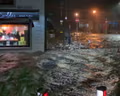

UK Storm Recovery Stalls as Boelo Aftermath Leaves 90,000 in Darkness and Prompts Fresh Alerts Click to expand the full report Collapse full report
Following a deadly weekend marked by two storm systems, approximately 90,000 properties remain without electricity as the Met Office issues new yellow wind warnings for Monday evening and Tuesday.
The United Kingdom is grappling with significant recovery challenges after Storm Boelo compounded the damage caused by Storm Austen earlier in the week. As of Monday, the Energy Networks Association (ENA) reported that roughly 90,000 properties remained disconnected from the power grid. The human toll of the severe weather was stark, with two men killed by falling trees on Sunday: one in his twenties in north London, whose vehicle was struck, and a 60-year-old resident in Mid Kelton, Dumfries and Galloway.
Restoration efforts have been severely impeded by persistent high winds. Leo Slade, CEO of the ENA, described the situation as "a tough weekend," noting that sustained speeds between 50 and 85 mph across Scotland and northern England prevented engineers from safely accessing damaged infrastructure. "Until that weather system passes, we can't safely get engineers out to replace poles, to get wires back up," Slade told BBC Radio 4’s Today programme, adding that Monday would see a surge in field activity once conditions permitted. While emphasizing the resilience of the UK’s power network, Slade called for a broader debate on whether current investment levels are sufficient to mitigate increasingly frequent storms driven by climate change.
The prolonged outages have inflicted heavy economic strain on local businesses. Marcus Reed, operations director at a home fragrance manufacturer in Lyndal, Cumbria, stated that his factory and retail outlet would likely remain without power until Tuesday evening. He expressed concern over losing two days of production and distribution during what he described as the busiest pre-Christmas period. "This is probably the worst situation I've experienced in my time here," Reed said, contrasting the current crisis with previous ad-hoc power losses that were typically resolved within 12 hours.
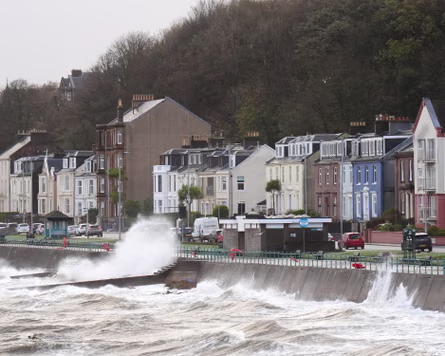
In North Ayrshire, business owners voiced frustration with local emergency responses. Wendy McKinney, who operates a bathroom shop in Largs, labeled the impact on local commerce as "devastating." She criticized the council for distributing sandbags only after flooding had begun, describing the effort as "too little too late" when materials were simply left on pallets in the street for residents to collect. North Ayrshire Council defended its actions, stating it had distributed nearly 300 sandbags in Largs and Saltcoats while adhering to safety protocols, and pledged to review the incident to identify lessons learned.
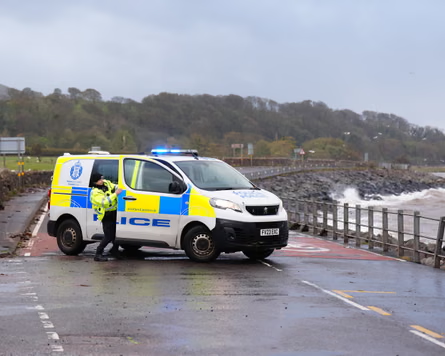
Travel disruptions continue, with several Scottish schools closed due to lack of heating, water, or structural damage. The Met Office has issued a new yellow warning for strong winds covering western England, Wales, Scotland, and eastern Northern Ireland, effective from 18:00 Monday to 03:00 Tuesday. Further alerts extend from 03:00 to 23:59 on Tuesday for much of Scotland, northern England, and Northern Ireland. Forecasters warn that these conditions could lead to additional power cuts, coastal spray, and travel delays, urging residents to prepare essential supplies such as torches and batteries. Rain moving northeast from southwest England is expected to intensify winds overnight, peaking on Tuesday as low pressure passes near Northern Ireland and northwest Scotland.