Serbia’s Snap Parliamentary Election: Student Movement Defeats Vučić, Ending His Long Rule
On October 25, 2026, Serbia held a snap parliamentary election. Against a backdrop of deep polarization, the student-led opposition movement (Students' List), which emerged from protests triggered by the November 2024 collapse of the Novi Sad railway station canopy, defeated longtime ruler Aleksandar Vučić and his Serbian Progressive Party with 52.7% of the vote to 39.2%. Vučić conceded defeat in the early hours of the following day, ending his party's 14 years in power, as large-scale celebrations erupted in Belgrade and elsewhere and a pro-government tent camp was dismantled. Although the campaign was marked by allegations of misuse of public resources and media bias, and Vučić later accused the students of being backed by foreign forces seeking to destroy the country, record participation by domestic observers and citizens helped ensure an overall calm election day. The election is seen as a major political shift in Serbia and has drawn close attention from the EU, Russia, Hungary and the wider international community. The new government faces the challenges of restoring the integrity of democratic institutions, advancing reforms required by the EU and balancing foreign relations, while the presidential election in December will be the next key milestone.
Background
- The collapse of the Novi Sad railway station canopy on November 1, 2024, killed 16 people. The disaster became the final straw, triggering nearly two years of student-led peaceful anti-corruption and anti-authoritarian protests in Serbia demanding accountability and justice for the victims.SKYNEWS GUARDIAN BBC BBC
- The EU had become increasingly frustrated by Serbia's lack of reform in the judiciary, rule of law and corruption, straining relations between the two sides.SKYNEWS
- Vučić and the Serbian Progressive Party (SNS) repeatedly denied allegations of corruption.BBC
- Hungarian opposition leader Péter Magyar won in April, ending Orbán's 16 years in power and providing a regional political backdrop for Serbia's upheaval.BBC
- In January 2025, Vučić's prime minister resigned in an attempt to ease tensions, but the move failed to quell the protests, and in March 2025 Belgrade saw the largest anti-government protest in Serbia's history.BBC
Key actors
- Aleksandar Vučić: Serbia's longtime leader, who ran for prime minister after resigning as president. He initially praised the protesters as well-intentioned, but later accused them of trying to destroy the country and of receiving support from foreign forces, before ultimately conceding defeat to the student movement in the election.SKYNEWS GUARDIAN BBC BBC
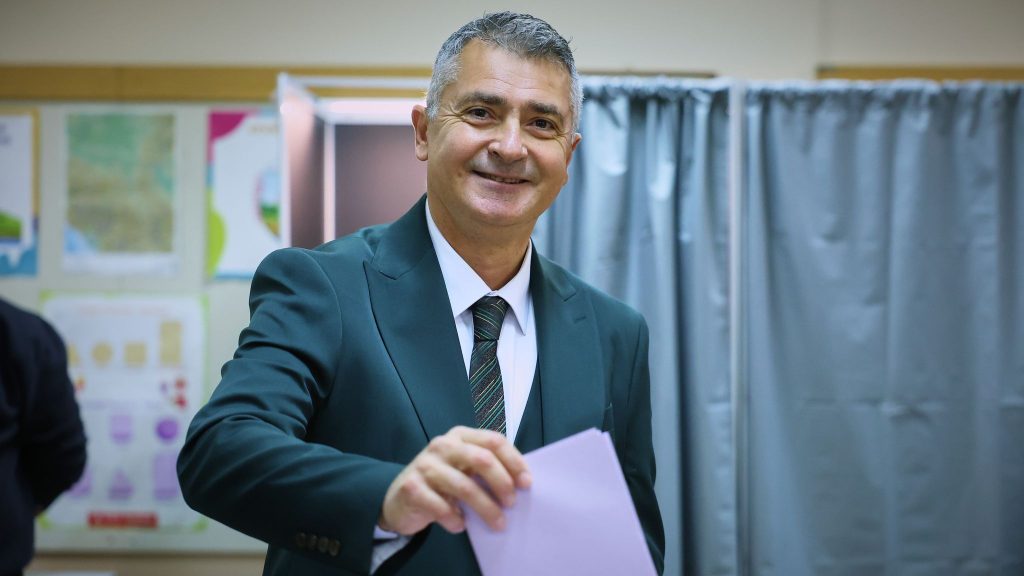
- Students' List/Student-led movement: Formed by students who launched protests after the railway station collapse, including Ilija Srdanović and Helena Ivanov. The movement successfully transformed emotional momentum into organizational strength and defeated the ruling party with 52.7% of the vote in the election.SKYNEWS GUARDIAN BBC BBC
- International and domestic observers (OSCE, ODIHR, CRTA, etc.): Monitored the election process, noting an uneven campaign environment but overall compliance on election day, while their record level of participation helped prevent systemic manipulation.GUARDIAN
- Péter Magyar: Hungary's prime minister, whose victory in April inspired Serbia's student movement and who welcomed Vučić's defeat.BBC
- Dmitry Peskov / Russian Kremlin: Praised Vučić's contribution to relations with Russia and expressed hope that Serbia's new political forces would understand that cooperation with Moscow serves their interests.BBC
- Marta Kos / EU representative: Said Serbia could open a new chapter, that the EU's door was open, and that it was ready to move forward together.BBC
- Dejan Šoškić: A figure widely criticized by pro-government media, representing individuals within the opposition camp targeted by the ruling party's media apparatus.BBC
Confirmed facts
- Election day was generally calm and orderly, with 96% of observed polling stations assessed positively, while record participation by domestic observers and citizens prevented systemic manipulation.GUARDIAN
- Smaller parties faced the risk of failing to reach the 3% vote threshold required to enter parliament.SKYNEWS
- Online campaigning was largely unregulated, with no dedicated oversight mechanisms, safeguards or accountability.GUARDIAN
- Preliminary results released by the election commission showed that after 97% of polling stations had been counted, the Students' List had won 52.7% of the vote and SNS 39.2%.BBC
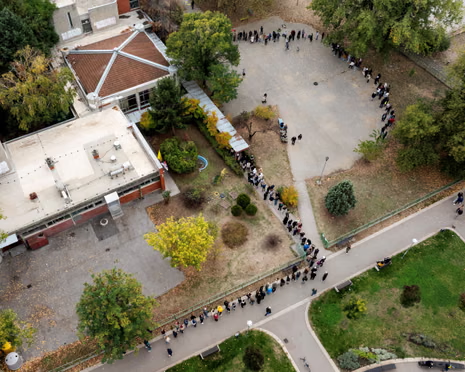
- On election day, long lines formed outside polling stations across Serbia and at Serbian communities abroad, indicating exceptionally high voter participation.BBC
- During the campaign, Vučić promised increases in pensions and public-sector wages, as well as investment in national healthcare.BBC
- Serbia is expected to hold a presidential election in December.BBC
- In January 2025, Vučić's prime minister resigned in an attempt to ease tensions caused by the railway station collapse.BBC
- In March 2025, Belgrade saw the largest anti-government protest in Serbia's history.BBC
- After the election results were announced, the metal fencing around the pro-Vučić tent camp Ćaciland was dismantled.BBC
- The student movement successfully transformed emotional momentum into organizational strength and trained personnel in how to protect fairness at polling stations.BBC
Claims and disputes
- Pre-election polling was divided: one poll showed Vučić's party leading the student camp by 47% to 40%, while other polls showed the students ahead.SKYNEWS
- There were differing perspectives on the fairness of the electoral environment: on the one hand, the process was compliant at the vast majority of polling stations and systemic manipulation was prevented; on the other hand, observers said the ruling party's misuse of public resources, voter intimidation and state-media bias seriously undermined campaign equality, arguing that “state capture” affected the election outcome.GUARDIAN
- Vučić and the pro-government camp accused the students of trying to destroy Serbia and claimed they were supported by unnamed European countries and the “American deep state.”BBC
- Vučić claimed that the students had destroyed two years of life in Serbia and asserted that they would be defeated sooner than they imagined.BBC
How sources covered it
- Focuses on uncertainty surrounding the election, the challenge to Vučić's long rule, conflicting opinion polls, the threshold for smaller parties, and the election's potential impact on Serbia's political landscape (drawing a comparison with Orbán's defeat in Hungary) and relations with the EU.SKYNEWS
- Focuses on the highly polarized electoral environment, the ruling party's misuse of state resources and media bias, difficulties surrounding overseas voting, and the key role of citizens and observers in preventing election manipulation, emphasizing the importance of restoring electoral integrity.GUARDIAN
- Focuses on the specific election results, jubilant reactions from student leaders and the public, Vučić's concession of defeat, and immediate diplomatic reactions to Serbia's change of power from Russia, Hungary, the EU and others.BBC
- Focuses on how the student movement transformed emotional momentum into organizational strength to protect fairness at polling stations, emphasizing the core value of the rule of law rather than being “ruled by law,” while also documenting Vučić's changing attitude toward the student movement and attacks by pro-government media on opposition figures.BBC
Reactions
- Young protesters demanded accountability for the disaster and justice for the victims.SKYNEWS
- The student movement gained broad support in Serbia.SKYNEWS
- Many Serbians supported Vučić because of modernization projects involving roads, railways, schools and hospitals.SKYNEWS
- The EU had become increasingly frustrated with Serbia's lack of reform in the judiciary, rule of law and corruption.SKYNEWS
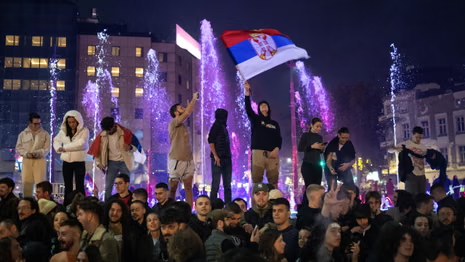
- Victors reflected on becoming winners in streets where they had once been beaten by police, while Belgrade saw a celebratory atmosphere of car horns, high-fives with police and revelry.GUARDIAN
- There were calls to address in the future the disproportionate inconvenience imposed on voters by overseas voting arrangements.GUARDIAN
- Student leaders said “this will be a free country,” expressed hope to “liberate the country from tyranny,” and said that “no obstacle is stronger than their will,” describing the victory as “an avalanche that will destroy the authoritarian regime and the entire political scene.”BBC
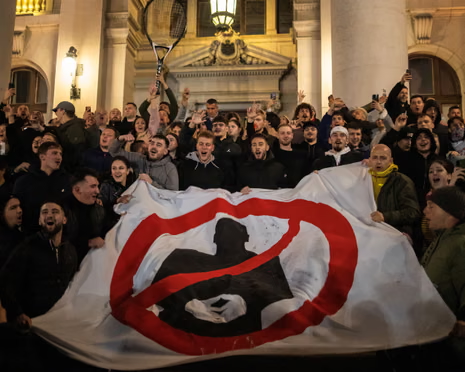
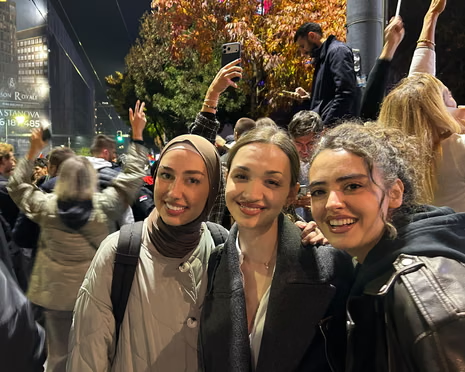
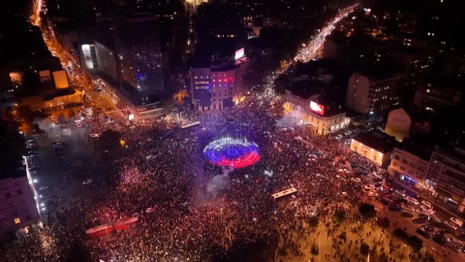
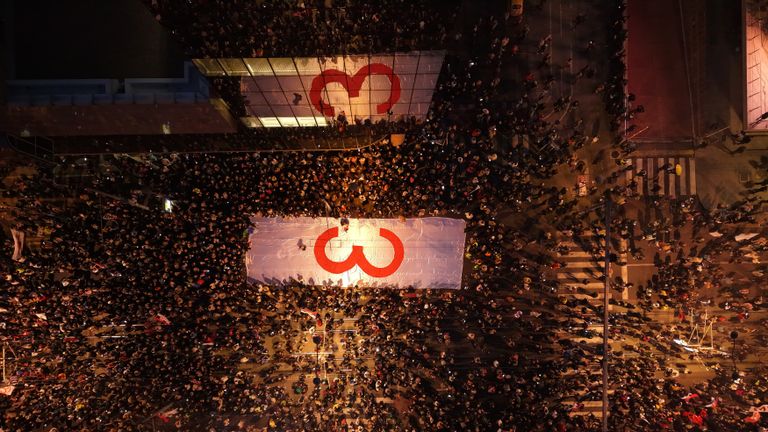
- Members of the public and students celebrated in the streets of Belgrade, Novi Sad and other cities by dancing, chanting “victory,” honking horns and setting off fireworks, with one student saying, “Serbia is free, it's a miracle.”BBC
- Kremlin spokesman Peskov praised Vučić's contribution to Russian-Serbian relations and expressed hope that Belgrade's “new political forces” would understand that cooperation with Moscow serves Serbia's interests.BBC
- Hungarian Prime Minister Péter Magyar welcomed Vučić's defeat and said his own victory in April had given strength to Serbia's student leaders.BBC
- EU representative Marta Kos said, “Serbia can open a new chapter, the EU's door is open, and we are ready to move forward together.”BBC
- Supporters gathered in the city center or at the Students' List headquarters in a euphoric atmosphere.BBC
- The metal fencing around the pro-Vučić tent camp Ćaciland was dismantled as crowds chanted “Vučić, leave.”BBC
- Vučić initially praised the protesters as well-intentioned but later accused them of trying to destroy Serbia.BBC
- Pro-government media widely criticized Dejan Šoškić.BBC
Impact analysis
- Impact already seen: Record participation by domestic observers and citizens successfully prevented systemic manipulation at polling stations, demonstrating the role of civil society in safeguarding electoral integrity.GUARDIAN
- Expected impact: The new legislative and executive institutions will need to make restoring electoral integrity and democratic institutions a top priority; a student-led government may face pressure to advance judicial and rule-of-law reforms in order to improve relations with the EU.GUARDIAN SKYNEWS
- Expected impact: The presidential election due in December will determine the ultimate distribution of executive power in Serbia and how the new government interacts with the presidency.BBC
- Expected impact: The change of power may lead to adjustments in Serbia's foreign policy, requiring a new balance between the EU, which demands rule-of-law reforms, and Russia, which is calling for continued cooperation.BBC
- Expected impact: The new government has pledged to restore the core values of a civilized society and replace the civic rights stripped away by the previous regime, potentially bringing far-reaching changes at the social, cultural and rule-of-law levels.BBC
Open questions
- How will the new government address systemic issues identified by election observers, including difficulties with overseas voting, state-media bias and the lack of regulation for online campaigning?GUARDIAN
- How will smaller parties that failed to reach the 3% threshold affect the final allocation of seats in the new parliament and the process of forming a government?SKYNEWS
- After winning an absolute majority with 52.7%, how will the Students' List form a new government and fulfill its promises to “liberate the country from tyranny” and improve people's livelihoods?BBC
- Will the presidential election in December alter the current parliamentary landscape dominated by the student movement or trigger new political maneuvering?BBC
Timeline
- Vučić served as prime minister.SKYNEWS
- Vučić's prime minister resigned in an attempt to ease tensions.BBC
- Belgrade saw the largest anti-government protest in Serbia's history.BBC
- The pro-Vučić tent camp Ćaciland was established in Pioneers Park in central Belgrade.BBC
- A poll was released showing Vučić's party leading the student camp by 47% to 40%.SKYNEWS
- Earlier on election day, long lines formed outside polling stations across Serbia and abroad.BBC
- The election commission released preliminary results with 97% counted: Students' List 52.7%, SNS 39.2%; Vučić conceded defeat at SNS headquarters.BBC
- International observers and CRTA released preliminary findings and assessment reports on the election in Belgrade.GUARDIAN
- Serbia is expected to hold a presidential election.BBC
Related news
Serbia’s Snap Election: A High-Stakes Duel Between Vučić and Student Protesters Click to expand the full report Collapse full report
Voters in Serbia are casting ballots in a pivotal parliamentary election that pits former President Aleksandar Vučić’s ruling party against the youth-driven Students' List, marking the most significant challenge to his decade-long dominance.
Serbia is witnessing a critical political moment as citizens head to the polls for snap parliamentary elections widely interpreted as a referendum on the future of the nation. The contest features a tight race between Aleksandar Vučić’s right-wing Serbian Progressive Party (SNS) and the emerging Students' List, a movement born from nearly two years of anti-corruption protests.
Opinion surveys published shortly before the vote indicated a statistical dead heat. While one Thursday poll placed Vučić’s SNS slightly ahead at 47% compared to 40% for the students, other recent measurements suggested the opposition might be leading. This unpredictability makes the election the most uncertain in years and poses the greatest threat to Vučić’s rule since he first rose to prominence over a decade ago.
Origins of the Challenge
The mobilization of the student movement was triggered by the collapse of a train station canopy in Novi Sad in 2024, which killed 16 people. What began as demands for accountability and justice evolved into a broader crusade against perceived government corruption and creeping authoritarianism. Gaining widespread support across the Balkan nation of more than six million inhabitants, the Students' List is led by cardiologist Ilija Srdanović.
Vučić initiated this electoral cycle by resigning from his second term as president in September to run for Prime Minister again. His political trajectory includes serving as Deputy Prime Minister (2012–2014), Prime Minister (2014–2017), and President until last month. Despite the challenges, many Serbians continue to back him due to infrastructure modernization efforts, including new highways, railways, schools, and hospitals.
Election Mechanics and Stakes
>With 18 parties competing for seats in the 250-member National Assembly, high voter turnout is anticipated. However, smaller parties face the risk of failing to cross the 3% threshold required for representation. Polls close at 8 pm local time (7 pm UK time), with initial results expected approximately two hours later.A victory for the Students' List would represent a dramatic political shift in Serbia, echoing the recent defeat of Hungarian Prime Minister Viktor Orbán in April. Analysts suggest such an outcome could provide a blueprint for other student movements across Europe that have recently protested, sometimes violently, against deteriorating education standards.
Policy Platforms
Vučić’s campaign focuses on domestic economic improvements, pledging higher pensions, increased public sector salaries, investments in healthcare, and subsidies for young couples. Internationally, he has navigated a delicate balance, maintaining strong ties with China as a major investor and Russia as a traditional ally and primary natural gas supplier, while keeping the door open for European Union accession. However, EU relations have grown strained due to Brussels’ frustration with Serbia’s slow progress on judicial reforms, rule of law, and anti-corruption measures.
In contrast, the Students' List prioritizes domestic educational reform. The group has remained relatively quiet regarding its specific international ambitions, focusing primarily on internal governance and accountability.

Serbia’s student-led revolt challenges Vučić’s long rule Click to expand the full report Collapse full report
A movement sparked by a deadly station collapse grew into a nationwide anti-corruption campaign and, in less than two years, weakened Aleksandar Vučić’s 14-year political dominance. A final projection gave its electoral list 141 parliamentary seats.
A deadly collapse in Novi Sad set off a protest movement that expanded from university campuses into a nationwide campaign against corruption and government negligence. Less than two years later, the movement had become a major challenge to Aleksandar Vučić’s 14 years of political dominance, with support for his Serbian Progressive Party (SNS) fading in an election framed as a choice about Serbia’s future. The trigger came on 1 November 2024, when a concrete canopy outside the train station in Serbia’s second-largest city collapsed, killing 16 people. Critics saw the disaster as a symbol of widespread corruption and connected the station’s flawed renovation to Vučić, who had closely identified himself with the project. “When the canopy collapsed that served as the last straw,” said Helena Ivanov of the Henry Jackson Society think tank. She said the emotional shock ignited a national campaign of marches and events that reached Serbians in a way opposition parties had not managed. Weekly student demonstrations calling for justice grew into protests involving many parts of society, including farmers, actors and judges. The leaderless movement organised through student assemblies, or plenums. By January 2025, Vučić’s government had been shaken enough that the prime minister resigned, saying it was “to defuse tensions”. In March, Belgrade saw what the report describes as Serbia’s largest-ever anti-government protest. When Vučić announced snap elections last month, the students were prepared to turn their momentum into an electoral operation. “They have been able to take that emotional momentum into a proper organisation and have people learn how to protect fairness at polling stations,” Ivanov said. The movement, called “Student List-Students Win”, put forward candidates for all 250 parliamentary seats, but none were students. Its lead candidate, Novi Sad cardiology professor Ilija Srdanović, joined a student march towards Belgrade last week and said: “The energy is unstoppable.” He told the BBC: “We offer our citizens the core values of civilised society, which this previous regime has taken away from our citizens for the last time.” The list drew support from anti-government voters across Serbian society, though few of its candidates are seen as possible leaders. A final projection by independent polling groups CeSID and Ipsos gave it 141 seats. Those projected to enter parliament include former basketball star Dejan Bodiroga, listed 24th; actor Tihomir Stanić, 8th; opera singer Nikola Mikić, 46th; former National Bank of Serbia governor Dejan Šoškić, 27th; and numerous professors. Šoškić has been discussed as a possible candidate for the top post, has outlined economic reforms and has faced broad criticism in pro-government media. Srdanović, despite leading the list, is not widely viewed as a likely prime minister. Gordana Delić, who heads the Balkans programme at the German Marshall Fund of the US, said the election was effectively a referendum. “The message was clear: the rule of law and not ruled by the law,” she said. Vučić initially described the demonstrators as “well-intentioned”, but before the election accused them of seeking to “bring down” Serbia. After conceding victory on Sunday night, he alleged—without evidence—that they had backing from unnamed “European countries and the American deep state”. In a speech to party supporters that evening, he said the students had destroyed two years of life in Serbia and would be defeated “faster than they think”. The students themselves did not stand for election, a deliberate choice: the report says voters might not have supported a slate with little life experience. Instead, the movement selected citizens to represent it in parliament. The students said those elected had been entrusted with “transferring part of the struggle we have been waging on the streets for the past year into the institutions”. Their 11-point programme includes proposals to fight corruption by creating a police unit to arrest those responsible; remove from the Interior Ministry officials who broke rules while suppressing protests or were linked to organised crime; reform Serbia’s media landscape and free the public broadcaster from political control; and stop appointing party loyalists to lead public enterprises. Though the students will not take seats themselves, they made the promises to the public, and their representatives will face pressure to deliver. Celebrations followed the vote in Belgrade, Novi Sad and Niš, where supporters gathered in city centres and outside Student List headquarters. The students posted on social media: “Serbia is free.” In central Belgrade, metal barriers around Ćaciland—a pro-Vučić tent camp established 18 months earlier in Pioneers Park, opposite parliament—were pulled down as people shouted: “Vučić is leaving.”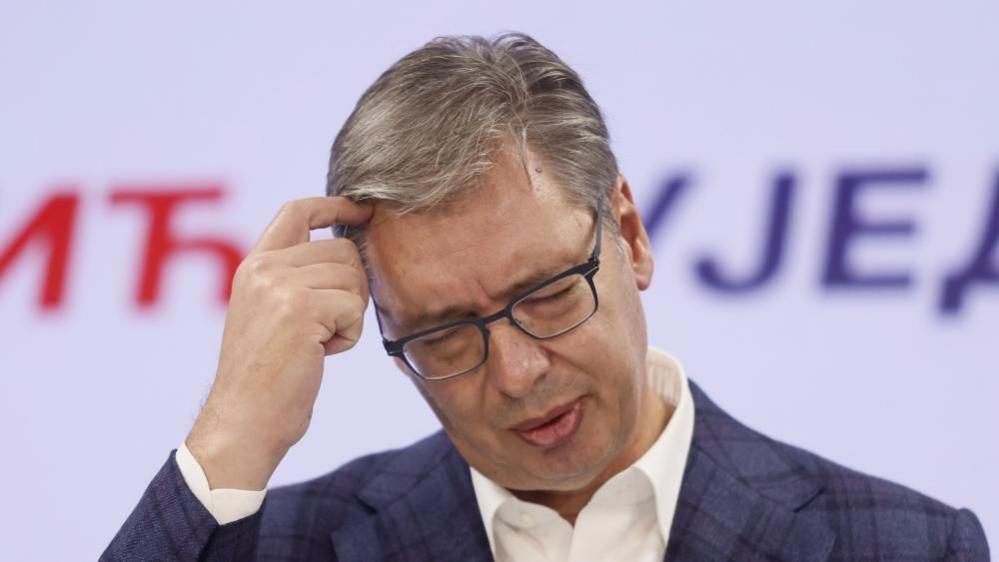
Student movement unseats long-serving Serbian leader Vučić in snap election upset Click to expand the full report Collapse full report
Following a historic vote framed as a referendum on the nation's direction, Serbia's dominant right-wing leader of 12 years conceded defeat to a grassroots coalition.
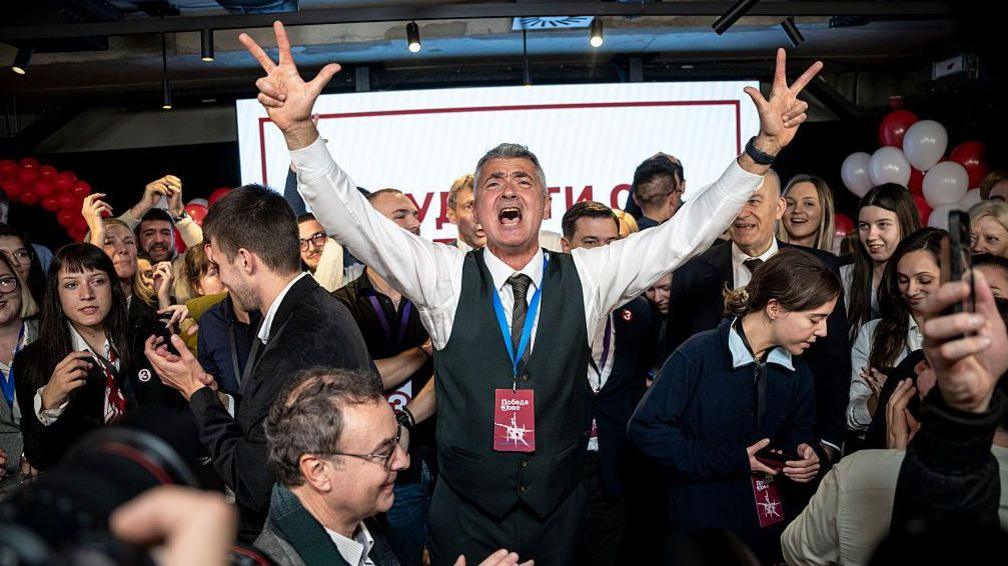
Aleksandar Vučić, who has steered Serbian politics for over a decade, acknowledged defeat in snap parliamentary elections after a youth-driven protest movement surged to victory. Street celebrations erupted across Belgrade, Novi Sad, and other municipalities as crowds gathered to mark the outcome. The political coalition behind the movement emerged less than two years prior following a fatal railway station tragedy widely attributed to negligence and graft, ultimately contesting the ballot with figures representing a broad cross-section of society. Speaking at the headquarters of the Serbian Progressive Party (SNS) in the capital, Vučić conceded that the vote's outcome was unequivocal. Preliminary figures released by the election commission late Monday morning—with 97% of ballots tallied—indicated the student-backed coalition captured 2.25 million votes, securing 52.7% support, compared with 1.67 million votes and 39.2% for the former ruling SNS. Having served two terms as president, Vučić was ineligible to seek a third and had spearheaded the SNS ticket with the intention of transitioning back to the prime minister's office, a position he vacated in 2017. He called the snap election in the wake of two years of continuous demonstrations sparked by the collapse of a concrete canopy at the Novi Sad station, an accident that claimed 16 lives. Ilija Srdanović, a leading candidate for the Student List, told BBC Serbian that the country was on the cusp of becoming a free state, noting that the anti-corruption coalition had mobilized anti-government sentiment nationwide to dismantle tyranny. Festive demonstrations crowded urban thoroughfares, accompanied by honking horns, fireworks, and crowds chanting "victory." One student described the outcome as miraculous, while another participant in Belgrade, Selena Lebovic, remarked that the results felt unbelievable and drew tears of joy. According to Reuters, candidate Radomir Saicic declared during a celebratory address that the public had demonstrated that no obstacle could outweigh collective will and determination. In Belgrade, David Vasić told BBC Serbian from the crowded center of Novi Sad—the focal point where the protests originally began—that conditions were bound to improve. The Student List, characterized by a decentralized leadership structure and candidates largely unaccustomed to traditional politics, fielded contenders from various professional backgrounds, including academics, medical doctors, actors, and sports figures. Nebojša Vladisavljević, a political science professor at the University of Belgrade, observed that the outcome represented an unprecedented political avalanche that swept away an authoritarian administration, establishing two major political poles and granting the Student List absolute legitimacy to govern. The movement's electoral platform centered on purging officials implicated in cracking down on demonstrators, barring party loyalists from managing public enterprises, and liberating the state broadcaster from political influence. Vučić and the SNS have consistently denied allegations of corruption. During the campaign, Vučić—who advocated for European Union membership while declining to apply sanctions against Russia regarding its invasion of Ukraine—had promised higher public sector wages, increased pensions, and greater spending on state healthcare. International reactions varied. Kremlin spokesperson Dmitry Peskov commended Vučić's efforts in bilateral relations and expressed hope that the new political leadership would recognize the mutual value of cooperation with Moscow, while adding that "it takes two to tango." Hungarian Prime Minister Péter Magyar welcomed the defeat, noting that student leaders had shared how much inspiration they drew from his own party's victory in April, which ended 16 years of Viktor Orbán's tenure, contrasting with the SNS administration that began in 2012. European Commissioner for Enlargement Marta Kos stated that a fresh chapter was opening for Serbia, confirming that EU doors remain open for mutual progress. Voting procedures earlier in the day saw substantial queues outside polling centers nationwide, as well as at diplomatic locations serving diaspora communities in cities such as Ljubljana, Munich, Paris—where voters waited through heavy rain—alongside Los Angeles and Chicago. Tensions surrounded the election, with police cordoning off the area around the Republic Electoral Commission in Belgrade. Focus has now shifted toward identifying who will head the Student List as prime minister, while presidential elections approach in December, with parliamentary speaker Ana Brnabić currently managing executive duties in a caretaker capacity.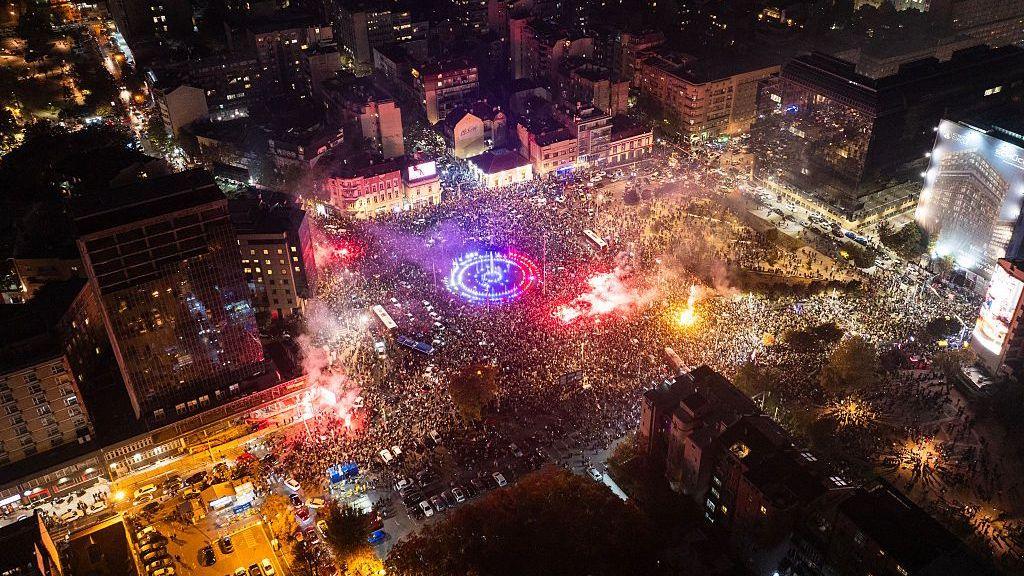
International Monitors Highlight Systemic Flaws After Landmark Serbian Election Click to expand the full report Collapse full report
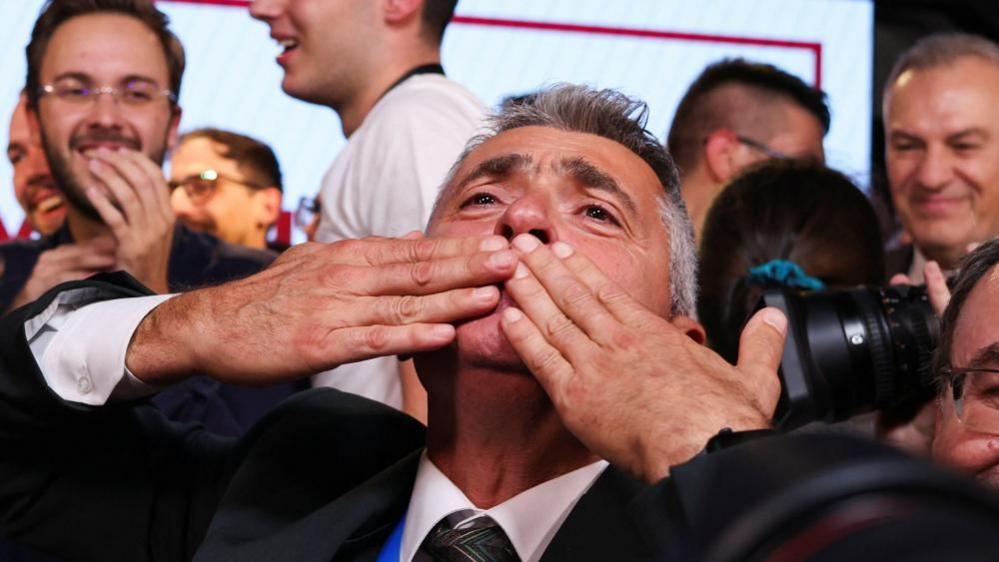
Global election observation missions released their preliminary evaluations regarding Serbia's October 25 early parliamentary vote, pointing to severe polarization, state resource abuse, and campaign inequalities, even as a youth-backed movement triumphed to unseat longtime leader Aleksandar Vučić.
International electoral observers have issued their joint preliminary findings concerning Serbia's early parliamentary elections held on October 25. While noting high civic participation and active competition, international monitors emphasized that the vote took place amidst deep political polarization and serious imbalances in campaign opportunities. Delegation representatives highlighted entrenched advantages held by the incumbent administration, citing instances of voter pressure, intimidation, and the severe misuse of public resources. Eoghan Murphy, head of the OSCE Office for Democratic Institutions and Human Rights (ODIHR) mission from Ireland, drew particular attention to inadequately regulated online campaigning, noting a lack of transparency regarding how social media algorithms amplify content. He also criticized state-controlled media outlets for failing to deliver impartial information, citing severe coverage imbalances that ran contrary to legal obligations. Additional structural hurdles were raised by Italian MP Federica Onori of the OSCE Parliamentary Assembly and Austrian MEP Andreas Schieder, head of the European Parliament delegation, both of whom underscored significant voting difficulties and long queues faced by diaspora communities abroad, such as in London, due to arbitrary polling station arrangements. Meanwhile, Pierro Fassino, heading the Council of Europe’s parliamentary assembly delegation, remarked that the ballot proceeded responsibly in roughly 96% of observed locations despite the tense climate. Luxembourgish MP and special coordinator Gilles Baum reiterated concerns regarding systemic disadvantages for challengers and widespread skepticism surrounding voter registration lists, although general election day administration received positive marks outside of reported physical altercations and procedural snags. Domestically, Raša Nedeljkov of the Center for Research, Transparency and Accountability (CRTA) reported that up to 15,000 domestic observers helped block widespread local irregularities, though he stressed that deep state capture and heavily skewed media exposure—such as President Aleksandar Vučić receiving over 500 live camera appearances—heavily tainted the overall contest. The ballot's outcome marks a dramatic political turnaround following nearly two years of anti-establishment protests. The victorious student-backed platform—whose candidate list features academics and artists rather than traditional politicians, including over 160 PhD holders—centered its campaign on anti-corruption reforms following the tragic events in Novi Sad. Standing in central Belgrade amidst celebratory crowds, 24-year-old local resident Sara reflected on the momentous shift, noting the surreal experience of celebrating victory on streets where police and gendarmerie forces had previously confronted demonstrators, moments after Vučić publicly conceded defeat.